Histomat: Adventures in Historical Materialism

'Historical materialism is the theory of the proletarian revolution.' Georg Lukács

Monday, July 03, 2017

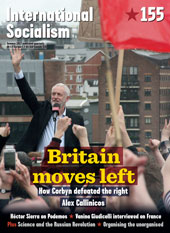
International Socialism #155 out now


The latest issue of International Socialism is out now, with analysis of the glorious general election of 2017 in Britain and also an interview with a French activist regarding 'the meaning of Macron'.  Other topics discussed include Podemos in Spain, the Russian Revolution at its centenary, and the state of the class struggle in Egypt and China - check out the full contents list anyway and consider subscribing if you do not currently... 

Labels: , , , , , , ,

Wednesday, December 17, 2014

Day School: China, World Capitalism and Workers' Resistance

Saturday 28 February 2015
10.30am – 5pm
Central London
Sessions on:
  • The Political Economy of China Today
  • China in the World
  • Labour struggles, the umbrella protests and new movements for democracy
Speakers include:

  • Tim Pringle, lecturer at SOAS and author of Trade Unions in China: The Challenge of Labour Unrest 
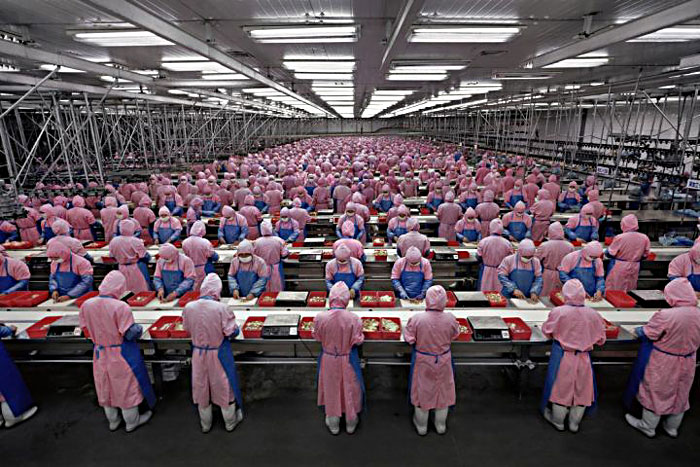
  • Jenny Chan, lecturer at Oxford and expert on labour in China and the workers at Foxconn in particular. 
  • Jane Hardy, professor of political economy at University of Hertfordshire and author of Poland’s New Capitalism 
  • Adrian Budd, lecturer in politics at London South Bank University and author of Class, States and International Relations: a critical appraisal of Robert Cox and neo-Gramscian theory
  • For more details and how to book see here
  • Labels: , , , , , , ,

    Friday, October 17, 2014

    International Socialism # 144 out now

    Cover of issue 144

    The latest issue of International Socialism journal, a quarterly journal of Marxist theory, is out now - highlights include critical discussions of Lahs Lih's work on Lenin, Lise Vogel's work on women's liberation, Vivek Chibber's work on the Subaltern Studies school, plus articles on Scotland, South Africa, Ukraine, imperialism and global warming.  There is also an online only article on 'The birth of a new generation under tear gas: the umbrella movement in Hong Kong' by Vincent Sung, which is most timely and brings out the tensions and how that movement is at something of a crossroads.  To subscribe to the ISJ, see here.


    Labels: , , , , , ,

    Monday, October 06, 2014

    Alex Callinicos on the multiple crises of imperialism

    If the United States remains the command centre of global capitalism, a multiplicity of crises has been flashing up on its screens in the past few months. Let’s consider them in ascending order of importance from the perspective of US decision makers. First, there was Israel’s latest war on Gaza—not a crisis for Washington, more the kind of violent outburst through which a kind of equilibrium is re-established, but for growing numbers of people around the world an outrage and a crime. Secondly, there was the war—now halted by an uneasy ceasefire—between the pro-Western government in Kiev and Russian-backed forces in south eastern Ukraine. Thirdly, there is the US bombing campaign to halt the advance of the jihadi group that calls itself the Islamic State, but which we will continue to call ISIS, in Iraq and Syria. And, finally—not yet a crisis, but potentially the most serious conflict—there’s the increasingly intense interstate competition in East Asia in response to China’s growing power...
    For revolutionaries, opposing Obama’s bombing campaign—and whatever other military actions follow—should be straightforward. (We should also, of course, oppose NATO expansion in Central and Eastern Europe.) But this opposition needs to be informed by an understanding that the latest US intervention in the Middle East takes place against the background of a renewal of inter-imperialist rivalries on a scale not seen since the end of the Cold War. Anti-imperialism during that era required, not simply opposing our “own” imperialism, but also refusing to prettify the actions of its rival and acknowledging that it too operates according to an imperialist logic. The same stance is required today, with the complication that today we are seeing multi-polar interstate competition. This is clearest in East Asia. On a global scale, the US remains the only world power, but it faces serious regional challenges from Russia and China, and within the Western bloc Germany and Japan are newly assertive.
    Grasping this complexity is not an academic exercise. If we assign a “progressive” role to America’s rivals, we lose hold of the thread of class struggle. The main antagonism in the world becomes that between states rather than classes. But, beyond their real conflicts of interest, all the leading capitalist states are united by their common dependence on the exploitation of wage labour. As Lenin and Luxemburg understood so well in 1914, the critique of the imperialist system is an essential political tool in uniting workers against capital.

    Labels: , , , , , , , , ,

    Thursday, March 29, 2012

    International Socialism # 134

    The latest issue of International Socialism leads with an interview with Panos Garganas, editor of the Greek newspaper Workers Solidarity, about the latest developments in Greece - a country at the cutting edge of the European class struggle. There is also discussion of contemporary anti-capitalist movements. One debate in the US Occupy movement is clearly about the need for a new 'third party' to challenge the two pro-big business and pro-imperialist parties - though the experience of the New Anti-Capitalist Party (NPA) in France has sadly not been particularly auspiciously encouraging. In the upcoming French election, the glimmer of hope for the left has come from the campaign waged by Jean-Luc Mélenchon, candidate of the Left Front - an alliance of former Socialists and the French Communist Party rather than the NPA.
    People should peruse the ISJ contents for themselves, as there are plenty of other articles which will be doubtless of interest, ranging from John Newsinger on the decline of the Murdoch empire, Neil Davidson on the politics of Scottish independence, Leo Zeilig on Frantz Fanon, Richard Seymour on Christopher Hitchens, Nicola Ginsburgh on David Roediger, to a review of blogger Scott Hamilton's recent study of EP Thompson - a work which has oddly stirred up a degree of controversy in some quarters. It is worth ending on an optimistic note, with a quote from Mike Davis from a recent New Left Review editorial, the conclusion of which is quoted in full in the round-up of other selected journal articles at the end of ISJ 34:

    'Western post-Marxists—living in countries where the absolute or relative size of the manufacturing workforce has shrunk dramatically in the last generation—lazily ruminate on whether or not ‘proletarian agency’ is now obsolete, obliging us to think in terms of ‘multitudes’, horizontal spontaneities, whatever. But this is not a debate in the great industrialising society that Das Kapital describes even more accurately than Victorian Britain or New Deal America. Two hundred million Chinese factory workers, miners and construction labourers are the most dangerous class on the planet. (Just ask the State Council in Beijing.) Their full awakening from the bubble may yet determine whether or not a socialist Earth is still possible...'

    Labels: , , , ,

    Wednesday, April 14, 2010

    New Book: Marx at the Margins

    Kevin B. Anderson: Marx at the Margins:On Nationalism, Ethnicity, and Non-Western Societies

    In Marx at the Margins, Kevin Anderson uncovers a variety of extensive but neglected texts by the well-known political economist which cast what we thought we knew about his work in a startlingly different light. Analyzing a variety of Marx’s writings, including journalistic work written for the New York Tribune, Anderson presents us with a Marx quite at odds with our conventional interpretations. Rather than providing us with an account of Marx as an exclusively class-based thinker, Anderson here offers a portrait of Marx for the twenty-first century: a global theorist whose social critique was sensitive to the varieties of human social and historical development, including not just class, but nationalism, race, and ethnicity, as well. Marx at the Margins ultimately argues that alongside his overarching critique of capital, Marx created a theory of history that was multi- layered and not easily reduced to a single model of development or revolution. Through highly-informed readings on work ranging from Marx’s unpublished 1879–82 notebooks to his passionate writings about the antislavery cause in the United States, this volume delivers a groundbreaking and canon-changing vision of Karl Marx that is sure to provoke lively debate in Marxist scholarship and beyond.

    Acknowledgments
    List of Abbreviations
    Introduction
    1. Colonial Encounters in the 1850s: The European Impact on India, Indonesia, and China
    2. Russia and Poland: The Relationship of National Emancipation to Revolution
    3. Race, Class, and Slavery: The Civil War as a Second American Revolution
    4. Ireland: Nationalism, Class, and the Labor Movement
    5. From the Grundrisse to Capital: Multilinear Themes
    6. Late Writings on Non-Western and Precapitalist Societies
    Conclusion
    Appendix. The Vicissitudes of the Marx-Engels Gesamtausgabe from the 1920s to Today
    Notes
    References

    Kevin B. Anderson is professor of sociology and political science at the University of California–Santa Barbara and most recently, with Janet Afary, the coauthor of Foucault and the Iranian Revolution: Gender and the Seductions of Islamism, also published by the University of Chicago Press.

    Labels: , , , , , ,

    Thursday, September 13, 2007

    History Is No Pacifist

    'This prospect, it must be confessed, is very far from being an idyll, but Clio, the muse of history, was never a member of a Ladies’ Peace Society. The older generation which passed through the war of 1914-18 did not discharge a single one of its tasks. It leaves to the new generation as heritage the burden of wars and revolutions. These most important and tragic events in human history have often marched side by side. They will definitely form the background of the coming decades. It remains only to hope that the new generation, which cannot arbitrarily cut loose from the conditions it has inherited, has learned at least to understand better the laws of its epoch. For acquainting itself with the Chinese Revolution of 1925-27 it will not find today a better guide than this book.

    Despite the unquestionable greatness of the Anglo-Saxon genius, it is impossible not to see that the laws of revolutions are least understood precisely in the Anglo-Saxon countries. The explanation for this lies, on the one hand, in the fact that the very appearance of revolution in these countries relates to a long-distant past, and evokes in official "sociologists" a condescending smile, as would childish pranks. On the other hand, pragmatism, so characteristic of Anglo-Saxon thinking, is least of all useful for understanding revolutionary crises.

    The English Revolution of the seventeenth century, like the French Revolution of the eighteenth, had the task of "rationalizing" the structure of society, i.e., cleansing it of feudal stalactites and stalagmites, and subjecting it to the laws of free competition, which in that epoch seemed to be the laws of "common sense." In doing this, the Puritan revolution draped itself in Biblical dress, thereby revealing a purely infantile incapacity to understand its own significance. The French Revolution, which had considerable influence on progressive thought in the United States, was guided by formulas of pure rationalism. Common sense, which is still afraid of itself and resorts to the mask of Biblical prophets, or secularized common sense, which looks upon society as the product of a rational "contract," remain to this day the fundamental forms of Anglo-Saxon thinking in the domains of philosophy and sociology.

    Yet the real society of history has not been constructed, following Rousseau, upon a rational "contract," nor, as according to Bentham, upon the principle of the "greatest good," but has unfolded “irrationally,” on the basis of contradictions and antagonisms. For revolution to become inevitable class contradictions have to be strained to the breaking point. It is precisely this historically inescapable necessity for conflict, which depends neither on good nor ill will but on the objective interrelationship of classes, that makes revolution, together with war, the most dramatic expression of the "irrational" foundation of the historic process.

    "Irrational" does not, however, mean arbitrary. On the contrary, in the molecular preparation of revolution, in its explosion, in its ascent and decline, there is lodged a profound inner lawfulness which can be apprehended and, in the main, foreseen. Revolutions, as has been said more than once, have a logic of their own. But this is not the logic of Aristotle, and even less the pragmatic demi-logic of "common sense." It is the higher function of thought: the logic of development and its contradictions, i.e., the dialectic.

    The obstinacy of Anglo-Saxon pragmatism and its hostility to dialectical thinking thus have their material causes. Just as a poet cannot attain to the dialectic through books without his own personal experiences, so a well-to-do society, unused to convulsions and habituated to uninterrupted "progress," is incapable of understanding the dialectic of its own development. However, it is only too obvious that this privilege of the Anglo-Saxon world has receded into the past. History is preparing to give Great Britain as well as the United States serious lessons in the dialectic.'

    - Leon Trotsky, 1938.

    From 'The Chinese Revolution', his introduction to The Tragedy of the Chinese Revolution by Harold Isaacs, one of the most remarkable accounts of a revolution ever written, and now online in its entirety for the first time.

    Labels: , ,