Histomat: Adventures in Historical Materialism

'Historical materialism is the theory of the proletarian revolution.' Georg Lukács

Friday, January 29, 2016

Middle East Solidarity Day School 2016

Middle East Solidarity Day School 2016


Speakers include: Omar Barghouti, Ala’a Shehabi, Sameh Naguib, Joseph Daher, Adam Hanieh, Muzna al-Na’ib, Anne Alexander and others

This dayschool will provide an essential guide for activists and trade unionists who want to understand more about how ordinary people across the Middle East continue to resist military intervention and dictatorship in their day-to-day struggles for justice and dignity. Join the debate with leading activists from Palestine, Bahrain, Egypt and Syria who offer analysis of the region which cuts through the picture of confusion and despair in the mainstream media. We will also hear hidden stories of courage and resilience which continue to inspire, five years after the revolutions which shook the region and beyond.
Sessions on:
  • Palestine and the struggle for justice
  • Counter-revolution, military intervention and crisis in Syria
  • Egypt: strategies for resistance
  • Sectarian polarisation in the Gulf
Djam Lecture Theatre, SOAS, Russell Square, London, WC1H 0XG
£5 unwaged / £10 waged
Organised by Middle East Solidarity magazine with support from SOAS Unison, Egypt Solidarity Initiative, MENA Solidarity and Bahrain Watch

Labels: , , , , , ,

Wednesday, July 08, 2015

On the anniversary of 7/7

One of the strange things about having a blog - and keeping it going (well, just about...) for over a decade - is that when anniversaries come around, you think - 'hang on, I wrote something about that'. Anyway, for what it is worth - this is the piece I wrote in the aftermath of the 7/7 London bombings at the time: The roar of bombs and the deep sleep of England - for the record, my opinion about British foreign policy has not changed - and as the British ruling class prepare to contemplate a fresh imperialist slaughter in Syria, I guess it remains worth reposting.

Labels: , , , ,

Saturday, January 31, 2015

C.L.R. James on Winston Churchill - Tory War-dog


Winston Churchill - a reactionary prize-fighter for the British ruling class

...Long before 1939, when the outbreak of war saved his career, Winston Churchill had established himself as the most discredited, the most untrustworthy, and the most irresponsible of all the senior politicians in England. The rulers of Britain did not take him seriously on the politics of war because, except for his capabilities as a war minister, they did not take him seriously on anything except his capacity to make a serious nuisance of himself.

Churchill was born the son of Lord Randolph Churchill, a brilliant young nobleman who reached the post of Chancellor of the Exchequer and seemed headed for the premiership but wrecked his career by his erratic political behavior. His character was adequately summed up in the phrase “the boy who would not grow up.” It was the kind of heritage that a careful politician would take care to live down. It is characteristic of Winston Churchill that he lived up to it.

He joined the army as a cavalry officer and thus began his lifelong and passionate interest in war. He became a war correspondent, was captured by the Boers and escaped. When he lectured in New York in 1906, at the age of twenty-six, he was billed as “the hero of five wars.” He was already actively interested in politics. In the early years of the century, liberalism seemed in the ascendancy in Britain. Churchill made a spectacular break with the Tory Party and joined the Liberals.

He became Home Secretary and distinguished himself by what is derisively known as the Battle of Sidney Street.  A group of foreign anarchists well supplied with arms refused to give themselves up to the police. Churchill converted a police operation into a battle. He went down himself to take charge of the “struggle” (or as privileged observer), was nearly killed and created a scandal among his colleagues and the sober-minded British people. In 1911 he went over to the Admiralty and there did his best work, preparing the fleet for 1914.

But the war of 1914 had no sooner begun than Churchill was at it again. A critical situation at Antwerp found Churchill, still head of the Admiralty, persuading the reluctant Sir Edward Grey to let him go to Belgium in person. He found himself as usual under fire. The battle stimulated him to offer, from Antwerp, his resignation from the Admiralty to take command of the British land forces at Antwerp. The transfer was not made but as one of his biographers (Philip Guedalla) says of the unsatisfactory outcome: “There was a vague feeling that Mr. Churchill’s restlessness might be to blame ... that it was Sidney Street over again ...”

By 1915, despite his competence, he had lost his post at the Admiralty. He held other posts, but it is related of him that at one time while a minister in London he did most of the work in a chateau in France so as to be near the firing line. After World War I he was the moving spirit in the military intervention against Russia. It is known that in 1944 to keep Churchill from joining the cross-channel expedition the present king had to threaten that he would also join it if Churchill insisted on going; baffled here, nevertheless Churchill turned up with the invading army in the last stages of the victory against Germany.

That is the man. Every British politician knew him and his Napoleonic complex, his preoccupation with war and war preparations, his extraordinary capacity for making a fool of himself on critical occasions. Asquith, Prime Minister in 1914, wrote of him “Winston, who has got on all his war-paint, is longing for a sea-fight in the early hours of the morning to result in the sinking of the Goeben.” Someone who saw him at the beginning of the 1914 war remarked on his “happy face”...

In the cabinet reshuffle of 1936, everyone expected him to be included because of his audacity as a war minister. Baldwin left him out. Churchill writes: "He thought no doubt, that he had given me a politically fatal stroke, and I felt he might well be right.” He says too, “There was much mockery in the press about my exclusion.” Exactly. His career was always in danger. His adventures were the subject of perpetual mockery. We can now judge with a little more sense of proportion Churchill’s claim that on a question vital to the world he was the purveyor of wisdom to fatuous idiots and fouls. If the words idiot and fatuity, etc., were to be applied up to 1936, the chief candidate would have been Churchill himself.

Never at any time did he behave like a man who had a serious point of view, knew what was at stake and fought seriously for it. These erratic habits of his were intimately connected with the failure of his supposedly correct policy on the war. It was precisely during the time that he was supposed to be fighting this life-and-death struggle to prevent the unnecessary war, that Churchill showed that age had not withered nor custom staled the infinite variety of what the novelist, Arnold Bennett, called his “incurable foolishness” ... it is clear that to this day he is not fully aware of the folly of his procedure in relation to his war policy...

In 1931, British imperialism began the colossal, and as it has proved, the impossible task of reconciling India to British rule by binding the Indian bourgeoisie and the feudal lords to the British system. After Hitler’s accession to power in Germany this was an urgent task precisely because of the uncertain world situation. Churchill, however, for years rallied the worst of the Daily Mail type of Conservatives and led a struggle against Baldwin which for intemperance and unscrupulousness even he has rarely surpassed. He was ignominiously defeated as he was bound to be ... any level-headed capitalist politician could not but see that some sort of settlement and pacification of India was necessary for any British government that contemplated war.

 By the end of his battle of India, the Conservative Party had no use whatever for him. However by 1936 he had built around himself a little group around a policy he called “Arms and the Covenant,” the Covenant being the League of Nations. The sharpening international situation was giving weight to their attacks upon the policy of the Baldwin government. Nothing is more illuminating of what Britain’s rulers thought of Churchill than his account of how, all through his years of political exile, every British Prime Minister saw to it that he was well informed of the latest military and scientific developments; he was even placed on some of the most secret war committees. This explains his place in British politics. He was a kind of national strong-arm man who was kept well trained and in shape, for the day when blows were needed. Until then nobody wanted to have anything to do with him. And this book shows that no one had worked more assiduously to build this reputation than himself.

But perhaps, it may be said, that despite all his follies Churchill was right in his consistent opposition on the war issue. His book explodes that fable. Churchill’s opposition on the actual issue of the war was no different from his shrill opposition on other issues. He spoke with more authority perhaps on this, and he certainly impressed outsiders and the general public. But he did not impress the politicians and for one very good reason. They knew that they could have shut up his mouth at any time by giving him office. The measure of their contempt for him can be judged by the fact that eloquent and active as he was they refused to do this.

History is full of men who felt that a certain policy was essential to the life of their country or their class and fought for it to the end, reckless of victory, defeat or their personal fate. Such for instance was the uncompromising struggle of Clemenceau for leadership of France in the days of 1914-18 when the government was in such a crisis that at one lime his attacks upon the government sounded like treason to the bourgeoisie. No such mantle can be hung on Winston Churchill despite all the assiduous tailoring of Henry Luce. Churchill knows better than to make any great claims for himself on this matter. There are too many men alive who could tear him to bits if he tried to do this. It was not principled opposition which kept him out of the ministry in 1936 and thus saved him from getting himself as thoroughly compromised as Baldwin and Chamberlain. It was his bad reputation and habits...

Until the war came Churchill was nobody, played no heroic role, opposed the government but was always ready to enter it...But maybe Churchill did have the correct policy, if even he did not make any heroic battle for it. Now this is precisely what was in dispute all the time and is still in dispute. And here, above all, Churchill’s policy, in so far as he had a policy, seemed to his colleagues the quintessence and crown of his irresponsibility.

Let us try to get clear exactly what Churchill’s policy was not. First of all Churchill was not and today is no enemy of either dictatorship or fascism. He is an enemy of all who threaten the British Empire and the “pleasant life” he leads and refers to so often. That is all.

On January 30, 1939, this stern opponent of Chamberlain’s policy of appeasing the dictators wrote as follows:

“Up till a few years ago many people in Britain admired the work which the extraordinary man Signor Mussolini had done for his country. He had brought it out of incipient anarchy into a position of dignity and order which was admired even by those who regretted the suspension of Italian freedom.” (Step by Step, 1936-1939, by Winston Churchill, p. 285.)

On February 23, 1939 he wrote of Franco:

 “He now has the opportunity of becoming a great Spaniard of whom it may be written a hundred years hence: ‘He united his country and rebuilt its greatness. Apart from that he reconciled the past with the present, and broadened the life of the working people while preserving the faith and structure of the Spanish nation.’ Such an achievement would rank in history with the work of Ferdinand and Isabella and the glories of Charles V.”(Ibid, p.285.)

As far as the record goes in this book he makes an extraordinarily good case for himself on the question of the air-race with Germany. But that is not enough to build the pedestal for his statue. And beyond this it is difficult to find out exactly what at any precise moment, he concretely stood for....

From all this it must not be considered that Churchill is a negligible person. That would be stupidity. Put him in a war department, or give him a war to lead, and from all the evidence he is far above his colleagues, in energy, in knowledge, in attention to business and curiously enough, in tempering his audacity with sobriety of judgment. He has also developed another valuable gift. His famous sense of history is famous nonsense. He has none, as I shall show in a moment. What he does have in his head is the writings of the great British historians and the speeches of the great British orators. This and his single-mindedness, his operatic consciousness of playing a great role in historic conflicts, enable him at times to rise to great heights of rhetoric.

At times his words can be singularly effective, especially when people are frightened and bewildered by the complex class, national and international currents of modern war. Churchill has no doubts, as a bull in a China shop has no doubts. He has a great gift of phrase, and long training as a journalist gives him an eye for the salient facts in a military or political situation. At all points he is equipped for war, to shout for war, to glamorize past wars, to explain a war that is going on, to make new ones look like a defense of civilization.

Politically he is as stupid a reactionary as ever. The war was no sooner over than he aroused universal execration in Britain by saying on the radio that the victory of the Labour Party would mean a Gestapo for Britain. He himself lost thousands of votes in his own constituency.... It is a measure of the degeneration of our society that such a man should be its most notable spokesman; above all it is a scandal that he should be represented ... as a defender of democracy and civilization. In reality the evidence is thick ... that Churchill is not merely a conservative, but is today as ever a vicious reactionary.

A few examples will suffice... writing about Hitler in 1932 he uses these sentences: “I admire men who stand up for their country in defeat, even though I am on the other side. He had a perfect right, to be a patriotic German if he chose. I always wanted England, Germany, and France to be friends.” Hitler attacked Britain. That is all that concerned Churchill. But for that he would have admired him to this day... 

Admiration for dictatorship and military and feudal elements, racial arrogance, anti-Semitism, these and much more stare you in the face as soon as you shake yourself free of bourgeois propaganda ... It is one of the urgent tasks of the struggle against war to expose ... the pretensions of this reactionary prize-fighter to be a defender of democracy and civilization.

C.L.R. James, 'Winston Churchill - Tory war-dog', Fourth International, 10, no. 2 (February 1949), pp.41-46


See also this poem, Great Britain's Greatest Beast by Heathcote Williams and this piece - Winston Churchill: The Imperial Monster  

Labels: , , , , , ,

Tuesday, January 13, 2015

Resist the racist offensive against Muslims


As well as Hassan Mahamdallie on levels of Islamophobia before the horrific Paris attacks (in this month's Socialist Review), see this week's  Socialist Worker for the anti-racist arguments more necessary now than ever to challenge the rising racist backlash underway - while there is also some useful commentary on Charlie Hebdo itself here, here and for some essential historical background see Robert Fisk - while on a related point Jim House and Neil MacMaster's work, Paris 1961: Algerians, State Terror and Memory recovers some of hidden history of another Paris massacre - one which saw 200 Algerian protesters killed by the police in Paris.

Labels: , , , , , , , ,

Sunday, January 04, 2015

Conference: The Arab Uprisings Four Years On

The Arab Uprisings Four Years On
A conference organised by MENA Solidarity, Egypt Solidarity Initiative and BahrainWatch
6-9pm Friday 13 February – 10-5pm Saturday 14 February
School of African & Oriental Studies, Thornhaugh Street, Russell Square, London WC1H 0XG 
£5 student or unwaged / £10 waged
Four years after uprisings swept the Middle East millions of people still struggle for freedom and social justice. In 2011 dictators fell and new movements emerged in countries from North Africa to the Gulf. Their demands won support worldwide and inspired a host of campaigns for radical change.
Challenged by the prospect of democracy, regimes have since attempted counter-revolution. Some have used extreme violence; some have encouraged sectarian division or attempted to co-opt and control organisations of the mass movement. Activists across the Middle East nonetheless continue to work for change.

This conference addresses achievements of the revolutions and the challenges that now confront them:
  • what can we learn about struggles from below and the responses of the state?
  • have attempts at counter-revolution been successful?
  • how are activist networks sustained – and how can we support them?
The conference will draw on experiences in Tunisia, Egypt, Syria, Bahrain, Yemen, Libya and Morocco – and other countries in which activists have attempted to launch movements for change. It will consider the centrality of Palestine for movements across the region – and the impact of the uprisings within Palestine. Speakers will include activists from the front line, with assessments from academics, human rights experts and media analysts.

Speakers include: Ali Abdulemam – Gilbert Achcar – Anne Alexander – Miriyam Aouragh – Joseph Daher – Kamil Mahdi – Nadine Marroushi – Sameh Naguib – Ala’a Shehabi and others.

Sessions include:
  • Revolution and counter-revolution: the people and the state
  • Neo-liberalism and struggles for change
  • Sectarianism
  • Gender matters: women and the movements
  • The workers’ movement and social justice
  • Democratic agendas
  • Solidarity and regional links
  • Palestine and the struggle for liberation in the Arab world

Labels: , , , , , , , , , , ,

Wednesday, December 17, 2014

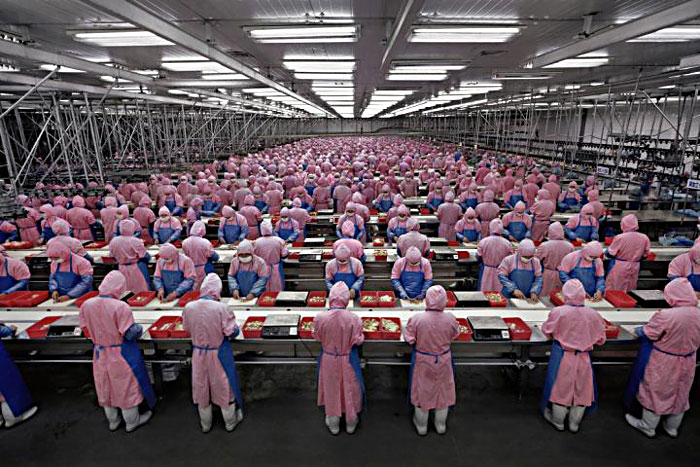
Day School: China, World Capitalism and Workers' Resistance

Saturday 28 February 2015
10.30am – 5pm
Central London
Sessions on:
  • The Political Economy of China Today
  • China in the World
  • Labour struggles, the umbrella protests and new movements for democracy
Speakers include:

  • Tim Pringle, lecturer at SOAS and author of Trade Unions in China: The Challenge of Labour Unrest 
  • Jenny Chan, lecturer at Oxford and expert on labour in China and the workers at Foxconn in particular. 
  • Jane Hardy, professor of political economy at University of Hertfordshire and author of Poland’s New Capitalism 
  • Adrian Budd, lecturer in politics at London South Bank University and author of Class, States and International Relations: a critical appraisal of Robert Cox and neo-Gramscian theory
  • For more details and how to book see here
  • Labels: , , , , , , ,

    Thursday, December 11, 2014

    Remembering the Soldiers' Revolt at Christmas

    Good pieces by Adam Hochschild and Chris Fuller on the 100th anniversary of the Christmas revolt in 1914, and how it has been commemorated and commodified.

    Labels: , ,

    Friday, October 17, 2014

    International Socialism # 144 out now

    Cover of issue 144

    The latest issue of International Socialism journal, a quarterly journal of Marxist theory, is out now - highlights include critical discussions of Lahs Lih's work on Lenin, Lise Vogel's work on women's liberation, Vivek Chibber's work on the Subaltern Studies school, plus articles on Scotland, South Africa, Ukraine, imperialism and global warming.  There is also an online only article on 'The birth of a new generation under tear gas: the umbrella movement in Hong Kong' by Vincent Sung, which is most timely and brings out the tensions and how that movement is at something of a crossroads.  To subscribe to the ISJ, see here.


    Labels: , , , , , ,

    Monday, October 06, 2014

    Alex Callinicos on the multiple crises of imperialism

    If the United States remains the command centre of global capitalism, a multiplicity of crises has been flashing up on its screens in the past few months. Let’s consider them in ascending order of importance from the perspective of US decision makers. First, there was Israel’s latest war on Gaza—not a crisis for Washington, more the kind of violent outburst through which a kind of equilibrium is re-established, but for growing numbers of people around the world an outrage and a crime. Secondly, there was the war—now halted by an uneasy ceasefire—between the pro-Western government in Kiev and Russian-backed forces in south eastern Ukraine. Thirdly, there is the US bombing campaign to halt the advance of the jihadi group that calls itself the Islamic State, but which we will continue to call ISIS, in Iraq and Syria. And, finally—not yet a crisis, but potentially the most serious conflict—there’s the increasingly intense interstate competition in East Asia in response to China’s growing power...
    For revolutionaries, opposing Obama’s bombing campaign—and whatever other military actions follow—should be straightforward. (We should also, of course, oppose NATO expansion in Central and Eastern Europe.) But this opposition needs to be informed by an understanding that the latest US intervention in the Middle East takes place against the background of a renewal of inter-imperialist rivalries on a scale not seen since the end of the Cold War. Anti-imperialism during that era required, not simply opposing our “own” imperialism, but also refusing to prettify the actions of its rival and acknowledging that it too operates according to an imperialist logic. The same stance is required today, with the complication that today we are seeing multi-polar interstate competition. This is clearest in East Asia. On a global scale, the US remains the only world power, but it faces serious regional challenges from Russia and China, and within the Western bloc Germany and Japan are newly assertive.
    Grasping this complexity is not an academic exercise. If we assign a “progressive” role to America’s rivals, we lose hold of the thread of class struggle. The main antagonism in the world becomes that between states rather than classes. But, beyond their real conflicts of interest, all the leading capitalist states are united by their common dependence on the exploitation of wage labour. As Lenin and Luxemburg understood so well in 1914, the critique of the imperialist system is an essential political tool in uniting workers against capital.

    Labels: , , , , , , , , ,

    Sunday, September 28, 2014

    Why we need a socialist alternative to Labour

    On 28 September 1864, 150 years ago, a mass meeting was held in St Martin’s Hall in central London to launch a new organisation, the “International Working Men’s Association” (IWMA) - the First International. In the IWMA's Inaugural Address, written by Karl Marx, the group stressed the importance of workers challenging the “criminal designs” of their own capitalist class, their “playing upon national prejudices, and squandering in piratical wars the people’s blood and treasure”.

     Sadly the IWMA fell apart in the 1870s, but the Socialist (Second) International which was formed in 1889 to replace it on paper at least continued something of this honourable anti-imperialist tradition. For example, in 1906 the Labour Party in Britain, an affiliate of the Second International in 1906 declared it was against 'wars fought to make the rich richer,' while 'underfed schoolchildren are still neglected'. Tragically, the Second International famously failed the test of the First World War, as the majority of its affiliate organisations voted to support this bloody inter-imperialist conflict. The leaders of the organisations which make up what is still nominally called the Socialist International - which include the Labour Party in Britain - have not learnt anything from its past mistakes with respect to history, at least not if the Iraq wars past and present are anything to go by. In 2003, a majority of Labour MPs voted to support Bush and Blair's criminal and disastrous Iraq War - with only 139 voted against. In 2006, only 12 Labour MPs voted for an inquiry into the Iraq War. Now with Cameron's current Iraq War, only 23 Labour MPs voted against - and the vast majority of Labour MPs who forgot the lessons of past imperialist interventions from 1914 onwards and voted for war are below:

     The Labour MPs who voted in favour were: Debbie Abrahams (Oldham East & Saddleworth), Bob Ainsworth (Coventry North East), Douglas Alexander (Paisley & Renfrewshire South), Heidi Alexander (Lewisham East), Dave Anderson (Blaydon), Mr Jon Ashworth (Leicester South), Ian Austin (Dudley North), Adrian Bailey (West Bromwich West), Willie Bain (Glasgow North East), Ed Balls (Morley & Outwood), Gordon Banks (Ochil & Perthshire South), Kevin Barron (Rother Valley), Hugh Bayley (York Central), Dame Margaret Beckett (Derby South), Hilary Benn (Leeds Central), Luciana Berger (Liverpool Wavertree), Clive Betts (Sheffield South East), Roberta Blackman-Woods (Durham, City of), Hazel Blears (Salford & Eccles), Tom Blenkinsop (Middlesbrough South & Cleveland East), Paul Blomfield (Sheffield Central), David Blunkett (Sheffield Brightside & Hillsborough), Kevin Brennan (Cardiff West), Lyn Brown (West Ham), Nicholas Brown (Newcastle upon Tyne East), Russell Brown (Dumfries & Galloway), Karen Buck (Westminster North), Richard Burden (Birmingham Northfield), Andy Burnham (Leigh), Liam Byrne (Birmingham Hodge Hill), Alan Campbell (Tynemouth), Sarah Champion (Rotherham), Tom Clarke (Coatbridge, Chryston & Bellshill), Ann Clwyd (Cynon Valley), Vernon Coaker (Gedling), Ann Coffey (Stockport), Yvette Cooper (Normanton, Pontefract & Castleford), David Crausby (Bolton North East), Mary Creagh (Wakefield), Stella Creasy (Walthamstow), Jon Cruddas (Dagenham & Rainham), John Cryer (Leyton & Wanstead), Alex Cunningham (Stockton North), Jim Cunningham (Coventry South), Tony Cunningham (Workington), Simon Danczuk (Rochdale), Alistair Darling (Edinburgh South West), Wayne David (Caerphilly), Geraint Davies (Swansea West), Gloria De Piero (Ashfield), John Denham (Southampton Itchen), Frank Dobson (Holborn & St Pancras), Thomas Docherty (Dunfermline & Fife West), Stephen Doughty (Cardiff South & Penarth), Jim Dowd (Lewisham West & Penge), Gemma Doyle (Dunbartonshire West), Jack Dromey (Birmingham Erdington), Michael Dugher (Barnsley East), Angela Eagle (Wallasey), Maria Eagle (Garston & Halewood), Clive Efford (Eltham), Julie Elliott (Sunderland Central), Natascha Engel (Derbyshire North East), Bill Esterson (Sefton Central), Chris Evans (Islwyn), Paul Farrelly (Newcastle-under-Lyme), Frank Field (Birkenhead), Robert Flello (Stoke-on-Trent South), Caroline Flint (Don Valley), Yvonne Fovargue (Makerfield), Hywel Francis (Aberavon), Mike Gapes (Ilford South), Barry Gardiner (Brent North), Pat Glass (Durham North West), Mary Glindon (Tyneside North), Helen Goodman (Bishop Auckland), Tom Greatrex (Rutherglen & Hamilton West), Kate Green (Stretford & Urmston), Lilian Greenwood (Nottingham South), Nia Griffith (Llanelli), Andrew Gwynne (Denton & Reddish), Peter Hain (Neath), Fabian Hamilton (Leeds North East), Harriet Harman (Camberwell & Peckham), Tom Harris (Glasgow South), Dai Havard (Merthyr Tydfil & Rhymney), John Healey (Wentworth & Dearne), Mark Hendrick (Preston), David Heyes (Ashton Under Lyne), Meg Hillier (Hackney South & Shoreditch), Julie Hilling (Bolton West), Margaret Hodge (Barking), Sharon Hodgson (Washington & Sunderland West), Jim Hood (Lanark & Hamilton East), George Howarth (Knowsley), Tristram Hunt (Stoke-on-Trent Central), Huw Irranca-Davies (Ogmore), Glenda Jackson (Hampstead & Kilburn), Cathy Jamieson (Kilmarnock & Loudoun), Major Dan Jarvis (Barnsley Central), Graham Jones (Hyndburn), Kevan Jones (Durham North), Susan Elan Jones (Clwyd South), Dame Tessa Jowell (Dulwich & West Norwood), Mike Kane (Wythenshawe & Sale East), Elizabeth Kendall (Leicester West), Sadiq Khan (Tooting), David Lammy (Tottenham), Christopher Leslie (Nottingham East), Emma Lewell-Buck (South Shields), Ivan Lewis (Bury South), Andy Love (Edmonton), Ian Lucas (Wrexham), Steve McCabe (Birmingham Selly Oak), Michael McCann (East Kilbride, Strathaven & Lesmahagow), Kerry McCarthy (Bristol East), Siobhain McDonagh (Mitcham & Morden), Andy McDonald (Middlesbrough), Pat McFadden (Wolverhampton South East), Alison McGovern (Wirral South), Jim McGovern (Dundee West), Catherine McKinnell (Newcastle upon Tyne North), Khalid Mahmood (Birmingham Perry Barr), Shabana Mahmood (Birmingham Ladywood), Seema Malhotra (Feltham & Heston), John Mann (Bassetlaw), Gordon Marsden (Blackpool South), Michael Meacher (Oldham West & Royton), Alan Meale (Mansfield), Ian Mearns (Gateshead), Ed Miliband (Doncaster North), Andrew Miller (Ellesmere Port & Neston), Madeleine Moon (Bridgend), Jessica Morden (Newport East), Meg Munn (Sheffield Heeley), Jim Murphy (Renfrewshire East), Paul Murphy (Torfaen), Lisa Nandy (Wigan), Pamela Nash (Airdrie & Shotts), Chi Onwurah (Newcastle upon Tyne Central), Sandra Osborne (Ayr, Carrick & Cumnock), Albert Owen (Ynys Mon), Toby Perkins (Chesterfield), Bridget Phillipson (Houghton & Sunderland South), Stephen Pound (Ealing North), Lucy Powell (Manchester Central), Nick Raynsford (Greenwich & Woolwich), Jamie Reed (Copeland), Steve Reed (Croydon North), Rachel Reeves (Leeds West), Emma Reynolds (Wolverhampton North East), Jonathan Reynolds (Stalybridge & Hyde), John Robertson (Glasgow North West), Geoffrey Robinson (Coventry North West), Lindsay Roy (Glenrothes), Chris Ruane (Vale of Clwyd), Anas Sarwar (Glasgow Central), Andy Sawford (Corby), Alison Seabeck (Plymouth Moor View), Virendra Sharma (Ealing Southall), Jim Sheridan (Paisley & Renfrewshire North), Gavin Shuker (Luton South), Andy Slaughter (Hammersmith), Angela Smith (Penistone & Stocksbridge), Nick Smith (Blaenau Gwent), Owen Smith (Pontypridd), John Spellar (Warley), Gisela Stuart (Birmingham Edgbaston), Gerry Sutcliffe (Bradford South), Mark Tami (Alyn & Deeside), Gareth Thomas (Harrow West), Emily Thornberry (Islington South & Finsbury), Stephen Timms (East Ham), Jon Trickett (Hemsworth), Karl Turner (Hull East), Derek Twigg (Halton), Stephen Twigg (Liverpool West Derby), Chuka Umunna (Streatham), Keith Vaz (Leicester East), Valerie Vaz (Walsall South), Joan Walley (Stoke-on-Trent North), Dave Watts (St Helens North), Alan Whitehead (Southampton Test), Chris Williamson (Derby North), Phil Wilson (Sedgefield), Rosie Winterton (Doncaster Central), John Woodcock (Barrow & Furness), Shaun Woodward (St Helens South & Whiston), David Wright (Telford) and Iain Wright (Hartlepool).

     These pro-war Labour MPs have let down themselves and their voters very badly indeed - sanctioning a return of Western imperialism to the scene of its greatest crime in recent memory - and all of them deserve to face a left wing challenge to them in the general election. All socialists in Britain should surely now work together - whether in TUSC, Left Unity, Respect or whatever - to unite and rally around credible candidates in each area who can stand against as many of these people and raise the banner of 'Welfare not Warfare - Stop the Cuts - Stop the Bombing of Iraq'. Organising to stop the war in Iraq and organising for an anti-war left wing challenge in the 2015 general election is the best tribute we can pay to those pioneers - including Karl Marx himself - who formed the First International 150 years ago - and restore some honour to the words 'socialist internationalism'.

    Labels: , , , , , ,

    Saturday, September 27, 2014

    National Stop the War Demonstration on 4 October

    From the Stop the War Coalition:

    Stop the bombing of Iraq - don't attack Syria
    National demonstration, Saturday 4 October

    Assemble 1pm, 
    Temple Place, 
    London WC2R 3BD

    Parliament has voted for the third Iraq War. The last two have brought almost unimaginable suffering to the people of Iraq and have helped to create the current chaos, driving the country to the brink of break up.

    They claim this is a humanitarian operation to defeat Isis. In fact Isis is backed by various middle east powers and a new aerial bombardment will not defeat it. It will however kill innocents, further fragment the country and inflame violence. 

    The record of the west's wars in Afghanistan, Iraq and Libya show that as well as creating misery and mayhem, western military interventions make the world a more volatile, dangerous place.  

    Cameron's new war has built-in mission creep. Discussions are already underway for Britain to join the bombing of Syria, and there are growing calls for boots on the ground.

    The Stop the War Coalition is asking every one of its supporters to throw themselves in to the campaign against the insanity of another war on Iraq. Spread the word everywhere about next Saturday's demonstration.
    http://www.stopwar.org.uk/

    Labels: , ,

    Monday, August 04, 2014

    No More War

    ‘War is organised murder and nothing else....politicians who took us to war should have been given the guns and told to settle their differences themselves, instead of organising nothing better than legalised mass murder’
    Harry Patch, last surviving British soldier from the First World War (who passed away in 2009, aged 111)
    Harry-Patch-in-Ypres-in-2-009
    Harry Patch (left) in 2004 shaking hand with Charles Kuentz (right), last remaining German soldier from the First World War at Ypres

    ‘It means an awful lot to me, these small gestures are the things that encourage friendship between peoples, so that we will never again fight wars against each other.’
    Charles Kuentz, after meeting Patch, 2004

    No Glory in War, 1914-2014
    John Newsinger on the First World War - just war or imperial conflict?

    Labels: , ,

    Friday, August 01, 2014

    National Demonstration for Gaza - London 9 August

    Gaza Demonstration

    Saturday 9 August - 12 noon, London - Next national demonstration for Gaza

    No excuses. This must be the largest ever UK demonstration for Gaza.

    No excuses. Transport must be organised now from every corner of the country, bringing everyone who is outraged by Israel's barbaric onslaught to London, in an expression not just of our outrage, but also of our solidarity with the people of Gaza, who need to know they are not alone, as they face Israel's crimes against humanity.

    No excuses. Everyone must now mobilise wherever they are in Britain, spread the word as widely as they can -- among family, friends, in their workplaces, colleges, community.

    No excuses. Over the past three weeks, London has held the biggest demonstrations for Gaza in the world, twice mobilising over 50,000 protesters. But on Saturday 9 August we need to fill the streets of London with a huge outcry at the carnage being perpetrated by Israel with the support of David Cameron and his government.

    No excuses. 25 days of the world's fifth most powerful military force bombarding an area no bigger than the Isle of Wight has killed 1,500 Palestinians and injured 8000 more. No one and nothing is safe from Israel's war crimes: 80% of the dead are civilians, over 250 of them children -- women, the disabled, the elderly, the infirm, all slaughtered by Israel's indiscriminate bombing with missiles and shells.

    No excuses. Hospitals, schools, power stations, sewage works -- Gaza's infrastructure is being turned to rubble. Israel has declared more than half of Gaza a no-go area, effectively announcing it will make Gaza a free-fire zone, when it knows full well there is nowhere for its people to move that is safe, with the borders sealed by Israel and Egypt's inhumane siege.

    Labels: ,

    Tuesday, July 29, 2014

    David Rovics on tunnels, past and present

    Over 1,100 Palestinians killed, overwhelmingly women, children and the elderly. Several dozen Israelis killed, almost all of them soldiers. Killed by people coming out of tunnels. Tunnels that the soldiers are bombing and blowing up…

    In my mind I keep coming back to the tunnels. Tunnels are such a powerful image, with so much history. The Vietnamese won the war against the US invaders partially through the widespread use of tunnels. Of course Kissinger would complain incessantly of Soviet aid to the Vietnamese guerrillas being the problem. That sounds much better than admitting that you're facing a very poorly-armed enemy that's beating you through sheer determination, ingenuity and courage, despite all your weapons of mass destruction.

    The public line was the Vietminh was a small part of the population that needed to be dealt with. That if they could just destroy their infrastructure, the invaders would win. Secretly the American leadership knew this wasn't true. They knew their enemy was the people of Vietnam, and they prosecuted their war with this in mind, targeting broadly all of the civilians of that poor country, and their neighbors as well.

    But destroy the infrastructure – they did that, too. And what was that infrastructure? Planes, helicopters, tanks? No. Rocket launchers? A few. Antiquated rifles? A few more.

    Tunnels. Mostly tunnels. And courageous, desperate refugees. Refugees living in a walled-off ghetto, subject to an almost complete embargo, with no electricity, overflowing sewers, very little food, who are being incessantly bombed.

    When facing a determined opponent, “infrastructure” or the “infrastructure of terror” has a very different meaning than how the term is usually understood.

    The infrastructure, the Israelis now admit, is not the ineffective, home-made rockets. Not the paltry collection of guns. The infrastructure are the homes that people live in. Especially the ones around Gaza's inland perimeter, which the IDF is now annexing with tanks and bulldozers. The infrastructure is the homes, and the tunnels beneath them.

    The thing about fighting a determined enemy in an urban setting is you can only make the best use of your superior firepower if there aren't any buildings in the way. People can hide behind buildings. So you have to destroy them all, which is what the Israelis are doing. Which is what the US did in Fallujah, and in Hue, and is what the Nazis did in Warsaw.

    I'm no military expert or anything, but I am a history buff, and I believe the main difference between Fallujah, Hue and the Warsaw Ghetto is in Fallujah the resistance didn't build tunnels prior to the battle. In all those cases, though, the only way to win the battle was to completely demolish the cities, one building at a time.

    In Warsaw, after the buildings were all burned to the ground and the ghetto was nothing but rubble, the resistance continued, albeit on a small scale due in part to a complete lack of food or firearms. The reason any resistance was able to continue was down to the tunnels.

    Tunnels are a bit like buildings that way. You can hide behind a building, and if you're really lucky, you can ambush soldiers when they come around the corner. If you're really, really lucky as well as very skillful, you might get close enough for hand-to-hand combat. Which is necessary when the other side has all the firepower.

    You can also hide in tunnels, before you come out and engage in your mission to attack the enemy before the enemy inevitably kills you in return. It's almost always a suicide mission. You show yourself, you die, but maybe you kill first, if you're ready to die, and very lucky and very skilled.

    In Warsaw, the tunnels were how some of the ancestors of some of those IDF soldiers survived the Nazi Holocaust. The tunnels were how they managed to get some food into the ghetto from outside the ghetto walls. And even a few guns, and very home-made bombs. Beneath any well-stocked kitchen sink are the explosives necessary to have your own little “infrastructure of terror,” after all. Even in Warsaw, 1943. If you went outside the ghetto, where such chemicals could be purchased.

    So, destroy the buildings, destroy the tunnels, and face the conundrum that as long as people are able to buy food, fertilizer, gasoline, and Draino, they'll be able to make explosives. As long as there are people there will be terrorists.


    So “gas the Arabs” becomes the natural conclusion. It's the only way to have security. If you don't want to give them sovereignty, you have to kill them all. How close to “kill them all” are the Israelis willing to go?

    Full essay here, while for more analysis of Israel's barbarism and how to fight it, see here

    Labels: , , , ,

    Tuesday, July 15, 2014

    Palestine Solidarity national demonstration

    National Demonstration for Gaza: 
    Stop the Bombing • Free Palestine!

    Saturday 19 July 2014 • Assemble 12 Noon
    Downing Street • London
    March to Israeli Embassy

    Demonstration called by: Stop the War Coalition, Palestine Solidarity Campaign, CND, Friends of Al Aqsa, British Muslim Initiative, Muslim Association of Britain. Supported by War on Want, Islamic Forum of Europe and Palestinian Forum in Britain.

    Labels: , ,

    Monday, March 31, 2014

    Alex Callinicos on the Ukraine crisis

    The reaction of the Western left to this enormous crisis has been, to put it mildly, confused. Far too many (including some who should know better) have been willing to cast a blind eye at or find excuses for Russia’s military intervention. The reasons for this attitude are, in ascending order of respectability, Stalinist nostalgia, exaggeration of the role of the extreme right in the anti-Yanukovych movement, and the search for some counterweight to American power. The net result is a revival of what used to be called campism in the days of the Cold War—seeing states in conflict with the US and its allies (then the USSR, now usually Russia and China) as in some sense progressive allies of the left.
          None of this has much to do with the revolutionary Marxist tradition. The fate of Ukraine preoccupied Trotsky during the last year of his life in 1939-40, as Europe rolled into the Second World War. Distilling the results of prolonged debates among Russian Marxists (which continued after October 1917) in which Lenin consistently insisted on the necessity of defending the right to self-determination of oppressed nations, Trotsky defended “the independence of a United Ukraine” (ie incorporating Polish Galicia and Volhynia) even if that meant “the separation of Soviet Ukraine from the USSR”—and this, remember, at a time when he was vehemently arguing that the Soviet Union was still a “degenerated workers’ state” that revolutionaries should defend against Western imperialism.
           Quoting Trotsky can be a religious exercise, but his views are worth bearing in mind when considering supposed Marxists who dismiss the idea of Russian imperialism as an “abstraction” or even advocate the partition of Ukraine. Putin’s apologists on the Western left must explain how their stance squares with the right to national self-determination. If they defend Crimea’s (extremely dubious) claim to separate from Ukraine, where do they stand on the long-standing Chechen struggle for independence from Russia, brutally crushed by Putin? And what will they say if Russian forces move into eastern Ukraine and become mired in crushing the nationalist insurgency that this would almost certainly provoke?
           Of course, the US remains the dominant imperialist power on a world scale. And of course, it is thoroughly hypocritical for Obama and his secretary of state John Kerry to denounce Putin’s seizure of Crimea, forgetting Washington’s interventions in its own backyard such as the October 1962 naval blockade of Cuba or the December 1989 invasion of Panama (a state, incidentally, carved out of Colombia at Teddy Roosevelt’s behest at the beginning of the 20th century).
    But from a Marxist perspective, imperialism is about more than American power. The classical theory of imperialism is, more than anything else, a theory of intra-capitalist competition. Imperialism is a system, the form taken by capitalism when the concentration and centralisation of capital bring about the fusion of economic competition among capitals and geopolitical competition among states. Putin’s actions express exactly this imperialist logic, combining geopolitical preoccupations (above all, blocking NATO expansion) with economic motivations (fear that Russian firms will be squeezed out of the Ukrainian market by European rivals).
          The confused left response to the Ukrainian crisis is in part the result of an optical illusion created by the so called “unipolar moment” of apparent US global dominance after the end of the Cold War. Particularly in the light of Afghanistan and Iraq, American power has seemed so overwhelming and so malign that everything must be subordinated to resisting it. But this was always precisely an illusion. US hegemony has always been contested, reflecting the fact that imperialism involves a hierarchical distribution of power among competing capitalist states. This fact is becoming more important now.
           The relative decline of US power that has become evident since Iraq and the crash is opening up a period of more fluid competition, in which the weaker imperialist states begin to assert themselves. Putin’s strategy has reflected this for some time. Potentially a much more important conflict is developing in Asia, as China’s economic rise encourages its ruling class to flex their muscles geopolitically, in particular by building up the military capabilities to exclude the US Navy from the “Near Seas” along their coasts. The clashes between China and Japan over the disputed Diaoyu/Senkaku islands are harbingers of more to come.
         In this era of growing inter-imperialist rivalries political clarity among revolutionary Marxists is vital. In New York, London and Moscow the main enemy is at home (a slogan Karl Liebknecht coined in response to a great inter-imperialist war whose centenary we will soon be remembering). But acknowledging this is no reason to apologise for our own rulers’ rivals. Imperialism is a hydra-headed beast. It needs to be killed, not merely one of its manifestations.

    Full article 'Imperial Delusions' (from the forthcoming International Socialism journal) online here, while Tariq Ali also has quite a good article on the Ukraine here, as does Mehdi Hasan here 

    Edited to add: See also Rob Ferguson and Sabby Sagall in the new Socialist Review

    Labels: , , , , , ,

    Tuesday, March 04, 2014

    New Book: C.L.R. James in Imperial Britain

    Out now as part of the C.L.R. James Archives series with Duke University Press:


    C.L.R. James in Imperial Britain by Christian Høgsbjerg
    C. L. R. James in Imperial Britain chronicles the life and work of the Trinidadian intellectual and writer C. L. R. James during his first extended stay in Britain, from 1932 to 1938. It reveals the radicalizing effect of this critical period on James's intellectual and political trajectory. During this time, James turned from liberal humanism to revolutionary socialism. Rejecting the "imperial Britishness" he had absorbed growing up in a crown colony in the British West Indies, he became a leading anticolonial activist and Pan-Africanist thinker. Christian Høgsbjerg reconstructs the circumstances and milieus in which James wrote works including his magisterial study The Black Jacobins. First published in 1938, James's examination of the dynamics of anticolonial revolution in Haiti continues to influence scholarship on Atlantic slavery and abolition. Høgsbjerg contends that during the Depression C. L. R. James advanced public understanding of the African diaspora and emerged as one of the most significant and creative revolutionary Marxists in Britain.

    Read the introduction here

    Endorsements

    "Christian Høgsbjerg's book is going to make a very significant impact on the community of C. L. R. James scholars and beyond. Høgsbjerg has thoroughly combed the key archival sources to generate a comprehensive, lively, and insightful portrait of James's intellectual and political life during his first sojourn in Britain. In doing so, he has filled in many key details and fleshed out many important events in James's life in Britain."
    —Paget Henry, co-editor of C. L. R. James's Caribbean and editor of the C.L.R. James Journal

    "When C. L. R. James left Trinidad for England in 1932, it was a kind of homecoming: A connoisseur of cricket, immersed in the works of Shakespeare and Thackeray almost from birth, James was the consummate Afro-Saxon intellectual long before setting foot in London. In C. L. R. James in Imperial Britain, Christian Høgsbjerg follows him into the meeting halls and radical bookstores, the cricket grounds and bohemian haunts, where this displaced 'Victorian with the rebel seed' emerged as a leading figure in the Trotskyist and Pan-Africanist movements. The fusion of insight with command of factual detail sets the new standard by which serious work on C. L. R. James must be judged."
    —Scott McLemee, editor of C. L. R. James on the "Negro Question" and the forthcoming The Dialectics of State Capitalism: Writings on Marxist Theory by C.L.R. James

    Reviews

    ''C.L.R. James in Imperial Britain opens up the issue of the Third World struggle in an elegant and memorable way''
    'C.L.R. James: Back in Style, Black in Style' by Paul Buhle, authorised biographer of C.L.R. James, author of C.L.R. James: The Artist as Revolutionary

    "The excellence of this book by Christian Høgsbjerg on CLR James's first sojourn in Britain between 1932 and 1938 is signalled by the drama of its cover photograph.  Wearing a very English raincoat, the Trinidadian writer and militant is pictured addressing a mid-1930s meeting in Trafalgar Square.
        By 1938 Special Branch had judged James to be a fluent speaker, very well versed in the doctrines of Karl Marx and other revolutionary writers.
        Shortly after arriving in England he moved in with his old friend and compatriot, the cricketer Learie Constantine, and was a powerful advocate of West Indian self-government.  But his elite colonial schooling at Trinidad's Queen's Royal College and a literary apprenticeship in Port of Spain had certainly not made him a Marxist.
        Steeped in English literature - he told me in a 1982 interview that he had read Thackeray's Vanity Fair ten times before he was nine years old -  Høgsbjerg explains that in his early Trinidad days James had been a devotee of English Victorian cultural prophets like Matthew Arnold, with all his sweetness and light.
       Yet within a few months of staying with Constantine in the insurgent Lancashire cotton-weaving town of Nelson, where his host was a Lancashire League professional cricketer, he had become so involved in and influenced by the struggles of the "Red Nelson" working class - which he allied with black struggles all over the imperialist world - that, as he declared, "literature was vanishing from my consciousness and politics was substituting itself."   Høgsbjerg tells of this process of transformation with a compelling narrative vibrancy.
      In subsequent chapters he tells the story of James's involvement both in the apparently contradictory worlds - yet not so if you were James - of cricket reporting for the Manchester Guardian and Glasgow Herald and active solidarity with world anti-imperialist and Pan-Africanist processes.
       This was provoked by a reunion with his old Trinidadian school friend George Padmore who had written the pathfinding Life and Struggles of the Negro Toilers in 1931.  In 1937, as part of his solidarity work for the Ethiopian people after Mussolini's fascist invasion, he helped set up the African Bureau for the Defence of African and People of African Descent in London.
         Another engrossing chapter is that which tells of James's Paris-based research for, and the writing of The Black Jacobins, his history of the Haitian Revolution of 1791.  Its forerunner, the play about its leader Toussaint l'Ouverture with Paul Robeson as the protagonist, was performed in London's West End in 1936.
         Høgsbjerg has produced an invaluable addition to both British and Caribbean labour scholarship and has written it in such an accessible way that its stirring and provocative narrative ought to inspire thought and action.''
    Chris Searle, 'A scion of black consciousness', Morning Star, 26 May 2014.

    "Høgsbjerg discusses [James's] publications in various ways but it is the intellectual and social movement context the author brings to these works, which continue to animate critical minds today, that makes the reader pause and delight''
    Matthew Quest, Insurgent Notes

    ''This impressively researched, well-written and accessible book demonstrates that James's time in Britain was a period of fertile intellectual growth for this inspirational writer and activist''
    Brian Richardson, Socialist Review, June 2014.

    ''Just out from Duke University Press's C.L.R. JAMES ARCHIVES series is this important new book from Christian Hogsbjerg. Christian's first volume in this series was an edition of the original script of James's play Toussaint Louverture: The Story of the Only Successful Slave Revolt in History. This new book is the first to offer a full examination of James's years in England following his departure from Trinidad in 1932. In the few short years between his arrival in England and his departure for the United States, James published Minty Alley, The Case for West Indian Self-Government, World Revolution, A History of Negro Revolt and  Black Jacobins, all while keeping up work as a cricket writer and participating in the work of the African Service Bureau, International Friends of Abyssinia, and others. These years are vital for understanding James's evolution as a thinker and revolutionary, indispensable for understanding the work that he would do in the United States.''
    Aldon Lynn Nielsen, author of C.L.R. James: A Critical Introduction

    ''One of the most impressively researched biographies of a prominent radical to appear in recent memory ... Anyone with an interest in black protest, literary London, and/or left politics in the 1930s will enjoy this smart, factually grounded yet thematically rich biographical study''.
    Kent Worcester, 'Renegades and Castaways', New Politics (Summer 2014)

    ''Høgsbjerg has made a major contribution through his reconstruction of James’s life and times in imperial Britain. Recovering James’s ventures into radical bookshops such as Lahr’s, his time spent in Nelson and Bloomsbury, his touring Britain as a cricket reporter, and much more, Høgsbjerg does a supreme job of reconstructing the historical geography of a distinct, and distinctly radical, life. In this sense, his book is an example to geographers, historians or other radical intellectuals pursuing the study of previously neglected biographies.''
    Daniel Whittall, Antipode (August 2014)

    "One of the book’s greatest assets is the way it manages a remarkable density of information. Refusing to succumb to the temptation of showing a single, linear narrative of James, Høgsbjerg uses the most diverse sources to illuminate the man’s different facets. His James is a witty thinker, spectacular orator, gifted organizer, cricket lover, and a politics addict. Indeed, these different traits exist side by side, develop over time, and contribute to shaping James’s trajectory....  He illuminates James as an actor who participated in and influenced contemporaneous debates about how Marxism and Trotskyism could provide answers to fighting colonial rule and the rise of Fascism.... CLR James in Imperial Britain is a valuable contribution to the field of James studies. It illuminates the early phases of Afro-Caribbean anticolonial activism in Britain and the development of anticolonial Marxism. Simultaneously, it tells the story of a remarkable beginning and shaping of much of C.L.R. James’s thought".
    Itay Lotem, Twentieth Century British History (November 2014). 


    Book Launches
    Thursday 27 March, 7.30pm, Nelson Library, Lancashire.
    Supported by North East Lancs TUC and Preston Black History Group.

    Friday 11 July at Marxism 2014, central London 

    Edited to add: Check out this film about CLR James's life in 1930s Britain

    Labels: , , , , , , , , , , ,

    Neither Washington nor Moscow

    Socialists in the West must of course oppose any military intervention by the US or NATO in Ukraine. But the crisis reminds us that imperialism can’t be reduced to American domination. It is a system of economic and geopolitical competition among the leading capitalist powers.
            Rather than tail any of these powers, we must fight this entire system. This means opposing Russian intervention in Ukraine. Never has the slogan “Neither Washington nor Moscow but international socialism” been more relevant.
    Alex Callinicos on the mounting crisis of inter-imperialist rivalry in the Ukraine

    Edited to add: Ukraine in Crisis - say no to imperialist war games

    Labels: , , , ,

    Monday, December 16, 2013

    New Book: Chris Braithwaite: Mariner, Renegade and Castaway


    Just in at Bookmarks bookshop, courtesy of the Socialist History Society and Redwords books:

    Chris Braithwaite: Mariner, Renegade and Castaway by Christian Høgsbjerg

    Chris Braithwaite (aka 'Chris Jones') was a black Barbadian seaman who became a leading organiser of colonial seamen in inter-war Britain.  He played a critical role in the Pan-Africanist and wider anti-colonial movement alongside figures such as C.L.R. James and George Padmore.  Christian Høgsbjerg recovers Braithwaite's long over-looked life as a black radical and political trade-unionist, and suggests his determined struggle for working class unity in the face of racism and austerity retains relevance for us today.

    Endorsements / reviews

    'Through his scrupulous research of the compelling life and times of Chris Braithwaite, Christian Høgsbjerg has uncovered the vital contribution of a pioneering black activist and anti-colonial stalwart. Braithwaite's brave achievement should be on the curriculum of all our schools.'
    Chris Searle, Race & Class

    'Høgsbjerg shines light on a generation of radical fighters against racism and exploitation, caught between the spark of light generated by the 1917 Bolshevik revolution and the crushing darkness of Stalinism.'
    Hassan Mahamdallie, author of Black British Rebels

    'Christian Høgsbjerg's "biography from below" of West Indian seaman Chris Braithwaite opens a portal onto an dynamic Black and Red Atlantic world of work and politics.  Here is an excellent contribution to a "people's history of the sea."'
    Marcus Rediker

    'this short new biography of Chris Braithwaite (known as Chris Jones) rescues a forgotten hero of the working class movement from relative obscurity'
    Resolute Reader

    'In opening up the story of 'Chris Jones' or Chris Braithwaite, author Christian Høgsbjerg has also opened up a largely otherwise forgotten chapter, still with interesting questions, in the history of the British Left.'
    Charlie Pottins


    'a creditable introduction to this important but hitherto neglected figure in seafaring history'
    Mike Gerber, 'Uncovering an unknown hero', Nautilus Telegraph, 47, no. 6 (June 2014), p. 28.


    'Chris Braithwaite was born in 1885 in Barbados. He became a leading organiser of colonial seamen in inter-war Britain. As a black trade unionist and political activist his life has been marginalised in accounts of this period. Like Mancunian black activist Len Johnson he played an important role in his own community, representing black seamen and other minorities who faced racism,not just from shipowners and fellow seamen but also from their trade union. How he continued to stay active in politics given the forces against him makes this such a wonderful book... well worth buying and only £4!!'
    Lipstick Socialist

    'Chris Braithwaite, who often operated under the name Chris Jones, was a Barbadian trade union activist who chaired the Colonial Seamen’s Association and regularly spoke at rallies and at the Speakers Corner section of London’s Hyde Park. Like CLR James, he contributed political pieces to International African Opinion and other anti-colonial periodicals, and, like James, he was a leftist critic of Stalinism who believed in the power of the organized working class to change society. In contrast to James, of course, the story of Braithwaite’s trans-Atlantic activism has been largely overlooked; Høgsbjerg’s characteristically sturdy study goes a considerable distance toward rectifying this oversight.'
    Kent Worcester, 'Renegades and Castaways', New Politics 57 (Summer 2014).


    Book Launch
    Tuesday 18 February, 6.30pm at Bookmarks,1 Bloomsbury Street, London,WC1B 3QE call 0207 637 1848 to reserve place, £2 admission, refundable on any purchase.

    Labels: , , , , , , ,

    Saturday, October 19, 2013

    Norman Geras

    As for ‘betrayal’: although it has been overused, I believe this notion is sometimes apt, in political as in personal affairs. People can betray comrades or supporters; or their own stated principles. I think an excellent example of the latter case to be, precisely, the conduct of many ‘anti-militarist’ social-democratic leaders at the outbreak of the First World War...
    Norman Geras, 1988.

    I am not going to pass any kind of extended comment on Norman Geras, who I never knew personally, and who passed away yesterday, other than to say that he was once a Marxist - indeed a Trotskyist - who wrote some important work on matters including Rosa Luxemburg and human nature before betraying his comrades and own stated principles by cheerleading Western imperialism in a vocal manner on the blogosphere for the last decade or so of his life while trying to keep up the pretence he was still somehow on the 'Left'.  One of his best and most important books was entitled Literature of Revolution - his blog in contrast might best be filed under 'Literature of Imperialism' - and so is destined to be ultimately confined (to borrow a phrase from Leon Trotsky) to the 'dustbin of history'.

    Edited to add: Obituary in Socialist Review by Paul Blackledge

    Labels: , , , ,