Histomat: Adventures in Historical Materialism

'Historical materialism is the theory of the proletarian revolution.' Georg Lukács

Wednesday, January 14, 2015

Terence Ranger and Mike Marqusee

I was very sorry to read of the recent passing of both the English historian of colonial Africa Terence Ranger and also the American socialist journalist Mike Marqusee. There is a fascinating interview with Ranger about his life and work here while I once engaged with some of Marqusee's ideas on cricket on my blog here.  Both of them were thoughtful democrats and humanist thinkers who made important contributions to the fight against racism and imperialism over the course of their lives - and who could be counted on to side with the oppressed and exploited.  They will be missed - and my condolences to their friends and comrades.

Labels: , , ,

Tuesday, March 04, 2014

New Book: C.L.R. James in Imperial Britain

Out now as part of the C.L.R. James Archives series with Duke University Press:


C.L.R. James in Imperial Britain by Christian Høgsbjerg
C. L. R. James in Imperial Britain chronicles the life and work of the Trinidadian intellectual and writer C. L. R. James during his first extended stay in Britain, from 1932 to 1938. It reveals the radicalizing effect of this critical period on James's intellectual and political trajectory. During this time, James turned from liberal humanism to revolutionary socialism. Rejecting the "imperial Britishness" he had absorbed growing up in a crown colony in the British West Indies, he became a leading anticolonial activist and Pan-Africanist thinker. Christian Høgsbjerg reconstructs the circumstances and milieus in which James wrote works including his magisterial study The Black Jacobins. First published in 1938, James's examination of the dynamics of anticolonial revolution in Haiti continues to influence scholarship on Atlantic slavery and abolition. Høgsbjerg contends that during the Depression C. L. R. James advanced public understanding of the African diaspora and emerged as one of the most significant and creative revolutionary Marxists in Britain.

Read the introduction here

Endorsements

"Christian Høgsbjerg's book is going to make a very significant impact on the community of C. L. R. James scholars and beyond. Høgsbjerg has thoroughly combed the key archival sources to generate a comprehensive, lively, and insightful portrait of James's intellectual and political life during his first sojourn in Britain. In doing so, he has filled in many key details and fleshed out many important events in James's life in Britain."
—Paget Henry, co-editor of C. L. R. James's Caribbean and editor of the C.L.R. James Journal

"When C. L. R. James left Trinidad for England in 1932, it was a kind of homecoming: A connoisseur of cricket, immersed in the works of Shakespeare and Thackeray almost from birth, James was the consummate Afro-Saxon intellectual long before setting foot in London. In C. L. R. James in Imperial Britain, Christian Høgsbjerg follows him into the meeting halls and radical bookstores, the cricket grounds and bohemian haunts, where this displaced 'Victorian with the rebel seed' emerged as a leading figure in the Trotskyist and Pan-Africanist movements. The fusion of insight with command of factual detail sets the new standard by which serious work on C. L. R. James must be judged."
—Scott McLemee, editor of C. L. R. James on the "Negro Question" and the forthcoming The Dialectics of State Capitalism: Writings on Marxist Theory by C.L.R. James

Reviews

''C.L.R. James in Imperial Britain opens up the issue of the Third World struggle in an elegant and memorable way''
'C.L.R. James: Back in Style, Black in Style' by Paul Buhle, authorised biographer of C.L.R. James, author of C.L.R. James: The Artist as Revolutionary

"The excellence of this book by Christian Høgsbjerg on CLR James's first sojourn in Britain between 1932 and 1938 is signalled by the drama of its cover photograph.  Wearing a very English raincoat, the Trinidadian writer and militant is pictured addressing a mid-1930s meeting in Trafalgar Square.
    By 1938 Special Branch had judged James to be a fluent speaker, very well versed in the doctrines of Karl Marx and other revolutionary writers.
    Shortly after arriving in England he moved in with his old friend and compatriot, the cricketer Learie Constantine, and was a powerful advocate of West Indian self-government.  But his elite colonial schooling at Trinidad's Queen's Royal College and a literary apprenticeship in Port of Spain had certainly not made him a Marxist.
    Steeped in English literature - he told me in a 1982 interview that he had read Thackeray's Vanity Fair ten times before he was nine years old -  Høgsbjerg explains that in his early Trinidad days James had been a devotee of English Victorian cultural prophets like Matthew Arnold, with all his sweetness and light.
   Yet within a few months of staying with Constantine in the insurgent Lancashire cotton-weaving town of Nelson, where his host was a Lancashire League professional cricketer, he had become so involved in and influenced by the struggles of the "Red Nelson" working class - which he allied with black struggles all over the imperialist world - that, as he declared, "literature was vanishing from my consciousness and politics was substituting itself."   Høgsbjerg tells of this process of transformation with a compelling narrative vibrancy.
  In subsequent chapters he tells the story of James's involvement both in the apparently contradictory worlds - yet not so if you were James - of cricket reporting for the Manchester Guardian and Glasgow Herald and active solidarity with world anti-imperialist and Pan-Africanist processes.
   This was provoked by a reunion with his old Trinidadian school friend George Padmore who had written the pathfinding Life and Struggles of the Negro Toilers in 1931.  In 1937, as part of his solidarity work for the Ethiopian people after Mussolini's fascist invasion, he helped set up the African Bureau for the Defence of African and People of African Descent in London.
     Another engrossing chapter is that which tells of James's Paris-based research for, and the writing of The Black Jacobins, his history of the Haitian Revolution of 1791.  Its forerunner, the play about its leader Toussaint l'Ouverture with Paul Robeson as the protagonist, was performed in London's West End in 1936.
     Høgsbjerg has produced an invaluable addition to both British and Caribbean labour scholarship and has written it in such an accessible way that its stirring and provocative narrative ought to inspire thought and action.''
Chris Searle, 'A scion of black consciousness', Morning Star, 26 May 2014.

"Høgsbjerg discusses [James's] publications in various ways but it is the intellectual and social movement context the author brings to these works, which continue to animate critical minds today, that makes the reader pause and delight''
Matthew Quest, Insurgent Notes

''This impressively researched, well-written and accessible book demonstrates that James's time in Britain was a period of fertile intellectual growth for this inspirational writer and activist''
Brian Richardson, Socialist Review, June 2014.

''Just out from Duke University Press's C.L.R. JAMES ARCHIVES series is this important new book from Christian Hogsbjerg. Christian's first volume in this series was an edition of the original script of James's play Toussaint Louverture: The Story of the Only Successful Slave Revolt in History. This new book is the first to offer a full examination of James's years in England following his departure from Trinidad in 1932. In the few short years between his arrival in England and his departure for the United States, James published Minty Alley, The Case for West Indian Self-Government, World Revolution, A History of Negro Revolt and  Black Jacobins, all while keeping up work as a cricket writer and participating in the work of the African Service Bureau, International Friends of Abyssinia, and others. These years are vital for understanding James's evolution as a thinker and revolutionary, indispensable for understanding the work that he would do in the United States.''
Aldon Lynn Nielsen, author of C.L.R. James: A Critical Introduction

''One of the most impressively researched biographies of a prominent radical to appear in recent memory ... Anyone with an interest in black protest, literary London, and/or left politics in the 1930s will enjoy this smart, factually grounded yet thematically rich biographical study''.
Kent Worcester, 'Renegades and Castaways', New Politics (Summer 2014)

''Høgsbjerg has made a major contribution through his reconstruction of James’s life and times in imperial Britain. Recovering James’s ventures into radical bookshops such as Lahr’s, his time spent in Nelson and Bloomsbury, his touring Britain as a cricket reporter, and much more, Høgsbjerg does a supreme job of reconstructing the historical geography of a distinct, and distinctly radical, life. In this sense, his book is an example to geographers, historians or other radical intellectuals pursuing the study of previously neglected biographies.''
Daniel Whittall, Antipode (August 2014)

"One of the book’s greatest assets is the way it manages a remarkable density of information. Refusing to succumb to the temptation of showing a single, linear narrative of James, Høgsbjerg uses the most diverse sources to illuminate the man’s different facets. His James is a witty thinker, spectacular orator, gifted organizer, cricket lover, and a politics addict. Indeed, these different traits exist side by side, develop over time, and contribute to shaping James’s trajectory....  He illuminates James as an actor who participated in and influenced contemporaneous debates about how Marxism and Trotskyism could provide answers to fighting colonial rule and the rise of Fascism.... CLR James in Imperial Britain is a valuable contribution to the field of James studies. It illuminates the early phases of Afro-Caribbean anticolonial activism in Britain and the development of anticolonial Marxism. Simultaneously, it tells the story of a remarkable beginning and shaping of much of C.L.R. James’s thought".
Itay Lotem, Twentieth Century British History (November 2014). 


Book Launches
Thursday 27 March, 7.30pm, Nelson Library, Lancashire.
Supported by North East Lancs TUC and Preston Black History Group.

Friday 11 July at Marxism 2014, central London 

Edited to add: Check out this film about CLR James's life in 1930s Britain

Labels: , , , , , , , , , , ,

Tuesday, August 06, 2013

Some Summer Reading for Revolutionaries

Though there are important looming strikes ahead, as well as protests such as that at Tory Party conference in Manchester on Sunday 29 September, and other events such as the Unite the Resistance conference in October on the horizon, August is a good time to catch up on some reading, and though I am aware that many revolutionaries are busy reading Lenin just now - including One Step Forward, Two Steps Back, I thought I would highlight a few other books that might be of interest to readers of Histomat.

First up, some black history (on which subject see this blog post for other suggestions on 'radical black reading')*. In the superb Quentin Tarantino film Django Unchained, Christoph Waltz's character - a German dentist turned bounty hunter called Dr. King Schultz challenges the Leonardo DiCaprio's slaveowner character Calvin Candie about the fate of one of his slaves, D'Artagnan while in Candie's private study: 

Candie: Are you brooding 'bout me getting the best of ya, huh?
Schultz: Actually, I was thinking of that poor devil you fed to the dogs today, D'Artagnan. And I was wondering what Dumas would make of all this.
Candie: Come again?
Schultz: Alexandre Dumas. He wrote The Three Musketeers. I figured you must be an admirer. You named your slave after his novel's lead character. If Alexandre Dumas had been there today, I wonder what he would have made of it?
Candie: You doubt he'd approve?
Schultz: Yes. His approval would be a dubious proposition at best.
Candie: Soft hearted Frenchy?
Schultz: Alexandre Dumas is black.

While it is always good to read the great Dumas himself, the author Tom Reiss has recently published a Putlizer prize winning book - The Black Count: Napoleon's Rival and the real Count of Monte Christo about General Alexandre Dumas, father of the famous novelist - and a heroic black general who was born in what became Haiti and rose to command revolutionary armies during the French Revolution and who inspired many of the stories of daring-do in Dumas's novels. The work has been widely reviewed - including here and here, but in short you will be hard put to find a more gripping page-turner of a biography relating to race and revolution this year. I really cannot recommend this book enough. 
 

On the subject of racism, I have already mentioned Brian Richardson's excellent edited collection Say it Loud! Marxism and the Fight Against Racism on my blog (it is also reviewed here), but another edited volume from Bookmarks also deserves attention, Capitalism and Sport: Politics, Protest, People and Play edited by Michael Lavalette.  Full of wide-ranging essays on all manner of sports, there really will be something for everyone here and the book is packed full of eye-opening facts from history that will come as a surprise to all but the most well-read socialist sports fan.


 I have been meaning to mention another edited volume Marxism and Social Movements, co-edited by Colin Barker, Laurence Cox, John Krinsky and Alf Gunvald Nilsen, which is at the moment a very expensive hardback with Brill only but next year will be appearing in a more affordable paperback with Haymarket.  Nonetheless, some of the contents of the collection are available online on one of the editors blogs here - worth checking out.  On the subject of Marxism and social movements, the meetings from Marxism 2013 are now online to either listen to  here while some are available to watch here.

Finally, I have just finally got around to reading The Great Gatsby which I thoroughly enjoyed (but have still to see the new film).  As F. Scott Fitzgerald  once commented to his daughter in a letter only days before his death in December 1940: “Sometime when you feel very brave and defiant and haven’t been invited to one particular college function, read the terrible chapter in [Marx’s] Das Kapital on ‘The Working Day,’ and see if you are ever quite the same.”  At a time of Tory austerity, where zero hour contracts afflict the lives of hundreds of thousands of workers, suggesting people read (or re-read) Marx himself seems as good a way as any to end this post. 

 
 * Edited to add: I forgot to mention Footprints, a collection of poems by the black Barbadian Communist Peter Blackman (1909-93), and edited by Chris Searle - whose introduction to the volume has been reprinted in the latest issue of Race and Class.  This is a very nice little collection by a forgotten activist - who clearly deserves to be remembered as a significant Caribbean poet.

Labels: , , , , , ,

Tuesday, April 02, 2013

Selma James on Beyond a Boundary at 50

CLR James's Beyond a Boundary - declared by John Arlott 'the finest book written about the game of cricket', marks its fiftieth anniversary this year - there is a conference in Glasgow in May for those interested.  CLR James used to report cricket for the Glasgow Herald and the Manchester Guardian during the 1930s - and so it is fitting that the Guardian should publish a tremendous piece by CLR's wife Selma James recalling the circumstances in which James wrote his classic work (which I once discussed briefly on my blog in the past here amidst the victorious movements of national liberation in the Caribbean and elsewhere.

Edited to add: See this piece by Mike Marqusee

Labels: , , ,

Saturday, December 08, 2012

Was Theodor Adorno an Ipswich Town fan?


'Football implies the desire to suffer', wrote the Marxist Theodor Adorno, with all the characteristic pessimism one would expect from a thinker of the Frankfurt School, something noticed by the good people over at Philosophy Football, who have made a T-shirt in his honour. I think it highly unlikely Adorno was a fan of Ipswich Town Football Club - (unlike say George Orwell, who evidence notwithstanding I have always insisted was a quiet admirer of the currently low-flying Suffolk team*), but anyone who has followed the fortunes of Ipswich (or indeed any underperforming football team) the last few seasons will I think identify with the essential truth underpinning Adorno's statement here... * NB. The recent performances of ITFC have given some cause for optimism - it is to be hoped we might stay in the Championship this season at least...

Labels: , ,

Friday, June 15, 2012

The Workers' United FC?

I haven't written anything about football for a while on this blog (lets be honest I haven't written anything about anything for a while on this blog), but since it is Euro 2012, I thought I may as well highlight one quite remarkable piece of footballing trivia that may appeal to some readers.  This is: the great East Anglian footballing rivals - Ipswich Town and Norwich City - both currently have managers who are not only socialists (not in itself so remarkable given there is a great tradition of socialist football managers or one sort of another) but also have an admiration for Leon Trotsky.   Chris Hughton, the new Norwich manager, was a supporter of Gerry Healey's Workers' Revolutionary Party during the 1970s and even wrote a column for their paper Newsline:


I did write - but it's probably not as dramatic as it sounds. I've always had strong views on social issues such as hospitals - I think we should have a good health system - and the education system, too.  I was a young player with Ireland at the time. These days, players can do as many interviews and columns as they want. Back in the day, it wasn't like that.

Paul Jewell, Ipswich manager, meanwhile, has a pet tortoise called Trotsky:


Though Paul Jewell was actually born in Scotland Road, Liverpool – a working-class area home to many of the city’s migrant communities – he spent 21 of his first 23 years in the Walton district, not too far from the Anfield football ground.
His father Billy, an engineer, was a profound influence on his life. "I miss my dad more than anything (he died of a brain tumour 17 years ago). He was my best pal, and a man of strong, strong principles.
"He worked on the shop floor, and would never do overtime at a time of unemployment because he thought he would be stopping someone getting a job. He stuck by his values to the letter, and I admired him for that, he was a great guy."
Billy Jewell was a trade union activist and his son remembers being hoisted on to his shoulders in the 70s for many ‘right to work’ marches, as well as protesting against the three-day week, and for the miners.
The young Jewell was keenly interested in politics, reading about – amongst others – the lives and times of Lenin and Trotsky; his family even today has a pet tortoise named after the latter! He’s a great admirer of the Labour stalwart Tony Benn.
But even though he can engage compellingly, if pressed, about issues like the war in Afghanistan and the neglect of Africa, the absence of ideology and the blurring of party political lines has left him somewhat disillusioned with politics today.
"I look at politics now and I think, they’re no different, no matter who’s in charge, Labour or the Conservatives. I think it’s all spin – we live in an age of spin, don’t we? These days you often feel we only get to find out what our political masters want us to find out.
"I didn’t like Thatcher, I’ve got to be honest with you, but I knew what she stood for; she didn’t try to pull the wool over my eyes. Equally with Norman Tebbit, when he said ‘Get on your bike’ I knew where he was coming from, what side he was on. That’s why I liked Tony Benn, he had opinions and he could back them up."

I don't know what this means for either Ipswich or Norwich with respect to football, and it seems doubtful Leon Trotsky himself would have ever advocated long term entrism into the world of football management as a tactic for his supporters, but personally as a Trotskyist Ipswich Town fan (who once had a pet cat called Trotsky) I think having two such anti-Tory football managers is to be welcomed given the task of building a wider culture of resistance to the politics of austerity and racism in the current climate.  

Labels: , ,

Monday, May 30, 2011

Fire in Babylon

Am a bit gutted I seem to have missed this at the cinema, reviews of this documentary about the glory days of West Indian cricket sound incredible and people tell me it is well worth checking out...

Labels: ,

Monday, June 28, 2010

..they think its all over...it is now!


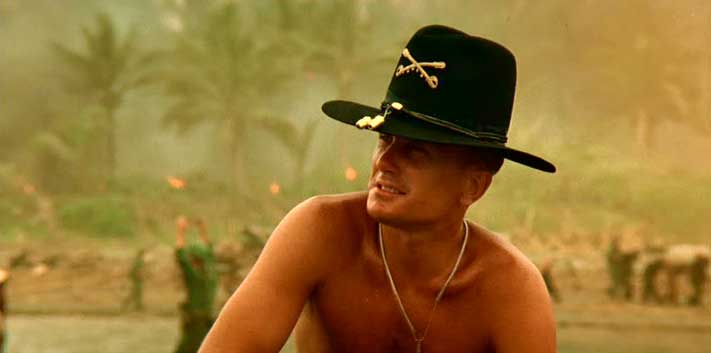
Kilgore: Smell that? You smell that?
Lance: What?
Kilgore: The smell of deflated national vanity, son. Nothing else in the world smells like that. [kneels] I love the smell of deflated national vanity in the morning. You know, one time England lost 4-1 to Germany. When it was all over, I walked around. We didn't find one synthetic England flag up, not one stinkin' England flag up. The smell, you know that smell...Smelled like [sniffing, pondering]... victory...

Labels: ,

Thursday, June 17, 2010

Eamonn McCann and Kevin Ovenden to speak at Marxism 2010

Though this year's Marxism festival in London in July can't promise Terry Eagleton outlining his controversial thesis on the World Cup, it does include critical eyewitnesses to two bloody massacres resulting from modern Western state terrorism - Eamonn McCann, veteran Irish revolutionary socialist and civil rights activist, will speak on 'The Bloody Sunday Inquiry' while Gaza Flotilla-survivor Kevin Ovenden will be participating in a meeting entitled 'Palestine’s fight for freedom'.

Labels: , , ,

Sunday, June 06, 2010

Charlie Brooker on the World Cup

I wish I enjoyed the World Cup, if only for some fleeting sense of common unity with the rest of humankind. But I simply don't get it...What puts me off isn't the game itself, but the accompanying patriotism; or, more specifically, the hollow simulation of patriotism used to hawk products throughout the contest.

Take the current Carlsberg campaign featuring an insanely jingoistic dressing room "pep talk" which blathers on and mindlessly on about national pride. "Know this," the voiceover whispers portentously, "that shirt you're wearing? Your countrymen would give anything to put it on." Really, Carlsberg? I wouldn't put down a sandwich to lift the World Cup, let alone pull a sweat-sodden sports jersey over my head. And would even the most committed fans really do "anything" to wear it? Would they saw their own feet off with a bread knife dipped in cat piss? No. They wouldn't. So stop lying.

Having grossly overestimated the cachet of said hallowed shirt, the ad treats us to a cameo from virtually every notable English sporting hero of the past 50 years, pausing briefly for a patronising moment of silence for Sir Bobby Robson, before depicting an ethereal Bobby Moore, bathed in heavenly light at the top of the tunnel, standing proudly beside a lion. The whole thing plays like a masturbatory dream sequence for Al Murray's Pub Landlord character, the punchline being that the whole thing is a sales pitch for a Danish brewing company. The tagline should be: "Carlsberg: as English as Æbleskiver"...There are other adverts of course: Coca-Cola, Nike, Pepsi-Cola, BP, Blackwater Security, The Tyrell Corporation, Damien Thorn Enterprises and so on. All hitting the same phoney note of concord, all somehow cheapening the fun that millions will extract from the tournament itself...


Encapsulates much more eloquently and accurately what I was trying to argue here

Edited to add: See also Mike Marqusee

Labels: , ,

Sunday, May 30, 2010

Socialists and the 2010 World Cup

Four years ago, in the run up to the 2006 World Cup I produced a brief socialist 'Guide to the World Cup', aimed really for football fans based in England of a left-wing, internationalist persuasion. I still hold to the essential argument I made there - one of 'Anyone But England' amidst the tide of corporate-sponsored English nationalism which seems to find expression in crappy little mass produced St Georges flags that are already reappearing across the landscape. This position seems doubly important given we are now under a new 'national coalition' of Tories and neo-Liberals committed to even more attacks on the working class, and which will no doubt see many attempts by 'Posh and Cleggs' to drap themselves in any success the England team do have - and this is before we come onto the likes of the EDL and their plans for racist rampages up and down the country. Some England supporters might point to the relatively high number of black players in the England team - as a defence - but given the changing forms of racism in Britain today have their cutting edge with Islamophobia - unless the England team were almost entirely Muslim I am not sure this argument carries a great deal of analytical weight. The only slight difficulty with holding such a clear internationalist and quasi-revolutionary defeatist position of 'Anyone But England' it seems to me might arise when England - still symbolic representative of the British Empire - play the symbolic representatives of the American Empire on 12 June - but one should I think still hold firm to a stress on 'the main enemy being at home', and perhaps lie back and think of those rich and powerful overlords who own and run BP and damage their oil spill has done and is doing to the US coastline.

Actually, the 2010 World Cup - set as it is in South Africa - gives English socialist football fans a refreshing choice of skilled and tough African teams to cheer on while they are hoping England crash out, including the likes of the Ivory Coast and Ghana. Some English socialists - readers of the Morning Star perhaps - might also point to the quite remarkable presence of plucky little North Korea in the tournament. However, while it would be great to see a World Cup final in which North Korea knock out the USA, such a clash seems, well, unlikely - and any revolutionary democrat could only celebrate such a result in terms of anti-imperialism - not as any sort of triumph of
socialism
as such.

Moreover, while the location of the World Cup in South Africa serves to highlight the criminal inequality and exploitation still remaining in that country, the history of anti-apartheid struggle allows socialists space to inject some anti-racist history and politics into the proceedings. And here it is only right to pay tribute to the people over at Philosophy Football, for highlighting this hidden history and producing a 'unique commemorative football shirt' honouring the Makana FA, 'the football association which was formed by prisoners on the notorious Robben Island' - one shirt any self-respecting revolutionary socialist of whatever nationality can proudly wear during the coming month or so. The story of Makana FA is perhaps a little reminiscent of the classic footy film 'Escape to Victory', only immeasurably more important and more inspiring because it is true.


Imprisoned because of their opposition to Apartheid, playing football, organising their own league and cup competitions as the Makana FA the game became a symbol and tool of the prisoners refusal to surrender their human dignity to the prison authorities. Yet this FA never had their own strip, now they do.

Labels: , ,

Sunday, February 28, 2010

Invictus

I went to see Clint Eastwood's Invictus the other day. I haven't got a great deal to say about it, and what I do have to say will certainly be way too soft - for a serious Marxist critique see the piece by Louis Proyect - but for someone for whom the 1995 Rugby world cup was a distant schoolboy memory, and at the time almost certainly an event viewed purely as a dramatic sporting spectacle (and I fear, probably if supporting onyone, then supporting the England side of if I remember rightly Will Carling and Jeremy Guscott - these being my 'pre-Marx' days) it was a little enlightening. Moreover, given Michael Moore's new film is going to be bloody hard to track down at the British box office, it ain't a bad film to see (though if you can still catch it, definitely check out A Prophet). The heady mix of race, sport and politics which runs throughout Invictus put me a little in mind of such epics as Escape to Victory, and while perhaps coming close to being a tiny little bit grating in one or two places, its gentle, liberal anti-racist message is timely at a time when fascist parties in Britain are standing on a programme and propagating policies rather akin to those in apartheid South Africa. For a sense of contemporary South Africa, with its grotesque inequalities and poverty, on film, one is much better off seeing a film like Tsotsi, while something of the power and glory of the anti-apartheid liberation struggle is captured in Amandla!.

Labels: , , ,

Monday, February 08, 2010

Free Nelson Mandela


Though I was a little too young to really remember the occasion myself, and indeed my only real connection to the man himself was being part of a mass crowd that welcomed him to Leeds in I think 2004, this week marks the anniversary of the freedom, after captivity for 27 years, of Nelson Mandela who was finally released by South Africa's Apartheid regime on 11 February 1990. This year, the country, which he was democratically elected President of, celebrates 20 years of freedom as well as hosting Africa's first World Cup. Back in the eighties The Specials sang Free Nelson Mandela. The people over at Philosophy Football have produced a timely T-shirt that both celebrates this message that inspired a generation to dance, march and boycott but also South Africa' achievements in its two decades of freedom. Plus the shirt helps raise funds for Action for Southern Africa successor to the Anti-Apartheid Movement - which is nice.

Labels: ,

Thursday, November 19, 2009

Leon Trotsky on sport


In 1925, in Where is Britain going? Leon Trotsky had suggested that any future ‘British Revolution’ will ‘inevitably awaken in the English working class the most unusual passions, which have hitherto been so artificially held down and turned aside, with the aid of social training, the Church, and the press, in the artificial channels of boxing, football, racing, and other sports’. Such an analysis of sport was of course far more sophisticated than the position the official Communist movement were to take subsequently, which went from a crude denunciation of sport as ‘bourgeois’ during the ‘class against class’ Third Period ‘line’ during the late 1920s and early 1930s, and then embracing sport in an uncritical manner during the Popular Front period and thereafter (pick up any copy of the Morning Star to see the residues of this aspect of British Communism). A decade later, in 1935, writing on the French Left, Trotsky lambasted the futility of socialist and trade unions counter-posing worker’s youth organizations in the recreational sphere to providing clear political leadership in the class struggle. ‘In the sphere of philanthropy, amusements, and sports, the bourgeoisie and the Church are incomparably stronger than we are. We cannot tear the working class youth away from them [i.e. away from the bourgeoisie and the Church] except by means of the socialist program and revolutionary action.’ [See Leon Trotsky, On France (New York, 1979), p. 114.] However, it might also be worth remembering that the ‘International Conference of the Youth of the Fourth International’, held in Lausanne on 11 September 1938, declared ‘we demand our right to happiness!’ ‘The duty of the working class is to help create a youth that is strong and capable of throwing all its physical and mental strength into the fight against capitalism’ and so ‘the Bolsheviks-Leninists demand’ among other things ‘free access to all sports fields’ and ‘stadiums’. [See Will Reisner (ed.), Documents of the Fourth International, p. 282.] I'll leave readers of Histomat to draw their own conclusions about Trotsky, orthodox Trotskyism and sport from the above, but for now if anyone reading knows me and is feeling silmulaneously both generous and short of ideas about what to get me for Xmas or anything, then one of the superb new Trotsky T-shirts from the good people over at Philosophy Football (see above) would be more than satisfactory. Failing that, some of the Trotsky, Gramsci or Luxemburg mugs or coffee sets available from Red Stuff would be perfectly acceptable as well. I think I have been suitably subtle about this...

Labels: ,

Tuesday, August 25, 2009

Win a CLR James T-shirt


Those Histomat readers whose interest in cricket has perhaps been slightly lifted of late by the recent Ashes series may be interested to know that the good people over at Philosophy Football recently produced a series of T-shirts, two of which were illustrated with quotes about cricket from legendary socialists Harold Pinter and C.L.R. James (others quoted include John Arlott and the liberal historian GM Trevelyan). The Trinidadian writer James, when he wasn't busy attempting a veritable Copernican Revolution in Marxist theory or labouring to uncover the hidden historic role played by black people in the development of modern civilisation (indeed, The Black Jacobins recently came first in the New Statesman's selection of 'Red Reads: Fifty Books That Will Change Your Life'), worked as a superb cricket correspondent for the Guardian during the 1930s and 1950s and once famously asked, in a nice riff on Rudyard Kipling's 'What should they know of England who only England know?', 'What do they know of cricket who only cricket know?'.

Anyway, if you'd like to be in with a chance to win a T-shirt with that very quote of James's on it, then Philosophy Football have teamed up with Socialist Worker to give you that very opportunity in a competition. The set question is not hard - you don't have to literally try and answer the question 'What do they know of cricket who only cricket know?' or another equally intriguing question, 'What do they know of CLR James who only CLR James know?' But be quick, Histomat readers - you only have till the end of the month...

Labels: , ,

Friday, April 24, 2009

Where are Ipswich Town going?

Or some random thoughts on the further transition of Ipswich Town Football Club from 'gentlemanly capitalism' to military-industrial complex by someone who has long had a soft spot for the club

[Quick warning to those Histomat readers who are not bothered about a Marxist's take on a small English provincial football club in East Anglia - look away now (perhaps go and read Lenin's Tomb or something]

Ipswich Town Football Club rarely makes the news outside of Suffolk, but over the last few days there has been a kind of 'utopian revolution' at the Club which has attracted national attention. A new Chief executive, Simon Clegg, was suddenly appointed by the owner of the club, Marcus Evans, and the next day Jim Magilton, the likeable but ineffectual manager was out and replaced by the 'no-nonsense hard man' Roy Keane. Many Ipswich fans are still in a state of bewilderment - this was definitely a 'revolution from above' - and 'Tractor Roy' may take some getting used to.

When Ipswich was bought by the mysterious Marcus Evans a couple of years ago, I wondered at what might the future hold, given Evans's day job involves presiding over a company which in part organises conferences on 'Delivering Critical and Actionable Information to Assess, Prevent and Respond to Chemical, Biological, Radiological, Nuclear and Explosive Events' and 'ELECTRONIC WARFARE: Enhancing Warfighter Capabilities Through Technology'.

We now also learn that Evans is a supporter of the Liberal Democrats - so a classic modern 'liberal imperialist' then, and the new chief executive Clegg has no previous connection to the game of football - though he was a former major in the parachute regiment. As the BBC note of Evans,

'He has so far done his talking through statements like the one on the club website which is littered with jargon such as "business portfolio" and presenting the club to an "international audience". All that is a far cry from the days when the blue-blooded Cobbold family ruled Portman Road before former Etonian David Sheepshanks took the reins.'

There is something to be said for Keane - my favorite moment in his career was back in 2000 when he lashed out at the way working class Manchester United fans had been priced out of home games to make way for corporate hospitality:

'Some people come to Old Trafford and I don't think they can spell football let alone understand it. As I've said, away from home our fans are what I would call the hardcore fans - but at home they have a few drinks and a prawn sandwich and don't realise what's going on out on the pitch and that's a worry.'


The potential dangers of what the further corporate takeover of Ipswich Town under Evans means are obvious, but the logic of competition in such a highly competitative capitalist industry like modern football means that a smallish club like Ipswich has to either strive to become a club like Manchester United by whatever means necessary or else slowly fade away into obscurity. The fans need to be prepared to fight the prawn sandwich/parachute regiment/electronic warfare brigade as and when. In the meantime we can perhaps savour Ipswich winning matches 3-0 again...

Labels: ,

Friday, August 08, 2008

A Marxist critique of the Olympics

Chris Bambery in this week's Socialist Worker has a critique of the Olympics opening in Beijing, and building on his analysis in Marxism and Sport, a critique of sport more generally. It's all good stuff, though I suspect there are some who will take issue with the way in which he ignores some of the contradictions within sport. For example, he writes that

Sport has been used as a tool of imperialism. Trinidadian Marxist CLR James showed how cricket was used in the British West Indies to disseminate ideas that were central to maintaining colonial rule.

Now this is of course true as far as it goes. Cricket was promoted by colonial officials at the height of the power of the British Empire in order, some of those - like say Lord Harris - doing the promoting, thought, to precisely uphold the values of Empire. Cricket then was tied up with Englishness and Empire during this Victorian period - the 'Golden Age' of the game.

But those who do read CLR James's Beyond a Boundary will of course see something else, that actually the way cricket was organised and structured in colonial Trinidad according to race and class actually meant that sometimes cricket matches took on enormous political significance. Moreover, when the West Indies and other teams like India played England at an international level - particularly once the grip of colonialism was being steadily undermined off the pitch by national liberation movements, cricket matches could help embolden those struggling to build say a new West Indian national consciousness or say Indian national consciousness. Lets quote, (oddly enough for this blog), the former Conservative Prime Minister John Major, in his history of cricket, More Than a Game:

'The Marxist historian C.L.R. James argued that, in the West Indies, cricket had a magic that was a guiding light for the dispossessed and the disenfranchised. From a polar opposite political position, Lord Harris argued that cricket upheld the values of a nineteenth-century empire. From their disparate viewpoints, James and Harris had instincts in common: both believed that cricket touches deep and conflicting emotions, and offers added value to society. They are right. Sport, and cricket specifically, can have a dynamic effect upon a community, and can spring from the very core of a nation.'

Now today, of course, things are slightly different again. The enemy of cricket now is less imperialism - though like racism, until the socialist revolution, that will sadly always be one factor shaping the game - but rather the enemy is capital and corporate power in particular. David Renton writes about this particular threat here. Renton is also author of a new biography CLR James: Cricket's Philosopher King, and if anyone wants to hear someone who knows far more than me discuss what James might have made of cricket today, then he will be speaking at the Salford Working Class Movement Library on 4 October at 2pm.

Labels: ,

Sunday, May 04, 2008

In the Blue House

'Come on you blues!' the text from a former housemate and fellow Ipswich Town Football Club supporter said.

'Yes, indeed. Bring it.' I replied. Today was the day of our big match with Hull City FC - we needed to win to have a fighting chance of getting into the playoffs and so into the Premiership.

And then I remembered something. The ex-housemate was a bit of a Tory boy - indeed I think he now works in The City doing something. I don't know exactly what he does in The City, but I get the distinct impression it involves enriching himself massively at the expense of the proletariat in some way or another. I decided to send him another text.

'PS. I hope you were referring to itfc and not to david cameron's tories...'

'Ken had to go, brown is a disaster. Cameron is the only viable alternative and will be the next pm like it or not'.

I didn't bother replying. Ipswich did indeed manage to beat Hull, but failed to qualify for the playoffs, and so are destined to remain in the Championship for another season. Its probably for the best, but at the moment it just adds to what is turning out to be a pretty dismal weekend.

I have often noticed this - ones own personal and political hopes and dreams are often mirrored by the destiny of the football club one supports - when they seems to be winning, things seem to be going well and vice versa. I am sure if I spent time tracking this in terms of the recent history of the SWP and Ipswich Town FC for example I could find some sort of pattern. Noone can deny for example that thirty years ago in 1978, just after the original and awesome Rock Against Racism Carnival in London, which starred The Clash, Ipswich Town went on to win the FA Cup.

I know some would argue that surely things like this are matters of coincidence, and I am aware as a Marxist there can be no rational explanation, but the fact remains.

Before my more materialist readers desert this blog forever, however, I will just link to another interesting post over at Reading the Maps on EP Thompson and one aspect of 'the making of The Making of the English Working Class'. It doesn't make for that cheery reading either, but this probably isn't really the best place to come for that at the moment.

Labels: , ,

Thursday, April 17, 2008

Socialist seminars and conferences

Those near London might be interested in the following:

The London Socialist Historians Group are holding the following seminars at the Institute of Historical Research, Senate House, Malet Street.

Monday April 21st, 5.30pm, Stan Newens, 'No Bombs and No Bosses: CND and the Left 50 years on.'
Monday May 12th, 5.30pm, Mike Marqusee; David Renton, Andrew Smith, 'The View from Beyond the Boundary. The Left and cricket.'
Monday May 19th, 5.30pm, Gerd Rainer-Horn, '1968 40 Years on: a European Perspective.'
Monday June 3rd, 5.30pm, Ellen Ramsay, 'Moncure D.Conway (1832-1907): Rationalism, and the Abolition of Slavery.'

There is of course also also this conference on 1968 in London on Saturday May 10th, and then Marxism 2008 in London in July.

Incidently, those near Canada might also consider attending the Historical Materialism conference at Toronto from 24-26 April - see here

Labels: , , ,

Wednesday, October 31, 2007

Ipswich Town Enter the Dragon's Den

The news that Ipswich Town has been sold off to one very rich capitalist, Marcus Evans, deserves some comment. Granted, there are probably more important things for Marxist bloggers to be writing about (the growing anger of US and UK troops sent to Iraq and Afghanistan, Gordon Brown's clampdown on migrant workers, the march of India's landless on Dehli etc etc) but this site never pretended to be Lenin's Tomb...

Anyway, Ipswich Town FC, who are currently 4th in 'the Championship' (the old 'second division' of English football) have been taken over by a guy who according to his website owns a company which hosts conferences for, among other people, arms manufacturers:

'The marcus evans Defense division is a leader in strategic and innovative forums utilized by the world’s most influential defense officials. Our elite events attract high-quality speakers composed of allied militaries and defense related industry. Through strong governmental relationships, marcus evans Defense maintains the highest standards of quality and service in research, technology and product development. This commitment to service and quality is the basis for our reputation as the world's leading provider of unique and informative events.'

Who could be more suitable to own a provincial football club in rural Suffolk than someone who helps organises conferences on 'Delivering Critical and Actionable Information to Assess, Prevent and Respond to Chemical, Biological, Radiological, Nuclear and Explosive Events' and 'ELECTRONIC WARFARE: Enhancing Warfighter Capabilities Through Technology' I hear you ask...

As the current Chairman, David Sheepshanks, notes 'Marcus Evans' investment is potentially great news for Ipswich Town.' Sheepshanks's assessment seems to me to be appropriate. It is potentially good news for the club in terms of boosting its chances of promotion into the Premiership and then perhaps more critically, the chances of us staying in the Premiership should we qualify.

Indeed, given football is now big business, arguably such takeovers are a fact of life and should be recognised as such even by Marxists. Capitalism is a system based on competition and the drive for profit and this leads to what Marx called 'the concentration and centralisation of capital'. Obviously in the football business, the drive for profits is masked by the fact that in sport, anything can happen on the pitch and indeed one joy of the thing is when a small underdog triumphs over a mighty team full of expensive players. Yet these things have a way of playing out over the course of a season and success on the pitch is in part related to how much a team has to spend on players. Nor should we romanticise the old set up of football ownership just because clubs like Ipswich were once owned by local gentleman capitalists rather than the boss of a multinational corporation. I wrote something about supermarkets on this blog last year in a similar vein here.

Yet if it is pointless pretending Ipswich Town Football Club was once a rural peasant commune, there are clear and present dangers in handing control of a football club over to one rich individual. They will want a quick return on their money, and in general football fans, because loyalty to the brand of a football club is often based on emotion and tribal instincts rather than rationality, are perhaps easier to exploit in this regard by unscrupulous owners than the average consumer. [Obviously while Ipswich Town supporters have an emotional attachment for the club their decision to support Ipswich as opposed to say, Norwich, is also a decision rooted in rationality] It is too early to make a call on Ipswich's future, but it may well mean job cuts at the club, and a situation where managers (and players) are given less time to impress before being told where to go while fans face ticket price rises etc etc. Ipswich Town has entered the Dragon's Den as it were...

Speaking of 'Enter the Dragon', wasn't Bruce Lee a legend? I watched the film 'Dragon: The Bruce Lee Story' a week ago - and now I want to know more about Lee's interest in Hegel - if any readers have any thoughts about Lee's Hegelianism or more info that would be grand...

Labels: