Histomat: Adventures in Historical Materialism

'Historical materialism is the theory of the proletarian revolution.' Georg Lukács

Monday, March 28, 2016

Marxism and History


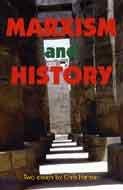
The two classic essays by Chris Harman collected together in the very useful volume Marxism and History (1998) are now both freely available online at the Marxist Internet Archive - the 1986 essay Base and Superstructure (which drew comments in response from Colin Barker, Alex Callinicos and Duncan Hallas - you can also listen to a debate on the topic here) - and the 1989 essay From feudalism to capitalism . Those interested in further discussions of Marxism and History might also like to check out these two conferences coming up in London in late June / early July - 'Radical Histories' and 'Marxism 2016'.

Labels: , , , , ,

Tuesday, June 30, 2015

Marxism 2015 - Ideas for Revolution

Marxism 2015: Ideas for revolution
A five day political festival: 9-13 July 2015, Central London
www.marxismfestival.org.uk
Book up - Just over one week to go!
New meeting: Tackling the Racist Offensive
Sat 11th July, 7pm
Marxism Festival is very pleased to announce that Diane Abbott MP will speak alongside Sabby Dhalu and Weyman Bennett (Joint Secretaries of Unite Against Fascism, pc) at this new meeting at Marxism.
Meetings on Greece at Marxism 2015
The crisis in Greece poses sharp questions for the left.
Don’t miss our special debate:
Syriza in power: Whither Greece?
With Stathis Kouvelakis (Syriza Central Committee) and Alex Callinicos (SWP)
Sat 11th July, 2pm 
Plus
  • Greece: keeping the hope for change alive
With Panos Garganas (SEK)
Sunday 12 July, 2pm
  • The fight against Golden Dawn in Greece
With Petros Constantinou (Athens Councillor and co-ordinator of the Movement Against Racism and the Fascist Threat) and Kostas Papadakis (part of the legal team representing the victims of Nazi attacks at the trial of Golden Dawn)
Saturday 11th July, 11.45am
  • Fighting the Troika and austerity across Europe
Maria Styllou from Greece will peak alongside Richard Boyd Barrett from Ireland and Christine Buccholz from Germany
Sunday 12th July, 3.45pm
Plus Panos Garganas will join the Marxism opening rally on Thurs 9th July at 7pm

Other meetings at Marxism 2015
  • After Kobane and the general election: where now for Turkey and the Kurds
 Ron Marguilies will be joined by HDP MP Sebahat Tuncel
Sat 11th July, 7pm (the time of this meeting may change – please check our website)
  • Orgreave: the search for the truth
Gareth Peirce and Mike McColgan from the Orgreave Truth and Justice Campaign
Sun 12th July, 3.45pm
  • The story behind Pride
With Nicola Field and Gethin Roberts, original members of LGSM
Sun 12th July, 7pm.
And if you missed Pride at the cinemas there is chance to watch the film afterwards.
  • Darcus Howe, broadcaster and civil liberties campaigner discusses his political life with his biographers Robin Bunce and Paul Field

The final timetable for Marxism 2015 will be on line from tomorrow . . . to book tickets and for more information go to www.marxismfestival.org.uk or call us on 020 7819 1190

Labels: , , , , , , , , , , ,

Friday, May 08, 2015

La Lutte Continue


After the generally disastrous general election, the struggle continues...

Labels: , , , , , , , , , ,

Monday, February 23, 2015

Where is Syriza going?

From Panagiotis Sotiris via Alex Callinicos:

First major negative reaction against the Eurogroup agreement from inside SYRIZA comes from Manolis Glezos, Member or European Parliament of SYRIZA, and a living legend of the Resistance against fascism (in 1941 along with Lakis Santas they took down the German flag from the Acropolis)
Here is a rough translation of his statement

Statement by Manolis Glezos

Before it is too late
The fact that the Troika has been renamed ‘the institutions’, the Memorendum has been renamed the ‘Agreement’ and the Creditors have been renamed the ‘Partners’, in the same manner as baptizing meat as fish, does not change the previous situation.
And you can’t change the vote of the Greek People at the January 25 election.
The Greek people voted what SYRIZA promised: that we abolish the regime of austerity that is the strategy of not only the oligarchies of Germany and the other creditor countries but also of the Greek oligarchy; that we abrogate the Memoranda and the Troika and all the austerity legislation; That the next day with one law we abolish the Troika and its consequences.
A month has passed and this promise has yet to become action.
It is a pity indeed
From my part I APOLOGIZE to the Greeκ people for having assisted this illusion
Before the wrong direction continues
Before it is too late, let’s react
Above all the members, the friends and supporters of SYRIZA, in urgent meetings at all levels of the organization have to decide if they accept this situation
Some people say that in an agreement you must also make some concessions. By principle between the oppressor and the oppressed there can be no compromise, as there can be no compromise between the slave and the conqueror; Freedom is the only solution
But even if accept this absurdity, the concessions that have already been made by the previous pro-memoranda government with unemployment, poverty and suicide, are beyond any limit of concession...
Manolis Glezos, Brussels 22-2-2015

Labels: , , , , ,

Monday, January 26, 2015

Revolutionaries and 'workers' governments'

The very nature of bourgeois government excludes the possibility of socialist class struggle. It’s not that we fear for socialists the dangers and the difficulties of ministerial activity; we must not back away from any danger or difficulty attached to the post in which the interests of the proletariat place us. But a ministry is not, in general, a field of action for a party of the struggle of the proletarian classes. 
 The character of a bourgeois government isn’t determined by the personal character of its members, but by its organic function in bourgeois society. The government of the modern state is essentially an organisation of class domination, the regular functioning of which is one of the conditions of existence of the class state. With the entry of a socialist into the government, and class domination continuing to exist, the bourgeois government doesn’t transform itself into a socialist government, but a socialist transforms himself into a bourgeois minister. 
 The social reforms that a minister who is a friend of the workers can realise have nothing, in themselves, of socialism; they are socialist only insofar as they are obtained through class struggle. But coming from a minister, social reforms can’t have the character of the proletarian class, but solely the character of the bourgeois class, for the minister, by the post he occupies, attaches himself to that class by all the functions of a bourgeois, militarist government. 
 While in parliament, or on the municipal council, we obtain useful reforms by combating the bourgeois government; while occupying a ministerial post we arrive at the same reforms by supporting the bourgeois state. The entry of a socialist into a bourgeois government is not, as is thought, a partial conquest of the bourgeois state by the socialists, but a partial conquest of the socialist party by the bourgeois state... 
 Within bourgeois society the role of social democracy [the socialist movement] as an opposition party is prescribed by its very essence. It can come forward as a ruling party only on the ruins of the bourgeois state
Rosa Luxemburg, 1899.

Although a left government cannot steer a path to socialism, revolutionaries are not indifferent as to whether such a government comes to power. Even though the bourgeoisie has only retreated from the front-line positions and still retains control of the economy and the state, immense possibilities can be opened up.


In both France and Italy, the entry into government of both communists and socialists for the first time since the late 1940s would lead to increased confidence and perhaps, militancy of the workers movement. To this extent the election of a left government provides the possibility of a major advance of the workers’ movement; if the masses take advantage of the temporary confusion of the bourgeoisie. But the advance is not inevitable, the government will be attempting to stabilise the situation, and the bourgeoisie will be regrouping. If the workers fall into the delusion that they have taken power, rather than crossed the first barrier, if, in other words, they rely on the government rather than their own activity, then their advance will be limited to reforms which can be clawed back by a resurgent bourgeoisie.
Hence the all-important paradox: the advent of a left government will only strengthen the workers’ movement inasmuch as the class, or at least its vanguard, do not have illusions in this government. The more independent and strong the workers’ movement is, the more reforms it will force from the government. The more it relies on its own forms of organisation, the more the way is open to a fundamental change in the balance of power between the workers and their allies and the bourgeoisie. But the more it is tied to the structures of state power, the greater is the possibility of bourgeois reaction.
This means that the role of revolutionaries is not to enter such a government ‘in order to accentuate the contradictions within it’, for to do this is to precisely tie the workers to the bourgeoisie.
Rather the job of revolutionaries is to break the illusions that the workers have in a ‘left’ government— and that means taking up all the partial limited struggles of workers, generalising them and leading them even if they conflict with the strategy of the government. In short, it is to organise a left opposition to the government, seeking to replace the reliance on the state with the self-organisation of workers.
Of course, tactically there are times when the revolutionary left defends the left government or perhaps particular measures; when it is open to attack from the right and the bourgeoisie trying to regain positions it has lost. But this should never obscure the fundamental positions that the revolutionary party has to adopt: the strategy of developing working class forms of power, which by definition will conflict with the bourgeois state power still in existence, in order to overthrow the government from the left and replace it with a workers state.
Otherwise, revolutionaries can find themselves in the same situation the Chilean left found itself in occasionally-appearing to defend unpopular governmental decisions against movements of the workers and petty bourgeoisie, so allowing the forces of the right to manipulate those movements.
Chris Harman and Tim Potter, 'The workers' government', SWP International Discussion Bulletin, No.4, 1977 - see also  Paul Blackledge, 'Left Reformism, the state and the problem of socialist politics today', International Socialism, 139 (2013)

Labels: , , , , , ,

Sunday, January 25, 2015

Stathis Kouvelakis on international solidarity with Greece

Greece has a very rich tradition of social struggle. What differentiates solidarity with Greece from previous forms of solidarity is that now it is not about expressing solidarity with countries that are geographically very far away and have major differences in terms of social structure and level of development...Greece is a periphery, if you like, but it is the periphery of Europe. Political processes happening in Greece have an expansive capacity, which is far superior and more direct in this part of world than the Latin American ones, because the Greek crisis is part of the bigger crisis of European capitalism. And Europe, despite its current position — which is very different from the position it held in the past — is still one of the major centers of the world capitalist system... What we need is some form of a new international, something more solid in terms of an international network. Without being megalomaniac, or hellenocentric, I think that with a Syriza government, Athens can become a center for political processes at a European and international level. What is needed in the case of a Syriza government would be a major political gathering in Athens — not just to support Syriza but to seriously discuss and to go beyond what we have now in terms of political tools, which is not much ...essentially what is necessary is to connect the fragmented forces of the radical left in each country and make progress on strategic and programmatic issues...
Read the full interview with Kouvelakis - a leading Syriza member - here, see also this eyewitness piece from Greece in the run up to the elections which features interviews with members of Antarsya

Labels: , , , , ,

Sunday, January 04, 2015

Panos Garganas on the looming struggles in Greece

As the Greek government falls, how can workers win?

Labels: , , , ,

Friday, October 24, 2014

How Capitalism Survives: Historical Materialism Conference 2014 in London

Conference Poster
How Capitalism Survives - Eleventh Annual Historical Materialism London Conference - 6-9 November 2014 - Vernon Square, Central London provisional programme available and registration open.

Labels: , , ,

Tuesday, March 04, 2014

New Book: C.L.R. James in Imperial Britain

Out now as part of the C.L.R. James Archives series with Duke University Press:


C.L.R. James in Imperial Britain by Christian Høgsbjerg
C. L. R. James in Imperial Britain chronicles the life and work of the Trinidadian intellectual and writer C. L. R. James during his first extended stay in Britain, from 1932 to 1938. It reveals the radicalizing effect of this critical period on James's intellectual and political trajectory. During this time, James turned from liberal humanism to revolutionary socialism. Rejecting the "imperial Britishness" he had absorbed growing up in a crown colony in the British West Indies, he became a leading anticolonial activist and Pan-Africanist thinker. Christian Høgsbjerg reconstructs the circumstances and milieus in which James wrote works including his magisterial study The Black Jacobins. First published in 1938, James's examination of the dynamics of anticolonial revolution in Haiti continues to influence scholarship on Atlantic slavery and abolition. Høgsbjerg contends that during the Depression C. L. R. James advanced public understanding of the African diaspora and emerged as one of the most significant and creative revolutionary Marxists in Britain.

Read the introduction here

Endorsements

"Christian Høgsbjerg's book is going to make a very significant impact on the community of C. L. R. James scholars and beyond. Høgsbjerg has thoroughly combed the key archival sources to generate a comprehensive, lively, and insightful portrait of James's intellectual and political life during his first sojourn in Britain. In doing so, he has filled in many key details and fleshed out many important events in James's life in Britain."
Paget Henry, co-editor of C. L. R. James's Caribbean and editor of the C.L.R. James Journal

"When C. L. R. James left Trinidad for England in 1932, it was a kind of homecoming: A connoisseur of cricket, immersed in the works of Shakespeare and Thackeray almost from birth, James was the consummate Afro-Saxon intellectual long before setting foot in London. In C. L. R. James in Imperial Britain, Christian Høgsbjerg follows him into the meeting halls and radical bookstores, the cricket grounds and bohemian haunts, where this displaced 'Victorian with the rebel seed' emerged as a leading figure in the Trotskyist and Pan-Africanist movements. The fusion of insight with command of factual detail sets the new standard by which serious work on C. L. R. James must be judged."
Scott McLemee, editor of C. L. R. James on the "Negro Question" and the forthcoming The Dialectics of State Capitalism: Writings on Marxist Theory by C.L.R. James

Reviews

''C.L.R. James in Imperial Britain opens up the issue of the Third World struggle in an elegant and memorable way''
'C.L.R. James: Back in Style, Black in Style' by Paul Buhle, authorised biographer of C.L.R. James, author of C.L.R. James: The Artist as Revolutionary

"The excellence of this book by Christian Høgsbjerg on CLR James's first sojourn in Britain between 1932 and 1938 is signalled by the drama of its cover photograph.  Wearing a very English raincoat, the Trinidadian writer and militant is pictured addressing a mid-1930s meeting in Trafalgar Square.
    By 1938 Special Branch had judged James to be a fluent speaker, very well versed in the doctrines of Karl Marx and other revolutionary writers.
    Shortly after arriving in England he moved in with his old friend and compatriot, the cricketer Learie Constantine, and was a powerful advocate of West Indian self-government.  But his elite colonial schooling at Trinidad's Queen's Royal College and a literary apprenticeship in Port of Spain had certainly not made him a Marxist.
    Steeped in English literature - he told me in a 1982 interview that he had read Thackeray's Vanity Fair ten times before he was nine years old -  Høgsbjerg explains that in his early Trinidad days James had been a devotee of English Victorian cultural prophets like Matthew Arnold, with all his sweetness and light.
   Yet within a few months of staying with Constantine in the insurgent Lancashire cotton-weaving town of Nelson, where his host was a Lancashire League professional cricketer, he had become so involved in and influenced by the struggles of the "Red Nelson" working class - which he allied with black struggles all over the imperialist world - that, as he declared, "literature was vanishing from my consciousness and politics was substituting itself."   Høgsbjerg tells of this process of transformation with a compelling narrative vibrancy.
  In subsequent chapters he tells the story of James's involvement both in the apparently contradictory worlds - yet not so if you were James - of cricket reporting for the Manchester Guardian and Glasgow Herald and active solidarity with world anti-imperialist and Pan-Africanist processes.
   This was provoked by a reunion with his old Trinidadian school friend George Padmore who had written the pathfinding Life and Struggles of the Negro Toilers in 1931.  In 1937, as part of his solidarity work for the Ethiopian people after Mussolini's fascist invasion, he helped set up the African Bureau for the Defence of African and People of African Descent in London.
     Another engrossing chapter is that which tells of James's Paris-based research for, and the writing of The Black Jacobins, his history of the Haitian Revolution of 1791.  Its forerunner, the play about its leader Toussaint l'Ouverture with Paul Robeson as the protagonist, was performed in London's West End in 1936.
     Høgsbjerg has produced an invaluable addition to both British and Caribbean labour scholarship and has written it in such an accessible way that its stirring and provocative narrative ought to inspire thought and action.''
Chris Searle, 'A scion of black consciousness', Morning Star, 26 May 2014.

"Høgsbjerg discusses [James's] publications in various ways but it is the intellectual and social movement context the author brings to these works, which continue to animate critical minds today, that makes the reader pause and delight''
Matthew Quest, Insurgent Notes

''This impressively researched, well-written and accessible book demonstrates that James's time in Britain was a period of fertile intellectual growth for this inspirational writer and activist''
Brian Richardson, Socialist Review, June 2014.

''Just out from Duke University Press's C.L.R. JAMES ARCHIVES series is this important new book from Christian Hogsbjerg. Christian's first volume in this series was an edition of the original script of James's play Toussaint Louverture: The Story of the Only Successful Slave Revolt in History. This new book is the first to offer a full examination of James's years in England following his departure from Trinidad in 1932. In the few short years between his arrival in England and his departure for the United States, James published Minty Alley, The Case for West Indian Self-Government, World Revolution, A History of Negro Revolt and  Black Jacobins, all while keeping up work as a cricket writer and participating in the work of the African Service Bureau, International Friends of Abyssinia, and others. These years are vital for understanding James's evolution as a thinker and revolutionary, indispensable for understanding the work that he would do in the United States.''
Aldon Lynn Nielsen, author of C.L.R. James: A Critical Introduction

''One of the most impressively researched biographies of a prominent radical to appear in recent memory ... Anyone with an interest in black protest, literary London, and/or left politics in the 1930s will enjoy this smart, factually grounded yet thematically rich biographical study''.
Kent Worcester, 'Renegades and Castaways', New Politics (Summer 2014)

''Høgsbjerg has made a major contribution through his reconstruction of James’s life and times in imperial Britain. Recovering James’s ventures into radical bookshops such as Lahr’s, his time spent in Nelson and Bloomsbury, his touring Britain as a cricket reporter, and much more, Høgsbjerg does a supreme job of reconstructing the historical geography of a distinct, and distinctly radical, life. In this sense, his book is an example to geographers, historians or other radical intellectuals pursuing the study of previously neglected biographies.''
Daniel Whittall, Antipode (August 2014)

"One of the book’s greatest assets is the way it manages a remarkable density of information. Refusing to succumb to the temptation of showing a single, linear narrative of James, Høgsbjerg uses the most diverse sources to illuminate the man’s different facets. His James is a witty thinker, spectacular orator, gifted organizer, cricket lover, and a politics addict. Indeed, these different traits exist side by side, develop over time, and contribute to shaping James’s trajectory....  He illuminates James as an actor who participated in and influenced contemporaneous debates about how Marxism and Trotskyism could provide answers to fighting colonial rule and the rise of Fascism.... CLR James in Imperial Britain is a valuable contribution to the field of James studies. It illuminates the early phases of Afro-Caribbean anticolonial activism in Britain and the development of anticolonial Marxism. Simultaneously, it tells the story of a remarkable beginning and shaping of much of C.L.R. James’s thought".
Itay Lotem, Twentieth Century British History (November 2014). 


Book Launches
Thursday 27 March, 7.30pm, Nelson Library, Lancashire.
Supported by North East Lancs TUC and Preston Black History Group.

Friday 11 July at Marxism 2014, central London 

Edited to add: Check out this film about CLR James's life in 1930s Britain

Labels: , , , , , , , , , , ,

Thursday, December 19, 2013

Capdown: Henryk Grossman and capitalist downfall

Capdown - Time For Change EP (1999)Capdown - Act You Rage (Single) (2003)

'Marxists cannot develop revolutionary theory in the 21st century without, in the process, returning to the ‘hidden from history’ debates which took place between Frederick Engels’ death and the rise of Stalinism. [Henryk] Grossman is an important part of our heritage, alongside other participants in those debates such as Luxemburg, Bukharin, Isaac Rubin, Pavel Maksakovsky, Roman Rosdolsky, and even the reformists Hilferding and Bauer.'
So noted Chris Harman in 2007, in a review praising Rick Kuhn's biography of Henryk Grossman, Henryk Grossman and the Recovery of Marxism.

The Tories are currently busy heralding the very mildest signs of limited economic growth as 'recovery' from the current great recession , but as the Marxist economist Michael Roberts notes, this is in large part down to a 'credit-fuelled property and financial asset boom' based in large part on a mini 'credit bubble' based around housing (anyone getting any sense of deja vu here?). 

Few people did more work on uncovering the crisis tendencies of the system than Karl Marx, and one of the most important Marxist economists in defending Marx's stress on the importance of looking at the underlying tendency of the rate of profitability to fall to see the roots of economic crisis was Henryk Grossman. 

Marxists, particularly Marxist economists, are therefore indebted to the continuing work of the team around Rick Kuhn who are in the process of translating for the first time the great corpus of Grossman's work into English from four languages over four forthcoming volumes (a taste of the first volume can be found in an essay ‘The Change in the Original Plan for Marx’s "Capital" and Its Causes' [an essay by Henryk Grossman]in the latest Historical Materialism journal, but available online in an earlier form here, with a contextualising introduction by Kuhn available here. Readers of Histomat who are interested in economic theory will also appreciate Grossman's essay ‘Fifty years of struggle over Marxism, 1883-1932’, about which Kuhn has again written a valuable contextual piece, bringing discussions around Marxist economics up to the present day.

Labels: , , ,

Thursday, April 11, 2013

International Socialism # 138 out now

Cover of issue 138
 The full contents are well worth a browse and are available here, but highlights at first glance include Sheila McGregor on 'Marxism and women's oppression today', which includes a defence of Engels's writings on this issue, and a series of essays on the state of the class struggles in Europe, including pieces by Catarina Príncipe on Portugal and Thanasis Kampagianni on Greece.  There are also a host of other pieces, including a discussion between Henry Bernstein and Joseph Choonara about agriculture, class and capitalism, and a kind of debate between Ian Birchall and John Rose about Lenin, Paul Levi and revolutionary strategy and tactics.  There is also a review of Donny Gluckstein's A People's History of the Second World War, a work which has already stirred up considerable debate online elsewhere.

Edited to add: The ISJ during the 1980s carried a number of interesting pieces on Thatcher - for example,  Sue Clegg on 'Thatcher and the Welfare State', while for discussions of 'Thatcherism', see Alex Callinicos.

Labels: , , , , ,

Thursday, March 14, 2013

Alexis Tsipras speaking in London

PUBLIC TALK ON FRIDAY 15 MARCH BY
-ALEXIS TSIPRAS-
INTRODUCED BY TONY BENN

SYRIZA London invites you to attend a public talk by the Leader of the Greek Opposition and head of the SYRIZA-USF parliamentary group, Alexis Tsipras, on Friday 15 March 2013, from 18:30 to 20:30 at Friends’ House, 173-177 Euston Rd, London NW1 2BJ.

Further details for the event and SYRIZA London:

We kindly ask for a voluntary contribution of £3 towards the costs of hiring the hall.

Edited to add: For more background on SYRIZA, see this recent piece on 'Greece, Politics and Marxist Strategy' by Thanasis Kampagiannis, who notes of SYRIZA 'it is now widely accepted that the Left of the party has little influence on its political trajectory, while it would be accurate to say that in SYRIZA’s economic think-tank the Left’s influence is nil. The main task of the party is now to prove its “ability to govern”, a strategy that has been pursued through trips by Tsipras to Latin America to meet with Lula (Brazil) and Kirchner (Argentina), a meeting with German Finance Minister Wolfgang Schäuble and most recently a trip to the USA to court the IMF and liberal think-tanks (including the Brookings Institution)...

Labels: , , ,

Sunday, February 03, 2013

New Book: Arms and the People


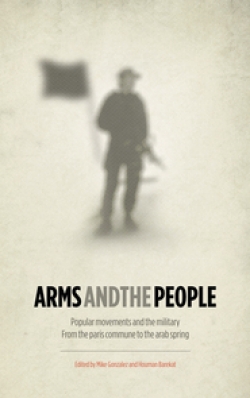
Mike Gonzalez & Houman Barekat (eds.), Arms & the People: Popular Movements & the Military from the Paris Commune to the Arab Spring
Pluto Press, 292pp, £17.50, ISBN 9780745332970

Looking at a range of global historical experiences, Arms and the People examines the relationship between mass movements and military institutions. Some argue that it is impossible to achieve and protect a revolution without the support of the army, but how can the support of the army be won?

Arms and the People explores the impact of profound social polarisation on the internal cohesion of the state’s ‘armed bodies of men’ and on the contested loyalties of soldiers. The different contributors examine a series of historical moments in which a crisis in the military institution has reflected a deeper social crisis which has penetrated that institution and threatened to disable it.

With a range of international contributors who have either studied or been directly involved in such social upheavals, Arms and the People is a pioneering contribution to the study of revolutionary change and will appeal to students and academics in history, politics and sociology.

'A most revealing study of some of the most dramatic moments of modern history, from the people in arms in the Paris Commune to today’s headlines. Often beaten back but even then leaving a legacy of achievement and understanding to carry the struggle forward.'
Noam Chomsky

 Read a review by Ian Birchall here

and also one by Estelle Cooch here

Labels: , , , ,

Sunday, January 13, 2013

International Socialism # 137

Internationalism seems to be the theme of the new ISJ (full contents here), with Phil Marfleet writing on the latest stages of the Egyptian Revolution, an interview with Pete Alexander about the Marikana massacre of mineworkers in the new neo-liberal ANC led South Africa, Mike Gonzalez on politics in Latin America which once again hang in the balance given Chavez's illness, as well as other pieces including Jane Hardy on 'new divisions of labour in the global economy. There are also other treats, including Alex Callinicos's review of Neil Davidson's epic work on bourgeois revolution, a piece on how the German Left failed to stop the rise of Hitler's Nazis to power 80 years ago this month, as well as Ian Birchall on Ed Miliband's new hero, the 'One Nation' Tory Benjamin Disraeli.

Labels: , , , , ,

Thursday, October 11, 2012

International Socialism # 136

The new issue of International Socialism is now online, and includes Alex Callinicos, Alexander Anievas, Adam Fabry and Robert Knox on Obama, his foreign policy record and the upcoming US election, Panos Garganas and Richard Seymour on Greece, Donny Gluckstein on what real democracy looks like, Nicola Ginsburgh on Owen Jones's Chavs, Paul Blackledge on autonomist theorist John Holloway, Esme Choonara and Yuri Prasad on the crisis of black political leadership in Britain exposed by the 2011 riots, and Laura Vooke on the impact of the crisis on the working class in Britain, as well as other material on for example, debates in political economy, Paul Levi and the Bradford riots of 2001.

Labels: , , , , ,

Monday, April 09, 2012

Guest post: Elaine Hirsch on Karl Polanyi and Haute Finance

[This blog is open to guest posts (contact histomat@hotmail.co.uk but prepare to be very patient), and Elaine Hirsch (elainehi86@gmail.com) has got in touch with a timely post about Karl Polanyi, author of among other works The Great Transformation (for more on Polanyi see the recent work of Gareth Dale - reviewed here) and Polanyi's theories about how "haute finance" is subordinating society.]
Haute Finance and the Post-Financial Crisis Economy
Elaine Hirsch

In the first half of the 20th century, philosopher/economist Karl Polanyi began charting economic progress and financial growth since the Industrial Age, especially focused on the laissez faire market conditions of the early 1900s and the impact they had on the world. It seemed to Polanyi that a mysterious, international force had developed during this time, an intangible yet powerful institution that called no single organization or government home, but existed more in the minds and emotions of financiers or investors across the first world. This system subordinated traditional society in the name of financial and economic growth, a process which Polanyi viewed as backwards. He called this force haute finance(high finance), a name that stuck through the ages.
So much for economic history. But haute finance began to take on a new meaning in a much closer era – the vibrant and often over-optimistic markets seen in the 1990s (perhaps stretching back to the 50s) and 2000s. While Polanyi's haute finance mechanisms was ended via the Great Depression and second World War, this new period of haute finance came crashing down through the financial crisis of 2007. Although this has resulted in growing attention in accredited MBA programs in sustainability, the vast majority of the “haute finance” mindset remains unchanged, leaving the world to wonder: If haute finance keeps failing, is it really such a valuable institution?

World Peace
Polanyi felt haute finance was a primary force for peace, since it focused primarily on financial gain across the board. Because war imbalanced financial gain and disrupted the status quo of the day, he believed the haute finance would always work against war and promote equality. Unfortunately, the lengthy wars of the 20th and 21st centuries, even after Polanyi's work was published, counter this particular argument. War with certain countries has become less likely through trade and greater financial reliance, but if this is haute finance it has proved a fickle creature, focusing only on markets with the most immediate benefit (Brazil, China, India…) and leaving other markets to fend for themselves or suffer (Iran, Iraq, Cuba…).
The start of the 21st century, with its move toward online trading and international corporations, punctured a hole in the haute finance theory. Looking back, we see that Polanyi's hopeful "Balance of Power" existed only on the sides that had financial power. Far from being ultimately flexible, haute finance conditions proved ultimately rigid. The dot-com bust and real estate market collapse in the 2000s proved that: a full-on pursuit of wealth creates problems, not peace.

All for One…
This "permanent" and "most elastic" agency of haute finance also begins to falter when looking at the investment markets leading up to the Great Recession. Analysts noted the rise of several major firms during this time period, including Lehman Brothers, Ernst & Young, Merrill Lynch, and others. They were haute finance in motion, nearly as tangible as an intangible force can get. But the drive to wealth, and concentrated wealth at that, served the purpose of no nation, no company, and in the end no individual. Lehman Brother's crashed to the dirt with its blindness and over-reliance on real estate. Other firms barely survived through mergers and bailouts. Corporations proved how greedy they were, and how that greed kept little peace and encouraged no stability.
The post-crisis market was left reeling from decades of an haute finance mentality, raising key criticism: Does the haute finance mechanism ever work, or should it always be looked at with suspicion? Free market capitalism is a discussion for the Ayn Rand battlefields, but here the overarching spirit and attitude are the key factor. Should the United States attempt to change its financial zeitgeist? Will this help avoid or diminish inevitable market cycles? As business becomes more global and a new haute finance oligarchy forms, perhaps a look to the past will serve as a useful reminder of what happens with too much wealth obsession.

Labels: , ,

Wednesday, April 04, 2012

Capitalism Kills - Kill Capitalism

“[Greek] Pensions have been cut by around a quarter since the crisis first hit in 2008. And the government has pledged to cut pensions further this summer. This is what causes the levels of desperation that have led to this latest suicide. People are forced to rely on their families if they can. There has been a huge increase in those turning to the churches for food. Even the United Nations now describes the situation in Greece as a humanitarian crisis.”
Panos Garganas on the recent suicide of a Greek pensioner

“Don’t let capitalism kill us!”
—protest outside the Greek embassy in London, 6pm, Thursday 5 April, at Greek Embassy, 1A Holland Park, W11 3TP

Labels: , ,

Thursday, December 08, 2011

Roundtable on the Eurozone crisis

BREAKING UP? A ROUTE OUT OF THE EUROZONE CRISIS

Friday 9 December, 2011
Doors open at 6 pm; the panel will begin at 6.30 pm
Brunei Gallery Theatre, SOAS , WC1H 0XG

Join us for a timely and urgently needed discussion over the future of
the eurozone, the possibility of exit, and what it will all mean for
the people of Europe . Bringing together leading economists, political
scientists and financial journalists, the discussion will play a
critical role in setting the terms of the debate for the tumultuous
period that lies ahead.

The panel includes:
- Costas Lapavitsas, professor, department of economics, SOAS, and
lead author of a series of groundbreaking reports on the eurozone
crisis from the Research on Money and Finance network.
- George Irvin professor, department of development studies, SOAS, and
author of 'Super Rich: the Growth of Inequality in Britain and the
United States '.
- Paul Mason, BBC economics editor and author of 'Meltdown: The End of
the Age of Greed'.
- Stathis Kouvelakis, reader in political theory, King's College London.
The panel will be chaired by Seamus Milne, associate editor at The
Guardian.

Please register your participation (see link below or visit the RMF
website) and arrive as early as possible.

Read the latest RMF report on the eurozone crisis: www.researchonmoneyandfinance.org
Register: https://docs.google.com/a/soas.ac.uk/spreadsheet/viewform?hl=en_US&formkey=dDRpWjBGaXNhTmxyb3lLUUFQdnRvcmc6MA

Labels: , ,

Wednesday, September 14, 2011

Stuart Hall on the state of neo-liberalism in Britain

An interesting piece, though it perhaps ignores some of the contradictions currently ensuring the Coalition government - with its unpopular agenda of cuts and privatisation - is currently incredibly weak. What is perhaps missing in particular is the most profound contradiction, one with the potential to undermine the neo-liberal economic agenda - the growing signs of a rising arc of class struggle in Britain and internationally - which offers the best hope of resisting not only the Tories but also any attempt to make neo-liberalism 'hegemonic'.

Labels: , ,

Wednesday, June 08, 2011

John Molyneux on the rising tide of revolution

An examination of this year’s revolutions, their significance and how they compare to patterns of revolt through history...

Labels: , , ,