Histomat: Adventures in Historical Materialism

'Historical materialism is the theory of the proletarian revolution.' Georg Lukács

Tuesday, June 30, 2015

Marxism 2015 - Ideas for Revolution

Marxism 2015: Ideas for revolution
A five day political festival: 9-13 July 2015, Central London
www.marxismfestival.org.uk
Book up - Just over one week to go!
New meeting: Tackling the Racist Offensive
Sat 11th July, 7pm
Marxism Festival is very pleased to announce that Diane Abbott MP will speak alongside Sabby Dhalu and Weyman Bennett (Joint Secretaries of Unite Against Fascism, pc) at this new meeting at Marxism.
Meetings on Greece at Marxism 2015
The crisis in Greece poses sharp questions for the left.
Don’t miss our special debate:
Syriza in power: Whither Greece?
With Stathis Kouvelakis (Syriza Central Committee) and Alex Callinicos (SWP)
Sat 11th July, 2pm 
Plus
  • Greece: keeping the hope for change alive
With Panos Garganas (SEK)
Sunday 12 July, 2pm
  • The fight against Golden Dawn in Greece
With Petros Constantinou (Athens Councillor and co-ordinator of the Movement Against Racism and the Fascist Threat) and Kostas Papadakis (part of the legal team representing the victims of Nazi attacks at the trial of Golden Dawn)
Saturday 11th July, 11.45am
  • Fighting the Troika and austerity across Europe
Maria Styllou from Greece will peak alongside Richard Boyd Barrett from Ireland and Christine Buccholz from Germany
Sunday 12th July, 3.45pm
Plus Panos Garganas will join the Marxism opening rally on Thurs 9th July at 7pm

Other meetings at Marxism 2015
  • After Kobane and the general election: where now for Turkey and the Kurds
 Ron Marguilies will be joined by HDP MP Sebahat Tuncel
Sat 11th July, 7pm (the time of this meeting may change – please check our website)
  • Orgreave: the search for the truth
Gareth Peirce and Mike McColgan from the Orgreave Truth and Justice Campaign
Sun 12th July, 3.45pm
  • The story behind Pride
With Nicola Field and Gethin Roberts, original members of LGSM
Sun 12th July, 7pm.
And if you missed Pride at the cinemas there is chance to watch the film afterwards.
  • Darcus Howe, broadcaster and civil liberties campaigner discusses his political life with his biographers Robin Bunce and Paul Field

The final timetable for Marxism 2015 will be on line from tomorrow . . . to book tickets and for more information go to www.marxismfestival.org.uk or call us on 020 7819 1190

Labels: , , , , , , , , , , ,

Sunday, February 08, 2015

Tim Sanders on Charlie Hebdo

The point of satire is to attack the powerful, to expose their hypocrisy and absurdity, and of course to be funny. If satire is directed downwards it is not satire, it’s bullying.
British socialist cartoonist Tim Sanders on satire on the latest Socialist Review

Labels: , , , , , ,

Friday, February 06, 2015

Defend victimised PCS rep Candy Udwin

No to privatisation at the National Gallery - sign the petition to reinstate victimised PCS rep Candy Udwin

Labels: , , ,

Thursday, March 20, 2014

Phil Evans - revolutionary cartoonist

Phil Evans on the Police...

...the Nazis...

...on Enoch Powell...

...and wider racism...

Karl Marx

...Phil Evans on the Labour Party and socialism...

...on Socialist Worker...

On alternatives resulting from the capitalist crisis

The man who decided to redefine socialism

(Apart from the last, which contrary to popular belief and malicious rumour was not drawn with Richard Seymour in mind, all images from Steve Irons (ed.) The Joke Works: The Political Cartoons of Phil Evans (London: Socialist Worker, 1982).)

The passing of the brilliant socialist cartoonist Phil Evans (1946-2014) attracted much less attention than that of Tony Benn and Bob Crow, probably because for the last twenty years or so of his life he had not really been engaged with the political Left and so he had kind of slipped out of view.  But his work from the 1960s until the 1980s Evans won a reputation on the Left as one of the best socialist cartoonists in Britain - and as the cartoons above hopefully show, he was able to wonderfully satirise everyone ranging from  fascists and racists on the right to the limitations of the reformist Left.  As Kent Worcester noted back in 2009 in The Comics Journal, 'Phil Evans is one of the most compelling visual satirists to comment on British politics in the past half-century. His career gives new meaning to the phrase “underrated.” His pen-and-ink drawings mainly appeared in SWP periodicals, most notably the weekly Socialist Worker. But they also turned up in numerous U.K. trade union publications in the seventies and eighties. His work was at one time highly regarded among labor movement activists, but invisible even then to many fans of English political cartooning. For American readers, the only plausible point of entry into Evans’ work would have been Trotsky for Beginners, published in 1980, with text by Tariq Ali, or Marx’s Kapital for Beginners, published two years later with text by David Smith'.  

In The Joke Works, a collection of his cartoons from 1982,  Evans described how he first came to draw his first political cartoons from 1965 onwards, aged 19 as a student at Leeds College of Art, and what he was trying to do with cartooning.

'At Leeds I founded - and was the secretary of - the Socialist Society, an alliance of different political groups, ranging from the Labour Party to the Communist Party to the sectarian Socialist Labour League.  I was never attracted to the CP because of the lessons of history: history is marvellous because it has (as Trotsky says) 'great irony'.  In 1956, no-one had to point out the connections between Hungary and Suez, because they happened silmultaneously.  History put them together.  More importantly for me, history put the invasion of Czechoslovakia and the height of the Vietnam War together (January-June 1968).  When I was nineteen, I started to draw political cartoons and design posters and leaflets.  One of the first posters I made was "Smash Imperialism East and West".  It was of a burning tank and was critical of both the imperialism of America in Vietnam and the imperialism of Russia in Czechoslovakia....

When I was younger I wanted to be an oil painter, a portraitist.  More recently I realised that to be a cartoonist is just as difficult - more difficult perhaps - because you have to get your hands dirty in the political fight.  I have always been interested in propaganda - I've always felt that if you're good at something then why not try to make a point with it?  A little pamphlet, with cartoons, on the struggle of a tiny group of ordinary seamen against their right-wing union leaders, or textile workers against a sweatshop employer, is more important than the cracks on the face of an important diplomat or princess.'

At some point in the 1980s, as Worcester notes, Evans parted company with the SWP, but his vast output for the socialist left - including the Our Norman cartoon strips about the life of a every day factory worker ('Norman') and his life and thoughts on the world around him remain an inspiration.  Worcester's descriptions of the Our Norman series really sum up what was critical about Evans's 1970s political cartooning at its best: 

'The cartoon tells its story from inside the labor process, from an explicitly blue collar point of view. Most editorial cartoonists see “politics” as something that concerns politicians and other prominent individuals, as something practiced in legislative chambers and presidential debates. Evans starts from the assumption that the experience of work itself is a fundamentally political question...What distinguishes Phil Evans’ 1970s-era cartooning is its remarkable confidence in the forward march of the masses. His work from that period anticipated a time when a confident and united working class could seize the levers of power.'

As Roger Huddle, who worked with Evans in the SWP printshop during the 1970s, recalled, 'Norman was every worker, someone ducking and diving though the trials of work in a factory. He got one over on the bosses, kept up his union dues and took great pride in outwitting the foreman. How Phil maintained the excellence of this series was his commitment to the workers’ struggle.'   Workers in struggle today - together with other socialists - can still learn much from the wit and wisdom of Phil Evans - who, like Tony Benn, made a tremendous contribution to powerfully and memorably communicating socialist ideas to a wide, popular audience.

Edited to add: Phil Evans obituary in the Guardian and this comment by Roger Protz plus:
David Widgery on Phil Evans (1981) 

Edited to also add: Kent Worcester's obituary of Phil Evans in New Politics 

Labels: , , ,

Thursday, January 09, 2014

Leon Kuhn - revolutionary socialist cartoonist

Today is the day of Leon Kuhn's funeral - and while I was not able to be there there is a wonderful obituary of this fine political cartoonist in this week's Socialist Worker, giving a good sense of his all too short life and tremendous work.  Many of his campaigning posters, such as the famous one of (the now financially as well as intellectually and morally bankrupt) British Nazi Party fuhrer Nick Griffin became classics, and by way of paying tribute to his memory and pointing people towards the fight to kick the British Nazis out of the European parliament this May I will republish his portrayal of Griffin below on Histomat.  RIP Leon.

  (Pic: http://www.leonkuhn.org.uk/» Leon Kuhn )


Labels: , ,

Saturday, February 02, 2013

Maya Deren - The Divine Horsemen: The Living Gods of Haiti


If you have an hour free and are interested in Haitian history and culture, this film is well worth a watch.  

Labels: , , ,

Sunday, April 03, 2011

Mike Rosen on Interculturalism

With David Cameron's words on multiculturalism still reverberating round the gutters, now's a good time to take a second look at the word "culture".

The two main overlapping ways the word is used in everyday conversation are: (a) to cover artistic products we consume - plays, films, books, paintings and the like - and (b) to talk of "the way we do things in our everyday lives" - our kinship relations, what we eat, what kinds of dwellings, rituals, music, gestures we make and, significantly, what language(s), dialect(s) and accent(s) we speak with.

Underlying many discussions about the second usage is the notion that there is a "host" culture which is distinct, unified, ancient, virtuous and desirable and there are "other" cultures which at best are "interesting" or "lively" but should be made to "integrate" or be "assimilated".

As Marxists, we might reshape that and talk of a "dominant" or "hegemonic" culture and of "non-dominant" or "sub-cultures". Either way, this has its problems, because it presents cultures as if they are discrete, self-contained chunks. From the right, there has been an effort to claim some kind of pure English or British "way of life" or "set of values" which is "indigenous". Meanwhile, on our side, we quite rightly celebrate multicultural "diversity" and "minority cultures", claiming this as a form of cultural resistance. I think we have to go further and celebrate "interculturalism" - which is ultimately part of internationalism...

Read the rest of the article from this month's Socialist Review

Labels: , , , ,

Saturday, January 22, 2011

John Molyneux on the politics of culture

The classical Marxist position, defended by Lenin and Trotsky, was that the best of bourgeois, and all past, culture should not be rejected by the working class but, as far as possible under capitalism, be assimilated by it, and taken over and preserved under socialism. As Trotsky put it in Class and Art Shakespeare will still speak to us when, ‘Capital will have become merely an historical document, together with the program of our party. But at present we do not yet intend to put Shakespeare, Byron, Pushkin in the archives, and we will continue to recommend them to the workers’. The healing of the split in culture, the achievement of a diverse but unified classless culture, would however be possible only in a classless socialist society.

To this standpoint, which I share, I would make two additions. Changed conditions in the last century have made it possible for some elements in popular culture, coming up from below, to achieve the quality, intensity and complexity associated with the best of high culture. This happens mainly in music, the art form closest to the people, but sometimes in other forms as well. My personal nominations would include Billie Holiday, John Coltrane, Shane McGowan, Charlie Chaplin and Tracey Emin.

Also every major people’s movement develops, as it were, its cultural wing and accompaniment. The Irish national struggle is an obvious example with WB Yeats, Jack Yeats, Synge, O’Casey etc. But think also of the black movement in the US with Paul Robeson, Miles Davis, Archie Shepp, Richard Wright, James Baldwin, Nina Simone and many others, or the Russian Revolution with Mayakovsky, Tatlin, Malevitch, Rodchenko, Eisenstein, Vertov and so on. This has a necessary and positive role to play in helping to bring social change and needs to be encouraged by socialists, not to replace or dispense with traditional art or ‘high culture’ but in addition to it.

Full article here, while those who want to read more of Molyneux on culture should read his reflections on Adorno on Beckett, plus I guess his blog more generally.

Labels: , , ,

Sunday, September 27, 2009

Classical Marxism in the Blogosphere

While this blog of late has struggled to remain as exciting as watching Ipswich Town under Roy Keane playing football, it is good to know that there is still some excellent Marxist blogging out there going on - and not just from the usual suspect. Check out - if you have not done so already - for example, John Molyneux write On Shakespeare, Money and Power and Michaelangelo and Human Emancipation, while Chris Harman's blog is also well worth a look...

Labels: , ,

Sunday, May 18, 2008

Thought for the day

Labels:

Saturday, March 15, 2008

John Molyneux on Marxism and Art

[I hope John Molyneux won't mind, but a recent introductory article on Marxism and Art on his blog deserves a wider readership, and so I will republish it on Histomat, with a few pictures to hopefully make the thing more aesthetically pleasing. There is also a good short introduction to why revolutionary socialists need to organise to build revolutionary parties by John Molyneux in the latest SW - online here]

What Marxism has to say about art (by which I mean all the creative arts i.e. music, literature, painting, sculpture, photography, film, drama, dance and so on) is limited but important.

It is limited in that Marxism does not offer, and should not try to offer, any prescriptions or instructions as to how artists should make their art. There is no 'Marxist' way to write poetry, or paint, or play the trumpet or compose symphonies, any more than there is a Marxist method of mechanical engineering, playing chess or doing the high jump. (Marx himself wrote some poetry when he was young, but it wasn’t very good and he soon gave it up). Marxism does not require that artists tackle certain themes e.g. class, war or revolution, rather than others such as sex, dreams or religion, or even that art be overtly political or committed.

Nor does Marxism provide a set of ready made political or ideological criteria for the evaluation of art. Mao Ze Dong was a poet as well as leader of the Chinese Revolution , but his merits as a poet are not determined by his merits or lack of them as a revolutionary or ruler of China. A Marxist who argues that T.S. Eliot was a bad poet because he was a reactionary (he was very reactionary) or that Diego Rivera was a greater painter than Picasso because he was more left wing, is not being a Marxist in his or her approach to art. Marx (and Engels) preferred the reactionary pro-aristocratic novelist, Balzac, to the progressive Zola, because he thought Balzac was a better writer who provided a fuller and more insightful picture of French society. The standpoint of Marxism, as Trotsky insisted in his debates over literature and art with the Stalinists, requires that art be judged as art.

What Marxism does do, however, is provide: a) a unique appreciation and understanding of the overall importance of art in individual and collective human development; b) the best analytical method for grasping the course of art and cultural history as a whole; c) an extremely useful standpoint for the analysis of the meaning and significance of individual works of art.

None of the great Marxists ever suggested that either individual works of art or art in general played a key role in determining the outbreak or outcome of revolutions. Nonetheless, they all took a serious interest in art and clearly felt informed and sustained by it. In this respect art seems to operate in a manner closer to medicine or nutritious food than to political action. Also the fact that art has existed in every known society in the history of the world reinforces the case for its social necessity. Marxism enables us to understand this.

For Marxism, creative labour is the essence of becoming and being human. Human beings are animals who have made themselves into more than animals through labour, 'by producing their means of subsistence' as The German Ideology puts it (see also Engels, The Role of Labour in the Transition from Ape to Man). Through labour humans shape their environment, their history and themselves.

However, in class divided society, and especially in capitalist society, most people most of the time are deprived of the possibility of creative labour. Their labour is alienated: they do not control it, and are forced to perform it not for themselves but at the behest of others and it becomes something that damages and distorts their lives. Art is the name we give to one of the few forms of creative labour, i.e. labour controlled by the producer (revolutionary practice is another) that is possible in class society. This makes genuine truthful communication of ideas and emotions possible in art in a way that is not possible in completely mercenary entertainment, journalism and advertising. And this is why art is important to us as human beings and Marxists even when that art is ideologically conservative and even though the art world and the cultural industries are dominated by the ruling class.

Indeed it is a central proposition of Marxist art history that the class which controls the major means of material production will also fundamentally dominate artistic production. For Marxism approaches art history on the basis of historical materialism which sees art, along with religion, philosophy, politics and law, as part of the superstructure of society which rests on, and is conditioned by, the economic base constituted by the forces and relations of production.

Of course the relations between economic development, class and art are not to be understood mechanically – they are complex and highly mediated – but denying or disregarding them as in the numerous bourgeois schools of formalist art and literary criticism makes it impossible to grasp the overall movement of cultural history or major developments within it.


Breughal's Landscape with the Fall of Icarus (c. 1558)

For example, why was the art of the European Middle Ages so (relatively) static, formalised and unchanging? Because it reflected the (relatively) slow development of the forces of production under feudalism and their accompaniment by a rigid social hierarchy resting on frozen relations of production. What generated the spectacular artistic and cultural upsurge of the Renaissance that began in Florence at the end of the thirteenth century (with Dante and Giotto), culminated in Italy with Leonardo, Michelangelo and Titian and then spread north through Germany, the Netherlands and England, encompassing such giant figures as Durer, Breughal, Rembrandt and Shakespeare? The historical materialist will answer that it was a reflection of the rise, at first within the fetters of feudalism and then breaking through in its own right, of the dynamic but contradictory system of capitalism and of the class associated with it, namely the bourgeoisie.

How do we explain why the stately procession of artistic phases (Renaissance, Baroque, Rococo, Neo-Classical, Romantic) measured in centuries and half centuries, suddenly gave way to the frenzy of modernism in which art movements (impressionism, expressionism, fauvism cubism, futurism, suprematism, dadaism etc) came and went almost in the blink of an eye, except as a response to the 'constant revolutionising of production' and 'uninterrupted disturbance of all social conditions' imposed by modern capitalism.

Can the succession of blues, jazz, rhythm and blues, soul, hip hop etc, and therefore the whole course of modern popular music from Elvis Presley to Amy Winehouse be understood apart from the freedom struggle of Black America?

Even where individual works and individual artists are concerned Marxism offers unique insights. In his great book Ways of Seeing John Berger used the Marxist critique of capitalist social relations to produce superb accounts of Holbein’s The Ambassadors and Dutch still-life paintings. Neither Charlie Chaplin’s film Modern Times nor Samuel Beckett’s Waiting for Godot can be understood without a grasp of Marx’s theory of alienation. In Seoul eighteen months ago I saw the Korean artist, Nam June Paik’s great pagoda of TV monitors The More the Better. It cried out for analysis using the concepts of Trotsky’s theory of combined and uneven development.


Holbein's The Ambassadors (1533)

No amount of Marxism can substitute for specific knowledge of, and sensitivity to, the art concerned. But art is part of society and evolves in constant interaction with society. The richest, most profound and most scientific analysis of society, which is Marxism, cannot fail to enrich our understanding of art.

Labels: ,

Saturday, April 28, 2007

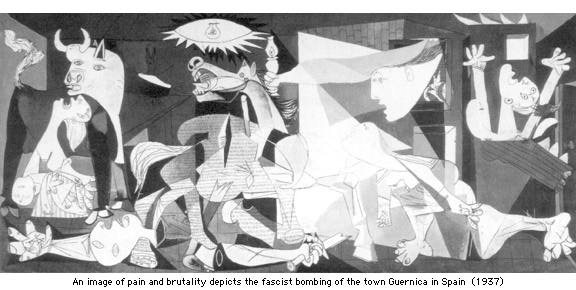
Guernica


Seventy years ago today, during the Spanish Civil War, Franco's fascist forces firebombed the village of Guernica, prompting the painter Pablo Picasso to paint his finest work by way of an damning indictment. Mike Gonzalez has an article about the continuing power of the painting in Socialist Worker, while there is also an article about the current controversy of the painting's location in the Guardian. On the subject of the Spanish Civil War, I should probably also highlight this year's London Socialist Historians Group Brian Manning Memorial Lecture, which is on Saturday 19th May in London, and by Reiner Tosstorff: 'Case closed: The Assassination of Andreu Nin, the Persecution of the POUM and its Background.'

Labels: , , ,

Saturday, April 21, 2007

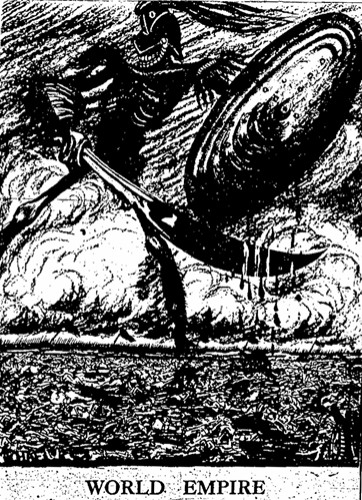
The face of Imperialism


From The Communist (CPGB), January 27, 1923.

Labels: ,

Wednesday, October 25, 2006

Propaganda posters

I hadn't seen these before, but I can wholeheartedly recommend them. Also check out the site of cartoonist Tim Sanders.

Labels:

Friday, March 10, 2006

Gordon Parks, 1912-2006


Malcolm X, photographed by Gordon Parks, 1963.

As well as directing the pioneering black film Shaft, Gordon Parks was a legendary photographer for LIFE magasine among other things. There is an interesting site with lots of his photos here, with comments about the featured photos. It also includes some biographical details. 'At 16, Parks found himself homeless and did everything he could do make money, from waiting tables to playing piano in a brothel to mopping floors. As Parks tells it, his first foray into photography came after he found a magazine left behind by a passenger on a train. A portfolio inside the magazine, documenting the terrible living conditions of migrant workers inspired Parks to buy his first camera, a Voightlander Brilliant, at a pawnshop in Seattle. "I bought what was to become my weapon against poverty and racism"'

Once established, Parks 'worked tirelessly and singlemindedly, and from the Forties through the Seventies he covered the major themes of each decade for LIFE magazine: social injustice, overwhelming poverty in the U.S. as well as in Brazil and Portugal, gang violence, the civil rights movement, and segregation in the Deep South. Though Parks's awareness of race, racism and hatred is a constant thread found through much of his work, this theme was juxtaposed early on with his expanding talent as a fashion photographer for Vogue, where he covered the Paris shows for several years. "The camera is not meant to just show misery," Parks says. "You can show beauty with it; you can do a lot of things. You can show things you like about the universe, things you hate about the universe. It's capable of doing both."'

Labels: , , ,

Saturday, March 04, 2006

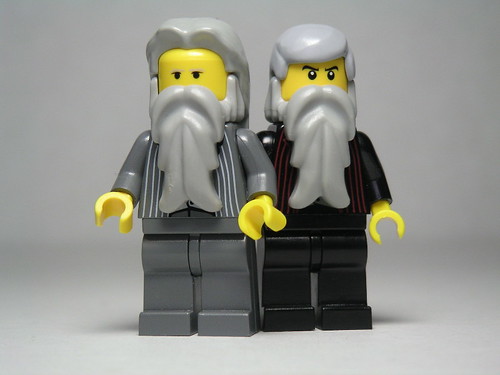
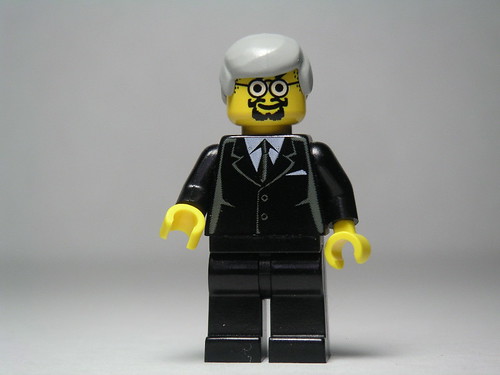
Lego Communists.

While there may well be something rotten in the state of Denmark, Lego Communists are not it. This is what blogs were made for:


Karl Marx and Frederick Engels


Vladimir Lenin


Leon Trotsky

Massive respect to Minifig for telling me about these. More Lego stuff here

Labels: ,

Tuesday, December 13, 2005

A poem for Geoff Hoon

Parents when a child is born
Wish it to be intelligent.
I through intelligence
Having ruined my whole life
Wish the boy to be both ignorant and stupid.
Then he can crown a tranquil existence
By becoming a Cabinet Minister.

(Ancient Chinese poem)

Labels: ,

Thursday, December 08, 2005

Pinter smashes the mirror

'When we look into a mirror we think the image that confronts us is accurate. But move a millimetre and the image changes. We are actually looking at a never-ending range of reflections. But sometimes a writer has to smash the mirror - for it is on the other side of that mirror that the truth stares at us.'

From Pinter's Nobel acceptance speech, 'Art, truth and politics', here.

Labels: , ,

Tuesday, October 18, 2005

Robert Capa.


Just watched a facinating documentary 'Robert Capa: In Love and War' about Robert Capa (1913-1954), possibly the most famous war photographer of the twentieth century - but someone I have only just found out about. He made his name with this powerful photograph above of exiled Leon Trotsky lecturing to an audience of Danish Social Democratic students in Copenhagen in 1932 on the fifteenth anniversary of the October Revolution in Russia. A few months later Hitler's Nazis took power - and Capa, a Hungarian Jew who grew up in Germany, chose to leave there. He became an intransigent anti-fascist, and went into journalism in order to fight fascism. When the Spanish Revolution erupted in 1936 against Franco, Capa - aged only 23 remember - went to cover the conflict. He later exposed the horrors of the Second World War, again braving fire from fascists. After the war, he lived in America but got bored of Tinseltown - calling Hollywood 'the biggest load of shit I ever stepped in'. He left to cover more international conflicts - and died covering the French war against Vietnam in 1954.

Labels: ,