Histomat: Adventures in Historical Materialism

'Historical materialism is the theory of the proletarian revolution.' Georg Lukács

Sunday, November 02, 2014

1640: The First English Revolution


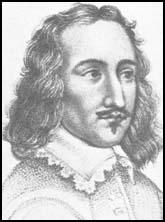
John Lilburne - calling for a spiritual revolution in England about 350 years before Russell Brand...

Russell Brand may have played his part in helping the word 'revolution' return to a degree of fashionability recently, but even in sleepy England revolutionary ideas have not simply been widely circulated long before him, but have actually been put into practice.   That Norah Carlin's pamphlet on 1640, The First English Revolution (1983) is now online is therefore most timely - for those wanting more on the historiography of revolution in England, see her earlier analysis of Marxism and the English Civil War.

Edited to add: The John Lilburne 400 anniversary conference

Labels: , , ,

Sunday, September 28, 2014

1,000 Stand Up to UKIP in Doncaster

One bit of good news on an otherwise quite depressing weekend - the importance of building anti-racist organisations like Stand Up to UKIP cannot be overstated as the UKIP bandwagon continues to roll on, taking the rest of mainstream official politics in Britain even further to the right...

Labels: , , ,

Sunday, September 14, 2014

Vote Yes - Make Britain History


Ruling classes rarely like mass popular participation in any kind of political activity - it smells too much of real, direct democracy for them.  So news that 97% have registered to vote in the Scottish referendum is terrifying the British ruling class, raising as it does the all too real spectre of a 'Yes' vote for independence that not once of them had conceived as being possible just a month or so ago.  Now in desperation, David Cameron is urging ordinary people in England and Wales to engage with this political process and 'love bomb' Scots through social media etc to try and persuade them to do what he and his fellow politicians from the 'Better Together' campaign could not do - and vote to 'stay together', and so while I have not said anything really about Scottish independence to date I thought as a blogger I should now also say something about this question.   So this is for my thousands of Scottish readers, who have doubtless been patiently waiting and wondering to see what my thoughts on this question were before they arrived at their final position...

For Marxists, the question of Scottish independence is not an issue of principle (that needs to be raised at all times and in all places) but rather a tactical question - but in the current period and climate the case for agitating for a Yes Vote seems to be a no-brainer for any anti-imperialist, let alone a Marxist.  One only needs to see the unholy alliance of forces opposed to the break up of the British state - from the rulers of the American and Chinese empires, to champions of British imperialism old and new, to see why the majority of revolutionary socialists in Scotland have thrown themselves into the 'Yes' campaign, and they have played a small but significant role in making the rallying cry 'Another Scotland is Possible' one which has tapped into working class communities and ethnic minorities.  Just watching one of Tommy Sheridan's speeches for independence on You Tube - speeches which have attracted audiences of hundreds of people - gives a sense of the mood of hope and optimism in radical politics being fired up by the referendum.  What has been propelling the mass movement and campaign for Yes has been these aspirations of dreams long deferred among millions.

The chance to deliver a body blow to British imperial power by the closing of the Trident nuclear submarine base at Faslane is in itself reason enough to vote Yes - but a Yes vote would also throw Cameron's Tories into chaos and further infighting and have many other repercussions and reverberations that are impossible to predict as yet.  Though in itself, a Yes vote for Scottish independence cannot be the end of the story, given Alex Salmond and the SNP's cosy relationship with Scottish big business, NATO and the British Crown, such a vote on 18 September would enable the Left in Scotland to begin to make the kind of demands - such as nationalisation of banks and energy companies - that would make the idealism of 'Another Scotland is Possible' into reality - and find a mass popular audience for such a radical vision for the first time in decades.  This would give hope to trade unionists and socialists in England and Wales in the wider fight against austerity and the likes of Tories and UKIP.   So my 'love-bomb' to Scottish readers of Histomat goes something like this:  Yes to Independence, No to Nationalism - Fight for Socialism!

Edited to add - in the aftermath of the No vote, an analysis of the vote and where next by Keir McKechnie and Charlie Kimber - see also this piece by Irvine Welsh.

Labels: , , , ,

Friday, March 14, 2014

Tony Benn on the radical and revolutionary tradition in Britain

Tony Benn 1925-2014 - an inspirational socialist and the finest orator I ever had the privilege of hearing

This book explores the radical and revolutionary tradition which we have inherited from those who went before us and established, here in our country, a set of values based on the ideas of freedom, equality and democracy to set against the prevailing political culture. This culture, which rests on the worship of authority and the elevation of personal privilege above the common good, is so strongly entrenched in the mass media and the educational system that the very fact that an alternative tradition has been in existence for centuries is simply not known to many people...

What is that rival tradition and that rival analysis? Where does it come from and on what does it depend for its authority and support? This reader sets out to provide some of the answers to those questions, and to do so through the minds, pens and voices of the people who created that tradition for themselves, and for us.

We are so used to the idea that Britain is an industrialized country and, overall, among the richest in the world, that it is easy to forget our past. For most of our history we were, like so many of the Third World countries today, a peasant society dominated by a feudal hierarchy which owned the land and lived off the people. Thus the roots of our radicalism lie in peasant resistance, and many of the demands for revolutionary change, recorded here, are the same as those that we hear and read about today in Asia, Africa and Latin America. For example, the theme of 'liberation from the Norman yoke' shows us people opposing the invaders and the oppression they brought. That resistance was based on the denial of the legitimacy of a Crown, which derives its legal claim to the throne from the Conquest, when William I, having defeated Harold at Hastings, proclaimed his personal authority... Such feelings, together with a distrust of the power of the landowners, bishops and lawyers who sustained that Norman oppression, fuelled radical and revolutionary movements long before trade-unionism and socialism appeared on the scene to reinforce those emotions with a scientific analysis of the role of class.

At the very beginning it was religious belief that provided the basis of opposition to the oppressors, and there are many references to the revolutionary message of the Bible. This is why the authorities would not allow the Bible to be made available in English, so that the people could read it freely until 1535. The Establishment feared that the same liberation theology - which today brings peasants, industrial workers, trade-unionists and socialists together in Latin America as they struggle for justice - might have united resistance to its authority.

The most basic feeling of all, and the one that could never be suppressed, was the idea of inherent rights, which recurs throughout this book. It derives originally from the belief that God, as the creator of all humanity, had implanted those rights in each man and woman as His gift, and that no person, however rich or powerful, had any moral or legal right to take them away. This is why radicals and dissenters, and many in the Labour Movement today, have always put the claims of conscience above the law, and have been quite ready to pay a personal price for doing so.

As the years passed, religious belief was supplemented, or replaced, by a more secular view of history. These inherent rights were restated in terms of reason, a humanist view that in the transition lost none of its ethical force, although it had been stripped of its theological significance. The concept has come to be expressed in terms of the rights of a freeborn Englishman, or the rights of the Scots, Irish or Welsh, of Women and of Blacks, to enjoy equality of treatment under the law. Yet the political battles that have been fought over the centuries were for the most part fought under the banners of religion and religious freedom. So it is important that we should remember that many of the ideas of solidarity, democracy, tolerance, equality and socialism owe their origin to the Old Testament and the teachings of the carpenter of Nazareth, as they were interpreted by those who were looking for some justification for their own struggles. Modern socialists should never forget that fact, lest we accidentally cut ourselves off from our own history and come to believe what our enemies say of us: that we are proponents of some foreign creed which has no roots in our own national history.

Indeed this is one reason why the Establishment historians ignore our real history. They fear that if it was made intelligible to the mass of the people we would quickly connect past with present, and draw great strength from that understanding. And so indeed we would, as we come to realize that we are engaged on a campaign for justice and freedom that has gone on, in varying forms, for nearly two thousand years. It is not, as the Establishment would have people believe, only a few trouble-makers, perhaps owing their allegiance to some foreign revolutionaries, who are pressing for change.

This, then, is the moral and historical basis for that alternative political tradition, and we only have to read a few of the passages to find ourselves immediately familiar with the arguments. For those who have not read them before, it is rather like meeting distant cousins for the first time, exploring the common relationship and exchanging family legends, so that, quite soon, total strangers begin to feel at ease with each other, and can almost imagine that they have known each other all along. But this personal selection also opens up direct communication between generations that will reawaken in us some of the anger experienced by those who have gone before and help fuel the present pressure for change, accelerating the process of reform here and now.
What is written here should not just be read as a collection of historical writings. It should allow us to use the past to serve the present; by making us familiar with the old battles to harden us for what may lie ahead, and to unite us with all people everywhere who are struggling for the same objectives and are using their own history to help them—a history that may turn out to be much like ours. In short this is a book for our times to give us knowledge that we can use, to provide hope and courage and, above all, the certainty that we are not alone in what we believe.

If we are to use this book, as it is intended to be used, we have to do a lot more than read it. For we are living at a time when the clock is being deliberately put back in order to cheat us of the gains that were won in earlier years. Unless we resist there is no guarantee that this skilful campaign of regression will not succeed. The attempt to restore Victorian values is only a beginning. It may help us to learn about the struggles that took place in Victorian times so that we can mobilize the forces for progress that achieved so much during that century, and laid the foundation for the advances that followed. We can call up Robert Owen, Charles Kingsley and Anna Wheeler, William Morris and H. M. Hyndman, Marx and Engels, the Chartists and the Tolpuddle martyrs together with all their progressive contemporaries, to reinforce us as we gird our loins to fight these old battles again. If they want to go back to the eighteenth century and resurrect the blind conservatism of Edmund Burke we have Tom Paine and his Rights of Man still at our disposal. Now that the divine right of Prime Ministers is being wheeled out, almost as Charles I would have argued it in the seventeenth century, we have John Lilburne and William Walwyn and the Levellers and Diggers in our camp.

In 1983 the Greenham Common women were gaoled under the Justices of the Peace Act of 1361, and if that is how they want to have it they should not forget that twenty years later Wat Tyler and John Ball marched across the bridge to occupy the City of London. Whichever century they choose to fight us in we have our champions too. Nor should we ever forget Pelagius—Britain's earliest and greatest heretic, who challenged St Augustine on the central question of original sin. He asserted the essential goodness of man, an idea that undermined the authority of the Papacy and anticipated by 1,800 years the socialists who argued the same case.

Some of the passages quoted here are explicitly revolutionary and we should not forget that the right to revolt is an ancient one that must always be held in reserve as a protection against the possibility that one day democracy and self-government might be removed, leaving us no alternative but to defend these rights by force. At this very moment in our history the other side should be reminded of this so that they do not miscalculate in what they may plan to do to us. For in the counter-revolution which they are trying to carry through it is already clear that they are prepared to attack our ancient freedoms, as with the attack on the rights of the people of London and of the other metropolitan boroughs who are to lose the power to elect their own councils. The trade unions are facing—in effect—the reintroduction of the Combination Acts which made it impossible for them to function. Women are under attack, both at work and in the home where they are expected to take on their shoulders the tasks that the Welfare State was set up to discharge.

We are losing the power to govern ourselves, and a foreign president may make war from our own country. The armed forces, the security services and the police, all heavily armed and trained in counter-insurgency operations, are now virtually unaccountable and work behind barriers of almost impenetrable secrecy. There is not a single democratic gain made by our people that is not now under some sort of threat, not a single major political issue that has not been discussed over the centuries that has not now been placed once more upon the agenda. The role of the crown, of the lords, and of the church are being discussed again. So is the question of Ireland, imperialism, our relations with America and Europe, and the rights of all working men and women.

It is not clear yet how far they want to go but we would be well advised to be ready for anything, since if they go too far it may be much harder, if not actually too late, to stop them. There is no law of God or Nature that exempts this nation from the fate that befell Germany and Italy, Spain and Portugal in the 1930s, and overtook Greece and Turkey more recently. The only guarantee of our freedom lies with here and now, and we had better wake up to that simple truth before it is too late. An ex-imperial power, as we are, with a decaying capitalist system of the kind we have, can be very dangerous to other countries and to its own people too. But even if we are spared the horrors of a domestic struggle to retain, or regain, our freedom, other countries will not be so fortunate.

Those who live now under corrupt military dictatorships, financed and supported by Washington, or London, to protect Western investments from the danger of a popular uprising, will almost certainly be forced to take to arms to liberate themselves. Herein lies one of the major risks of a global confrontation with nuclear weapons. For it is not the risk of a major invasion by one superpower across a European frontier that we have to fear so much as the danger of war by proxy or by accident, in the absence of any effective democratic control of the fearsome military machines that we have allowed to grow within our own societies. If humanity does survive the appalling dangers that now confront us, it will be, in part, because we have listened to these voices from the past, reproduced in these pages, and have taken seriously those who are warning us now.

Indeed hope must stem from the possibility that we might also allow these voices to reach the people in other countries, where the same calls for justice and peace are to be heard. Although the religious traditions, and the historical experiences of these peoples are different from ours, these writings on the wall are to be seen all over the globe, and have appeared in every generation to enrich the understanding of those to whom they were addressed. The only power strong enough to contain and control the unimaginable destructive force released by the splitting of the atom is the greater power that could be generated by the unification of all these voices into one great clamour for justice. Therein lies our greatest hope, and, however it is defined, it must mean radical, if not revolutionary, changes in all societies to make that possible...

It is when we contemplate the enormity of that task and the urgency with which it has to be attempted that we can appreciate the value of the very ancient traditions of liberty and democracy that emerge from these pages. Great as the task may seem to be to us, can it really be any greater or more difficult than the ones which faced our forebears when they made their demands? Those demands must have seemed as far-fetched to many of their contemporaries as they were unacceptable to those who stood to lose their privileges. But, as history teaches us, time and time again, it is not enough to speak or write, or compose poems or songs, about freedom if there are not people who are ready to devote to their lives to make it all come true. Some of those whose writings we are able to read worked, and others died, to uphold the principles that they proclaimed. It is only a matter of merest chance who is remembered and who lies forgotten in some graveyard known only to those friends and comrades who lived in the same town or village at the same time.

This book is therefore dedicated to the nameless thousands who  worked, where they lived, to advance our common cause. They can never have known that what they believed in, and worked for, would survive in legend and tradition to encourage us so many years after they were gone, nor realize that the gift they have passed on to us is the most priceless gift of all—hope. For our greatest enemy is the fear that our opponents seek to instill in our minds to force us to accept the unacceptable, and so to paralyse our will and render us incapable of thinking out the alternative or working to bring it about. If we were ever to allow that to happen, we would have conceded a final victory to the other side, but as this book shows we all have it in our power to deny them that victory; and to establish a better society by our own efforts, provided that we remember our own history and the lessons of unity and courage that it teaches us.

Extracts from the Introduction to Tony Benn (ed.) Writings on the Wall: A Radical and Socialist Anthology 1215-1984 (London, 1984)

Labels: , , , , , ,

Sunday, February 02, 2014

A New Nursery Rhyme

A New Nursery Rhyme by Tom Maguire

Sing a song of England,
Country of the free,
Sing her teeming millions,
Rulers of the sea;
Sing her trade and commerce,
And her "vales serene",
Isn’t it a dainty dish
To lay before the Queen?

Sing a song of England,
Shuddering with cold,
Doomed to slow starvation
By the gods of gold;
See her famished children
Hunger-marked, and mean,
Isn’t that a dainty dish
To lay before the Queen?

Sing her House of Commons,
Sitting all at ease,
While the ring of coal-lords
Fasten like disease
On the helpless toilers,
Hollow-eyed and lean;
Faith! it is a dainty dish
To lay before the Queen.

Mammon in the counting-house,
Counting out his money,
His Lady in the parlour
Eating bread and honey.
The worker on the highway,
Short of food and clothes -
God bless happy England!
And save her from her foes.

From The Labour Champion, 11 November 1893. 


Labels: , , , ,

Sunday, April 03, 2011

Mike Rosen on Interculturalism

With David Cameron's words on multiculturalism still reverberating round the gutters, now's a good time to take a second look at the word "culture".

The two main overlapping ways the word is used in everyday conversation are: (a) to cover artistic products we consume - plays, films, books, paintings and the like - and (b) to talk of "the way we do things in our everyday lives" - our kinship relations, what we eat, what kinds of dwellings, rituals, music, gestures we make and, significantly, what language(s), dialect(s) and accent(s) we speak with.

Underlying many discussions about the second usage is the notion that there is a "host" culture which is distinct, unified, ancient, virtuous and desirable and there are "other" cultures which at best are "interesting" or "lively" but should be made to "integrate" or be "assimilated".

As Marxists, we might reshape that and talk of a "dominant" or "hegemonic" culture and of "non-dominant" or "sub-cultures". Either way, this has its problems, because it presents cultures as if they are discrete, self-contained chunks. From the right, there has been an effort to claim some kind of pure English or British "way of life" or "set of values" which is "indigenous". Meanwhile, on our side, we quite rightly celebrate multicultural "diversity" and "minority cultures", claiming this as a form of cultural resistance. I think we have to go further and celebrate "interculturalism" - which is ultimately part of internationalism...

Read the rest of the article from this month's Socialist Review

Labels: , , , ,

Saturday, March 05, 2011

Rally to defend multiculturalism

Don’t let Cameron divide us!
Weds 9 March
7pm, Friends Meeting House,
Euston Rd (near Euston St)
Hosted by Unite Against Fascism and One Society Many Cultures.
Speakers: Peter Hain MP, Billy Hayes (CWU general secretary), Mehdi Hassan (Journalist), Edie Friedman (Jewish Council for Racial Equality), George Galloway, Dilowar Khan (Executive Director of East London Muslim Centre), Zita Holbourne (TUC Race Relations Committee and BARAC), Jerry Dammers (ex-Specials/ musician), Weyman Bennett (UAF joint secretary), Martin Smith (Love Music Hate Racism), Kanja Sesay (NUS Black Students’ Officer), Sean Vernell (UCU London region), Mike Rosen (broadcaster/poet), Avaes Mohammad (spoken word poet). Chair: Sabby Dhalu (One Society Many Cultures/UAF joint secretary) and Hassan Mahamdallie (author)

Labels: , , , ,

Sunday, February 06, 2011

It's Capital - not multiculturalism - that fails us now...

‘I don’t want to just try to win good headlines by saying I’m going to hammer these guys’, David Cameron mused about the bankers recently - after all these are rich and powerful and he knows many of them from his days at Eton. Instead Cameron has decided - in the most time-honoured ruling class traditions of divide and rule - to aim to win support from racists by declaring that instead of hammering bankers he is going to hammer one of the poorest and most powerless groups of people in Britain, and a group he knows next to nothing about: yep, you guessed it, the Muslim community.

We get deeper insight into Cameron's 'active, muscular liberalism' - as opposed to the supposed 'passive tolerance' of old - with his plans to try and abolish May Day - international workers' day - something not even Thatcher seriously attempted to do. It is clearer than ever what is the only thing Cameron really cares passionately about - the profits of the rich. As Madeleine Bunting notes, 'the "vision of society" that Cameron urges as necessary is in fact already in evidence – in a million versions of consumer capitalism 24/7, and it promotes acquisitiveness'. It is precisely this system - not 'multiculturalism' - which is currently failing in Britain and internationally. It is critical that socialists unite and throw themselves into helping build the working class fightback against this rotten government and the system it serves.

Edited to add: Sign this petition and see this appeal

Labels: , , , , ,

Monday, June 28, 2010

..they think its all over...it is now!


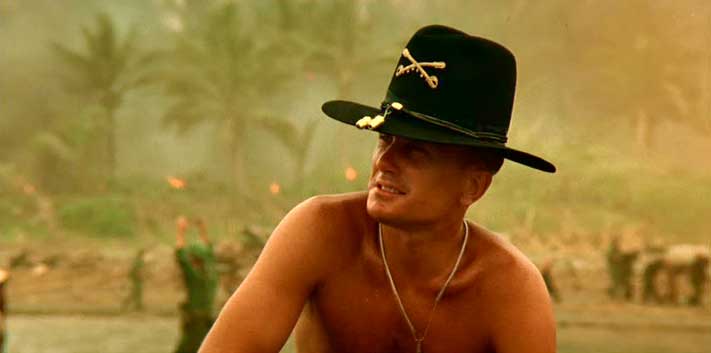
Kilgore: Smell that? You smell that?
Lance: What?
Kilgore: The smell of deflated national vanity, son. Nothing else in the world smells like that. [kneels] I love the smell of deflated national vanity in the morning. You know, one time England lost 4-1 to Germany. When it was all over, I walked around. We didn't find one synthetic England flag up, not one stinkin' England flag up. The smell, you know that smell...Smelled like [sniffing, pondering]... victory...

Labels: ,

Sunday, June 06, 2010

Charlie Brooker on the World Cup

I wish I enjoyed the World Cup, if only for some fleeting sense of common unity with the rest of humankind. But I simply don't get it...What puts me off isn't the game itself, but the accompanying patriotism; or, more specifically, the hollow simulation of patriotism used to hawk products throughout the contest.

Take the current Carlsberg campaign featuring an insanely jingoistic dressing room "pep talk" which blathers on and mindlessly on about national pride. "Know this," the voiceover whispers portentously, "that shirt you're wearing? Your countrymen would give anything to put it on." Really, Carlsberg? I wouldn't put down a sandwich to lift the World Cup, let alone pull a sweat-sodden sports jersey over my head. And would even the most committed fans really do "anything" to wear it? Would they saw their own feet off with a bread knife dipped in cat piss? No. They wouldn't. So stop lying.

Having grossly overestimated the cachet of said hallowed shirt, the ad treats us to a cameo from virtually every notable English sporting hero of the past 50 years, pausing briefly for a patronising moment of silence for Sir Bobby Robson, before depicting an ethereal Bobby Moore, bathed in heavenly light at the top of the tunnel, standing proudly beside a lion. The whole thing plays like a masturbatory dream sequence for Al Murray's Pub Landlord character, the punchline being that the whole thing is a sales pitch for a Danish brewing company. The tagline should be: "Carlsberg: as English as Æbleskiver"...There are other adverts of course: Coca-Cola, Nike, Pepsi-Cola, BP, Blackwater Security, The Tyrell Corporation, Damien Thorn Enterprises and so on. All hitting the same phoney note of concord, all somehow cheapening the fun that millions will extract from the tournament itself...


Encapsulates much more eloquently and accurately what I was trying to argue here

Edited to add: See also Mike Marqusee

Labels: , ,

Sunday, May 30, 2010

Socialists and the 2010 World Cup

Four years ago, in the run up to the 2006 World Cup I produced a brief socialist 'Guide to the World Cup', aimed really for football fans based in England of a left-wing, internationalist persuasion. I still hold to the essential argument I made there - one of 'Anyone But England' amidst the tide of corporate-sponsored English nationalism which seems to find expression in crappy little mass produced St Georges flags that are already reappearing across the landscape. This position seems doubly important given we are now under a new 'national coalition' of Tories and neo-Liberals committed to even more attacks on the working class, and which will no doubt see many attempts by 'Posh and Cleggs' to drap themselves in any success the England team do have - and this is before we come onto the likes of the EDL and their plans for racist rampages up and down the country. Some England supporters might point to the relatively high number of black players in the England team - as a defence - but given the changing forms of racism in Britain today have their cutting edge with Islamophobia - unless the England team were almost entirely Muslim I am not sure this argument carries a great deal of analytical weight. The only slight difficulty with holding such a clear internationalist and quasi-revolutionary defeatist position of 'Anyone But England' it seems to me might arise when England - still symbolic representative of the British Empire - play the symbolic representatives of the American Empire on 12 June - but one should I think still hold firm to a stress on 'the main enemy being at home', and perhaps lie back and think of those rich and powerful overlords who own and run BP and damage their oil spill has done and is doing to the US coastline.

Actually, the 2010 World Cup - set as it is in South Africa - gives English socialist football fans a refreshing choice of skilled and tough African teams to cheer on while they are hoping England crash out, including the likes of the Ivory Coast and Ghana. Some English socialists - readers of the Morning Star perhaps - might also point to the quite remarkable presence of plucky little North Korea in the tournament. However, while it would be great to see a World Cup final in which North Korea knock out the USA, such a clash seems, well, unlikely - and any revolutionary democrat could only celebrate such a result in terms of anti-imperialism - not as any sort of triumph of
socialism
as such.

Moreover, while the location of the World Cup in South Africa serves to highlight the criminal inequality and exploitation still remaining in that country, the history of anti-apartheid struggle allows socialists space to inject some anti-racist history and politics into the proceedings. And here it is only right to pay tribute to the people over at Philosophy Football, for highlighting this hidden history and producing a 'unique commemorative football shirt' honouring the Makana FA, 'the football association which was formed by prisoners on the notorious Robben Island' - one shirt any self-respecting revolutionary socialist of whatever nationality can proudly wear during the coming month or so. The story of Makana FA is perhaps a little reminiscent of the classic footy film 'Escape to Victory', only immeasurably more important and more inspiring because it is true.


Imprisoned because of their opposition to Apartheid, playing football, organising their own league and cup competitions as the Makana FA the game became a symbol and tool of the prisoners refusal to surrender their human dignity to the prison authorities. Yet this FA never had their own strip, now they do.

Labels: , ,

Monday, May 03, 2010

Wanted: A Modern Robin Hood


'Geoffrey Trease's novel Bows against the Barons [1934] had Robin and his "comrades" leading a (failed) peasant uprising'

With social inequality in Britain at its greatest levels since records began (after 13 years of New Labour government), it is timely that Ridley Scott has decided to make a new film about the legendary 'social bandit' Robin Hood, even if from what I have seen of the film (which stars Russell Crowe as Robin) so far makes it look rather like a remake of Gladiator set in mediaeval England. Anyway, The Guardian had an interesting article in it on Saturday by Adam Thorpe on representations of the enduring heroic symbol of peasant resistance in TV, literature and film which is worth a quick read. Though the article notes the Robin Hood Tax campaign, it seems to me that a truly modern Robin Hood that would actually genuinely fight for a massive redistribution of wealth and power from rich to poor would look more like the Trade Unionist and Socialist Coalition than anything else currently fighting this election campaign. Indeed, arguably, a 'modern Robin Hood' would represent a mass revolutionary socialist party standing in the tradition of Lenin's Bolsheviks - though I guess that whether that is the conclusion the majority of people who see Ridley Scott's film will draw after seeing the film seems unlikely.

Labels: , , ,

Sunday, March 28, 2010

That's why William Morris has gone to Iceland

[In the 1870s, the great Victorian artist William Morris made several trips to the now economically bankrupt (if remarkably relatively sexually liberated) country formerly known as 'Iceland' - and as the Morris scholar Fiona MacCarthy notes, we should all be glad he did because he came back a changed man, and indeed would later become an outstanding revolutionary socialist thinker:]

'Iceland itself became a kind of yardstick against which Morris measured the follies and iniquities of Victorian Britain. The Icelanders lived hard lives, but they never lost their dignity or sense of true priorities. The important things survived. Morris admired the strong literary traditions, noting how oral storytelling continued through the generations, keeping families transfixed through the long winter nights. He responded to the practical simplicity of Icelandic farmers' houses. These single-storey turf-walled structures, their rounded roofs blanketed with grass and flowers, had a minimalist beauty that showed up the self-indulgence of the "ordinary style of bourgeois comfort" in which Morris, a financier's son, had been brought up.

By the time he came to Iceland, Morris had founded his decorating firm Morris, Marshall, Faulkner & Co with the idea of reforming Britain's debased taste in the design of household products. From his own experience, he was already painfully aware of the economic pressures towards short cuts and shoddiness, the negation of the basic human instinct to perfect one's skills. In Iceland's more rudimentary economy craftsmanship still flourished within a living tradition of folk art. Morris's delight in discovering a country where design was directed only at supplying basic human needs fuelled his future diatribes against the Victorian culture of excess...Morris also came back with a new radical awareness. Reading the journals you can see the processes of revelation dawning. He came home politicised, convinced that "the most grinding poverty is a trifling evil compared with the inequality of classes"...

Early in 1883 Morris crossed the "river of fire" and became a revolutionary socialist. Note the image of the river: the journey across water was always a potent metaphor for Morris...This final transformation of the cosseted son of the capitalist classes, whose family fortunes derived from copper mining in the valley of the Tamar, was described by EP Thompson, the historian of the English working classes, as "among the great conversions of the world". Morris joined the Democratic Federation, a small and, at the time, relatively unknown party committed to bringing about a total social revolution, creating a society without rich and poor, without masters and men; a new world in which art could flourish. Art for Morris was the test of a true civilisation.

By now Morris had come to the conclusion that books without political purpose were flatulent and lifeless. For a decade he became totally embroiled in the literature of conflict. Everything he wrote – poetry and stories, journalism, lectures – was dedicated to what he called "the Cause". Not everybody noticed. In many people's eyes Morris was still the author of the relatively innocuous "Earthly Paradise", and he was seriously considered for the post of Poet Laureate in 1892 after the death of Tennyson. As a revolutionary socialist he could not possibly accept.

News From Nowhere is the book in which Morris's visionary politics find their ultimate expression. It is a novel of an ideal post-revolution future set in 2012, a date which now seems curiously imminent. Though it reads with the directness of a children's story, it has deep, underlying subversiveness, a total upturning of accepted values. News From Nowhere became a kind of handbook for the romantic-intellectual English socialism that has only just ended with the death of Michael Foot. Towards the end of this dream novel comes a haymakers' feast – a community gathering in a flower-decked church with a crowd of handsome, happy, well-dressed men and women looking "like a bed of tulips in the sun". The truly democratic village scene described by Morris reminds one of Iceland, but with better weather. Ideals of community he formed on those journeys of the 1870s stayed with him all his life.'

Labels: , ,

Monday, July 27, 2009

Winstanley


The 1975 film Winstanley (tagline: 'The revolution starts here') about Gerrard Winstanley, leader of the Diggers (at the vanguard of the far left in the English Revolution), is being re-released by the BFI - see also here.

Labels: , , ,

Sunday, June 07, 2009

Thomas Paine: Permanent Revolutionary

Tomorrow marks the bicentenary of Thomas Paine's death. When he died in 1809, only six mourners attended his funeral, two of them free African Americans (testament to Paine's hatred of slavery). As the great orator Robert Ingersoll noted,

Thomas Paine had passed the legendary limit of life. One by one most of his old friends and acquaintances had deserted him. Maligned on every side, execrated, shunned and abhorred – his virtues denounced as vices – his services forgotten – his character blackened, he preserved the poise and balance of his soul. He was a victim of the people, but his convictions remained unshaken. He was still a soldier in the army of freedom, and still tried to enlighten and civilize those who were impatiently waiting for his death. Even those who loved their enemies hated him, their friend – the friend of the whole world – with all their hearts. On the 8th of June, 1809, death came – Death, almost his only friend. At his funeral no pomp, no pageantry, no civic procession, no military display. In a carriage, a woman and her son who had lived on the bounty of the dead – on horseback, a Quaker, the humanity of whose heart dominated the creed of his head – and, following on foot, two negroes filled with gratitude – constituted the funeral cortege of Thomas Paine.

Today the corset-maker from Thetford, East Anglia, is claimed almost as a 'founding father' of America, to the extent that he was even quoted (though not named directly) by Barack Obama in his inaugration speech. Yet, as the radical historian Peter Linebaugh, who is working on an eagerly awaited biography of Paine, notes in two recent articles for Counterpunch - here and here there was much more to Paine than meets the eye: as Linebaugh notes, Paine was 'a revolutionary opposing kingship, one-man rule, the puppet-show of sovereignty, the war-making essential to monarchy'.

Of course there are inevitably limitations to Paine's political vision. As Megan Trudell noted,

'Paine's anger and disgust at bloated privilege, his sense of justice, faith in 'lower orders' and defence of revolution are very relevant. But Paine took part in revolutionary movements against the old order at a time when the bourgeoisie was a revolutionary class. Now that class is the order and is therefore the active enemy of revolution and a block on the further development of human society. Paine's work, however marvellous, does not give us the tools with which to break the grip of that parasitic class.'

Yet one aspect of Paine's politics does seem to be also very relevant today in particular - his tremendous internationalism. Paine was that quintessential prophet hated in his own country - England - at least among the rich. He went to fight in the American War of Independence, a revolutionary people's war against the British Empire, and then championed the Great French Revolution which so terrified the rich and powerful crowned heads of all Europe. Yet his internationalism did not stop him becoming an inspirational figure in the making of the English working class, as testified by E.P. Thompson in his classic work of 1963. As Mark Steel once noted, according to one account, the Chartists of Merthyr Tydfil 'assembled in secret places on the mountains, and taking Paine's works from under a concealed boulder, read them with great unction'.

Yet Paine's very internationalism (his motto was 'the world is my country') poses a problem for those who talk, like Andrew Marr, of 'a strong English patriotism of the left, a vision that gathered Tom Paine, Hazlitt, the Chartists, the struggle against fascism and the post-war welfare state'. Those today like Billy Bragg et al who think the English Left need to try and reclaim English nationalism from racists and nationalists and use it for 'progressive' ends, would not, I feel, have found a supporter in Paine himself. Paine, like many of the Chartists (one of whose leaders after all was William Cuffay) was a tremendous internationalist to his very core - and that aspect of his life, together with his revolutionary ardour and spirit, should be why the Left, particularly in England, remember him today.

Labels: , ,

Thursday, April 30, 2009

Alex Callinicos on J.G. Ballard

'a great subversive, and the world will be duller without him'. See also this piece, an interview from 2008 with James Campbell:

Ballard's conversation, like his writing, is regularly punctuated with inventories of the liberating spirit of technology. But with scarcely a twitch to indicate a change of direction, he explains that his most recent novel, Kingdom Come (2006), "posed the question: could consumerism turn into fascism? The underlying psychologies aren't all that far removed from one another. If you go into a huge shopping mall and you're looking down the parade, it's the same theatrical aspect: these disciplined ranks of merchandise, all glittering like fascist uniforms. When you enter a mall, you are taking part in a ceremony of affirmation, which you endorse just by your presence."

Labels: , , ,

Sunday, January 11, 2009

Off with their heads

At a time when that Prince 'All is good in the Empire' Harry continues to try to inspire more young people in Britain facing economic uncertainty, shit jobs and low wages to go and fight and die for the profits of gigantic multinational oil companies and arms manufacturers in Afghanistan and Iraq, it is worth remembering the radical popular traditions of revolutionary democracy that have existed in the past - and continue to express themselves on anti-war demonstrations and the like up to the present day. The following conference organised by the London Socialist Historians Group should therefore be very timely indeed, and should be attended by all those who feel it is not those racists like Prince Harry deem 'ragheads' that are in particular need of a 'civilising mission' but rather the likes of Prince Harry and the British ruling class...

1649 and the Execution of King Charles

30 January 1649 is the day when King Charles 1st was beheaded and the Commonwealth of Oliver Cromwell, the foundation of modern Parliamentary democracy, came into effective being. It was a revolutionary moment and it brought onto the historical stage people, ideas and movements that went well beyond anything that Cromwell and the senior leadership of the New Model Army had in mind. Brian Manning in his seminal book on 1649 notes that this was a year when popular mobilisations did not happen. There was no popular uprising to mark the Commonwealth, and no popular protest at the execution of the King. There was however an Army revolt at Burford, also celebrating its anniversary this year, which was brutally put down by Cromwell. 1649 was also the year when Cromwell landed in Dublin to initiate brutal episodes in Ireland. This conference will look at the liberties and democratic practices
ushered in by 1649 and at those who wanted to take them further.

1649 and the execution of King Charles

Saturday 7 February 2009
Venue: Institute of Historical Research, Senate House, London.

Programme

9.30 – Registration (Wolfson Room)

10.00-11.15 Welcome and Keynote addresses (Wolfson Room)
Chair: Keith Flett, LSHG
Geoffrey Robertson, author of The Tyrannicide Brief
John Rees, author of A Rebel's Guide to Milton, forthcoming

11.15-11.30 Coffee

11.30-12.30 PANEL ONE: Cromwell's coalition and its critics (Wolfson Room)
Chair: David Renton, LSHG
Martyn Everett, 'The Agitators – between Rebellion and Reaction'
Dr. Ariel Hessayon, Goldsmiths College, 'Early modern Communism: the
Diggers and community of goods'

11.30-12.30 PANEL TWO: 1649 in contemporary eyes (Pollard Room)
Chair: Tobas Abse, LSHG
Claudia Guli, University of Melbourne, 'Historical Precedent in
Contemporary Justifications of the Trial of Charles I'
Ángel Alloza, CSIC (Spain), '"An Outrageous Incident": the execution
of Kings Charles seen from Abroad'

12.30-1.30 Lunch

1.30-2.30 PANEL THREE: The regicide, terror and Restoration (Pollard Room)
Chair: David Renton, LSHG
Jerome de Groot, University of Manchester, '"Original Villany":
Foundational Terrorism'
Alan Marshall, Bath Spa University, 'The Trials of Thomas Harrison, regicide'

1.30-2.30 PANEL FOUR: The Republic and something more (Wolfson Room)
Chair: Paul Burnham, LSHG
Alejandro Doering De Rio, Queen's College Cambridge, 'James Harrington
as a theorist of political of equality'
Dr John Seed, Roehampton University, 'The politics of remembering: the
execution of Charles in C18 England'

2.30-2.45 Coffee

2.45-4.00 Closing Plenary (Wolfson Room)
Chair: Keith Flett
Norah Carlin, author of The Causes of the English Civil War
Geoff Kennedy, author of Diggers, Levellers and Agrarian Capitalism

£10 waged, £5 unwaged. Order from Keith Flett keith1917@btinternet.com

Labels: , , ,

Saturday, May 03, 2008

Against the New Nationalism

I haven't really got much idea who Genevieve Maitland Hudson is, but reading this article of hers on Englishness was an incredibly refreshing change to the stream of false consciousness on the subject (I am being polite) recently from the likes of veteran lefty singer-songwriter Billy Bragg and Paul Kingsnorth - who I consider 'the poor man's George Monbiot'.

The recent nationalist turn is nothing more than an emotional means of stirring up patriotic spirit against excessive corporate growth, and there is nothing innately left-wing about that. The English organic movement, after all, was the brainchild of the far right. In short, the New Nationalism is really very like the old. It tends towards the parochial, the middle-class, the rural and the safe but it cloaks this unsurprising bent in the language of environmental politics. We ought not to let this deceive us.

Labels: , ,