Histomat: Adventures in Historical Materialism

'Historical materialism is the theory of the proletarian revolution.' Georg Lukács

Wednesday, November 26, 2014

Still the Enemy Within

STEW DVD Spe Ed for website

Short of ideas for Xmas presents?  Why not pre-order the Still the Enemy Within film about the Great Miners' Strike of 1984-85 on DVD?

Labels: , , , , ,

Saturday, September 27, 2014

The Greatest Movie Never Made?

Though it was sadly not mentioned in a recent book, The fifty greatest movies you will never see, one film project that has a very good claim to be included in that category was the planned project to make a film about the Haitian Revolution starring Paul Robeson by the great Soviet film director Sergei Eisenstein during the interwar period (another would be Eisenstein's plans to make a film of Marx's Capital).  The latest issue of History Workshop Journal has an interesting article entitled Sergei Eisenstein and the Haitian Revolution about this thwarted project, which might be of interest to readers of Histomat...

Labels: , , , ,

Monday, March 11, 2013

The Spirit of `45 - Ken Loach talks about his new film

Well worth checking out by the sounds of things

Edited to add: See also this interview with Loach

Labels: , ,

Saturday, February 02, 2013

Maya Deren - The Divine Horsemen: The Living Gods of Haiti


If you have an hour free and are interested in Haitian history and culture, this film is well worth a watch.  

Labels: , , ,

Wednesday, January 23, 2013

Brian Kelly on the limitations of Spielberg's Lincoln

 Spielberg and Kushner marshal all the human and technical resources and cinematic expertise at Hollywood’s disposal in producing an elegantly rendered film.  Daniel Day-Lewis gives us an Abraham Lincoln that combines the wily, unaffected “plain folk” demeanour for which he was known and the intense brooding and deep pathos that marked his term in office. He is brilliantly supported by Sally Fields and Tommie Lee Jones in their roles as Mary Todd Lincoln and the Radical Republican tribune Thaddeus Stevens. Together the lowlight camerawork and precise attention to detail give the film a mid-nineteenth century, gas-lamp ambience, a sepia texture like glass-plate photographs. Some key scenes come off affected and overdone, but technically speaking Lincoln is a well-crafted and compelling film. 

It doesn’t do nearly as well, however, in offering viewers a nuanced portrait of the living Lincoln. This is a man who evolved under the pressure of events and the wider, revolutionary context from a middle-of-the-road lawyer and stump politician into his role as emancipator in a profound social upheaval. Against the current of much of the “new” history of emancipation—which acknowledges the centrality of slave self-activity to the war’s outcome—Spielberg’s Lincoln pushes slaves and northern free blacks to the very margins of the story, sailing close to an older and once dominant view of emancipation as an act of Yankee benevolence. In what amounts to a snapshot of high politics over a couple of weeks in late 1864 and 1865, the crucial relationship between the slaves’ desperate, persistent drive for freedom and the changing military conduct of the war is left on the cutting room floor...

Abraham Lincoln was a tentative revolutionary in a revolution aimed at consolidating bourgeois democracy in the face of an anti-democratic, slave owning ruling class willing to risk all for its survival. He was compelled by the force of events around him—and against his own inclinations—to lay his hand on the “thunderbolt of slavery” to win a desperate and otherwise unwinnable war.
However slow in coming round, ultimately Lincoln rose to the challenge, consummating the triumph of the American bourgeoisie over a regressive social order. But it was a triumph first conceived by slaves and their allies, and bought with the blood and sacrifice of hundreds of thousands of Union soldiers.

Read the full review here, and see also Kevin Anderson on Lincoln and Ken Olende on Tarantino's Django Unchained

Labels: , , , , ,

Monday, January 14, 2013

(Still) The Enemy Within: a film about the Great Miners' Strike


To help support this important film project see here

Labels: , , , ,

Monday, May 07, 2012

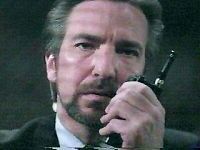
On the Hans Gruber / Golden Dawn controversy

Richard Seymour has a fine analysis of the Greek elections, which together with the defeat of Sarkozy signify a large scale popular rejection of the politics of austerity across Europe (whether the electorates of France and Greece will now actually get any kind of end to such politics is another matter), but while I am here I may as well clear up one controversy that has emerged as a result of the class polarisation across Europe in the context of the crisis - the rise of the far right in France and Greece - and in particular the rise of the neo-Nazi group Golden Dawn in Greece. Namely didn't Alan Rickman's character Hans Gruber mention the Golden Dawn group in the classic action film Die Hard?


Hans: The following people are to be released from their captors: In Northern Ireland, the seven members of the New Provo Front. In Canada, the five imprisoned leaders of Liberte de Quebec. In Greece, the nine members of the Golden Dawn movement...


John McClane: [listening on the radio] What the fuck?


Karl: [mouthing silently] Golden Dawn?


Hans: [covers the radio] I read about them in Time magazine...

In fact, despite rumours to the contrary and the imagined dialogue above, in fact Hans Gruber refers to a Sri Lankan group 'Asian Dawn' in Die Hard. It is important to clear stuff like this up. The more important question of course is how can the radical left in Greece and France now build on their recent successes to ensure that the politics of hope triumph over the Nazis' politics of despair. Here perhaps the anti-racist and anti-fascist campaigning taken in Britain by groups like Unite Against Fascism might serve as some sort of inspiration...

Labels: , , ,

Monday, May 30, 2011

Fire in Babylon

Am a bit gutted I seem to have missed this at the cinema, reviews of this documentary about the glory days of West Indian cricket sound incredible and people tell me it is well worth checking out...

Labels: ,

Monday, May 03, 2010

Wanted: A Modern Robin Hood


'Geoffrey Trease's novel Bows against the Barons [1934] had Robin and his "comrades" leading a (failed) peasant uprising'

With social inequality in Britain at its greatest levels since records began (after 13 years of New Labour government), it is timely that Ridley Scott has decided to make a new film about the legendary 'social bandit' Robin Hood, even if from what I have seen of the film (which stars Russell Crowe as Robin) so far makes it look rather like a remake of Gladiator set in mediaeval England. Anyway, The Guardian had an interesting article in it on Saturday by Adam Thorpe on representations of the enduring heroic symbol of peasant resistance in TV, literature and film which is worth a quick read. Though the article notes the Robin Hood Tax campaign, it seems to me that a truly modern Robin Hood that would actually genuinely fight for a massive redistribution of wealth and power from rich to poor would look more like the Trade Unionist and Socialist Coalition than anything else currently fighting this election campaign. Indeed, arguably, a 'modern Robin Hood' would represent a mass revolutionary socialist party standing in the tradition of Lenin's Bolsheviks - though I guess that whether that is the conclusion the majority of people who see Ridley Scott's film will draw after seeing the film seems unlikely.

Labels: , , ,

Saturday, May 01, 2010

Chris Morris's Four Lions

The latest issue of Socialist Review has a brief review of the eagerly awaited film Four Lions - a comedy film coming out soon by Chris Morris. Oddly enough, despite the fact that Morris of Brass Eye fame is widely and rightly regarded as a subversive comedy genius - indeed perhaps Britain's leading subversive comedy genius - and the film had been five years in the making, the BBC and Channel Four for some reason didn't want to go anywhere near it. I really can't imagine any possible reason why...

Labels:

Sunday, February 28, 2010

Invictus

I went to see Clint Eastwood's Invictus the other day. I haven't got a great deal to say about it, and what I do have to say will certainly be way too soft - for a serious Marxist critique see the piece by Louis Proyect - but for someone for whom the 1995 Rugby world cup was a distant schoolboy memory, and at the time almost certainly an event viewed purely as a dramatic sporting spectacle (and I fear, probably if supporting onyone, then supporting the England side of if I remember rightly Will Carling and Jeremy Guscott - these being my 'pre-Marx' days) it was a little enlightening. Moreover, given Michael Moore's new film is going to be bloody hard to track down at the British box office, it ain't a bad film to see (though if you can still catch it, definitely check out A Prophet). The heady mix of race, sport and politics which runs throughout Invictus put me a little in mind of such epics as Escape to Victory, and while perhaps coming close to being a tiny little bit grating in one or two places, its gentle, liberal anti-racist message is timely at a time when fascist parties in Britain are standing on a programme and propagating policies rather akin to those in apartheid South Africa. For a sense of contemporary South Africa, with its grotesque inequalities and poverty, on film, one is much better off seeing a film like Tsotsi, while something of the power and glory of the anti-apartheid liberation struggle is captured in Amandla!.

Labels: , , ,

Saturday, January 30, 2010

More from Moore

'Capitalism is an evil, and you cannot regulate evil. You have to eliminate it and replace it with something that is good for all people and that something is democracy.'
Michael Moore in Capitalism: A Love Story

This bit of historical detail about Roosevelt also caught my eye in Moore's recent interview with the Guardian:

Moore has dug out of a South Carolina archive a piece of film buried away 66 years ago because it threatened to rock the foundations of the capitalist system as Americans now know it. President Franklin D Roosevelt was ailing. Too ill to make his 1944 state of the nation address to Congress, he instead broadcast it by radio. But at one point he called in the cameras, and set out his vision of a new America he knew he would not live to see.

Roosevelt proposed a second bill of rights to guarantee every American a job with a living wage, a decent home, medical care, protection from the economic fears of old age, sickness and unemployment, and, perhaps most dangerously for big business, freedom from unfair monopolies. He said that "true individual freedom cannot exist without economic security and independence".

The film was quickly locked away.

"The next week on the newsreels – and we've gone back and researched this – they didn't run that," said Moore. "They talked about other parts of his speech, the war. Nothing about this. The footage became lost. When we called the Roosevelt presidential library and asked them about it they said it wasn't filmed. His own family told us it wasn't filmed." Moore's team scoured the country without luck until they were given a tip about a collector connected to the university of South Carolina.

The university didn't have anything archived under FDR's speeches that fitted, but there were a couple of boxes from that week in 1944.

"We pop it in. It was all there. We had tears in our eyes watching it. For 65 years not a single American saw that speech, not one. I decided right then that we're going to fulfil Roosevelt's wishes that the American people see him saying this. Of all the things in the film, probably I feel most privileged that I get to share this. I get to give him his stage." It's a powerful moment not only because it offers an alternative view of American values rarely spoken of today – almost all of which would be condemned as rampant socialism – but also an interesting reference point with which to compare the more restrained ambitions of the Obama administration.


For more on Obama's conservatism in his first year of office, see 'President of Cant' by Tariq Ali in the new New Left Review, Megan Trudell From a bang to a whimper (and analysis of Obama's banking reforms and Richard Seymour 'Obama: the dream dies'.

Labels: , ,

Saturday, September 26, 2009

Capitalism: A Love Story

Louis Proyect on Michael Moore's new film

Labels: , , , ,

Monday, July 27, 2009

Winstanley


The 1975 film Winstanley (tagline: 'The revolution starts here') about Gerrard Winstanley, leader of the Diggers (at the vanguard of the far left in the English Revolution), is being re-released by the BFI - see also here.

Labels: , , ,

Monday, July 20, 2009

Sheila Rowbotham on the Tolpuddle Martyrs


From here:

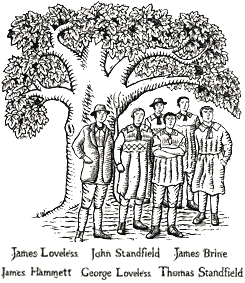
In 1834, six agricultural labourers, three of whom were Methodist lay preachers, were sentenced to transportation to Australia. Every year they are commemorated by the Trade Union Congress, at a festival in Tolpuddle in Dorset, as the founders of the trade union movement...To mark the 175th anniversary of their trial, the festival screened Bill Douglas's epic, long-lost and finally rediscovered film Comrades: A Lanternist's Account of the Tolpuddle Martyrs. Having attained almost mythical status since its release in 1986, the film is now being reissued by the British Film Institute (BFI).

By 1834 trade unions had been legalised, so the Tolpuddle men were charged under a nearly forgotten law that made it illegal to administer oaths. The names of the martyrs - George and James Loveless, Thomas and John Standfield, James Brine and James Hammett - might easily have been erased from history, like those of so many other hapless victims arraigned under a class-skewered legal system. Instead, the Grand National Consolidated Trades Union, inspired by the co-operator Robert Owen's hopes for "a new moral world", mounted an agitation for their release. The moderate radical MP JA Roebuck noted the political implications - the case revealed "that the House of Commons does not represent the feelings of the people". This was an ominous indictment of the legitimacy of the recently reformed parliament and the Whig government. To the petitioners and demonstrators these were merely the new tyrants.

Feelings ran so high that, incredibly, the men were pardoned and granted free passage back to Britain. It took three more years for them all to come home as the authorities were more tardy in tracing and releasing them than they had been in hustling them away. Nevertheless, against all odds, the Tolpuddle Martyrs returned. The victory became a symbol to a working-class movement of the power of combination, not only in the matter of wages but in the achievement of democratic power through a charter of political rights...

Labels: , , ,

Monday, June 08, 2009

Ken Loach on the need for left unity

From an interview with Martin Smith in the new Socialist Review:

"My feeling is that we need to think of the regroupment of the left in Britain in terms of the European left now. The European left is a project obviously bigger than any one group. I am very encouraged by the events in France right now and the development of the Nouveau Parti Anticapitaliste. The European left, which is so big, will just swallow up the differences between the different groups on the left over here. I've been in meetings where we've talked about this for 45 years, and organisationally are we any further forward in all that time? If you want to be depressed, that's the depressing thing. On the optimistic side the need just gets more and more intense. It was urgent after the Iraq war, but now even more urgent with the collapse of the banks and increasing unemployment, industries closing down and so on, and the environmental disaster that's awaiting the next generation. The pressure to unite just gets bigger and bigger. Every left meeting I go to is based on the fact that the crisis is about to engulf us all. It's not in the distant future. It's unfolding before us now. We've got to get together at some point. Living in separate tents isn't going to solve anything really."

Edited to add: The SWP's Open Letter to the left about the need to create a socialist alternative, with some responses here

Labels: ,

Tuesday, March 17, 2009

Che

I spent about 5 hours over the weekend in a darkened cinema in the company of Che Guevara, or rather Benicio del Toro doing a damn good impression of Guevara, via the two-part film 'Che' directed by Steven Soderberg. It is definitely worth seeing them together - indeed part two would I think be quite disappointing if you just saw that by itself. Louis Proyect is as usual well worth reading on the film, and there was a slightly more sympathetic article in Socialist Worker a few months ago. Personally, I am glad I saw the films, not least for the landscape and scenary of jungles in Cuba and Bolivia - three not particularly deep thoughts struck me after seeing it.

1) The film does succeed in bringing alive a sense of the personality of Che, as an 'incorruptible' revolutionary with a high moral code (and asthma). As Soderberg notes after interviewing people who knew him, he got the sense that personally Che 'was not embraceable, really.'

'The word "warm" never came up. He was a caring person, especially when he was doctor mode, but there was also a distant quality to him. How much of that is his personality and how much of it is a function of him becoming Che and a leader, I don’t know, but you could tell that these people cared for him a great deal and there was a lot of emotion in the way that they talked about him, but you could tell he was difficult. He didn’t have an off switch. The guy never dropped the revolutionary code of behavior, at no point was that relaxed.'

2) The first part is about the making of the Cuban Revolution by Castro's small group of Guerillas - and then the second part is Guevara's tragically doomed and ill thought out attempt to spread that revolution using exactly the same tactics in Bolivia. It was a reminder that while Che thought that 'if one is a revolutionary, then make a revolution', in reality revolutions are not made in a subjective manner by a few professional revolutionaries - they are made in certain objective circumstances by the activity of the many in society, even though they are often not even fully conscious of the fact that they are making a revolution. Moreover, while it is one thing 'to make' one revolution, spreading it elsewhere is a much harder affair - not simply because the objective conditions are often different but also because the forces of counter-revolution are far more prepared and organised subsequently. There are faint echoes here - and I would not want to push the parallels too far - between the October Revolution led by Lenin's Bolsheviks and then Luxemburg's group's failure to make the German Revolution of 1918 into a success - and the brutal rise of fascism as a response to the threat of socialist revolution spreading in Europe.

3) Regarding the strategy of guerilla war, watching Part 2 brings to mind the current situation in Northern Ireland - the utter futility of attempting to take on and defeat a professional army in armed combat with a handful of fighters. Louis argues that

'About part two of "Che", the less said the better. Like Mel Gibson’s "The Passion of the Christ", it is pretty much two hours of fairly graphic suffering, all intended to resonate with the popular image of Che Guevara as martyr to the cause. I only sat through it because I felt obligated to review both parts of the movie. But all in all, part two did not have anything to say that wasn’t already said in the 1994 documentary "Ernesto Che Guevara, The Bolivian Diary" that is a nonstop nightmare of asthma attacks, betrayal, and futility.

I don't fully agree with this - we heard in the film about the militancy and repression of the miners of Bolivia throughout - and we even seemed to have another possible strategy based around the activity of the organised working class and less atomised peasants seemingly counterposed to that of Che's strategy by the Stalinist leader of the Bolivian Communist Party, who he tells Che in quite uncompromising terms how bankrupt his strategy for revolution is. I'll leave readers to decide whether emerging from the cinema with a slightly higher respect for Bolivian Stalinists is an entirely healthy thing or not...

Labels: , ,

Wednesday, December 10, 2008

Waltz With Bashir


Last night I went to see Ari Folman's Waltz with Bashir and as a film in general (and about the horror of war and the dynamic nature of memory as told through the bloodshed and war crimes of Israel's bloody 1982 war in Lebanon in particular) it is impossible to really recommend it highly enough. There is a short review here, and a slightly longer review by Sasha Simic in Socialist Review - both of which rightly end with a simple call which I am more than happy to just echo: Go and see this film.

Labels: , , ,

Monday, November 10, 2008

Yeah, but can Zombies run?

For those who have not been avidly reading the Guardian of late, there is a critically important debate running between Charlie Brooker - writer of the quality recent TV show Dead Set (which was basically Dawn of the Dead meets Big Brother only with a touch of dark humour) and Simon Pegg (Shaun of the Dead) over whether Zombies can run or not. Pegg defends the classic traditional view of the matter with Zombies as incredibly slow stumbling mumbling and shuffling creatures while Brooker is more revisionist, defending the idea of diversity among breeds of zombie. If I get time this week I will write a brief review of Historical Materialism conference 2008, but I'm sorry folks its zombies or nothing for the time being.

Labels: ,

Saturday, October 04, 2008

New Film: How to Lose Friends and Alienate People


A hilarious new comedy starring Simon Pegg:

Simon Pegg plays Gordon Brown, a hapless control freak well out of his depth in the murky world of British politics, who makes blunder after blunder as Prime Minister. His disastrous infatuation with Margaret Thatcher, his bankrolling of bloody criminal imperialist wars, his public sector pay freeze at a time of economic crisis, his promotion of Peter Mandleson and his overall attitude of being 'intensely relaxed about people becoming filthy rich' by profiting from the misery of millions in rampant chaotic financial speculation ends up destroying the thing he loved the most - the Labour Party.

'More a tragedy really than a comedy - it shows the bankrupt logical end point of parliamentary socialism and the depths to which New Labour have now sunk as a political party. It beggars belief how so many trade union leaders can continue to bankroll such a party with their members funds, and put their loyalty to the Labour Party before the interests of the working class in general. Why don't they lead a united fightback against this incredibly unpopular New Labour regime?' - Jonathan Ross

Labels: , ,